Your kitchen sink looks clean, but an unpleasant odor keeps coming back every time you walk into the kitchen. You scrub the basin, wipe the faucet, and even rinse the drain, yet the smell never seems to disappear.
If cleaning the sink doesn’t solve the problem, the source is usually hidden below the surface. Grease inside the drain pipe, food trapped beneath the drain opening, bacteria growing as biofilm, or even a plumbing issue can all cause lingering odors.
The good news is that most kitchen sink smells have a specific cause. Once you identify where the odor is coming from, it’s usually much easier to fix than you might expect.
Quick Answer
If your kitchen sink still smells after cleaning, the odor is usually coming from hidden buildup rather than the sink itself.
The most common causes include:
- Food trapped below the drain
- Grease coating the inside of the drain pipe
- Bacterial biofilm
- A dirty garbage disposal splash guard
- A partially clogged drain
- A dry P-trap
- Sewer gas entering through a plumbing issue
Cleaning these hidden areas usually eliminates the odor.
Why Your Kitchen Sink Smells Even After Cleaning
According to the U.S. Environmental Protection Agency, properly functioning drain traps and plumbing vents help prevent sewer gases from entering a home.
The EPA also recommends maintaining plumbing systems properly to help protect indoor air quality. See the EPA’s guidance on indoor air quality for more information: Indoor Air Quality (IAQ).
A spotless sink doesn’t always mean a clean drain.
While the sink basin is easy to wipe down, many odor-causing materials collect in places you can’t see. Small food particles, cooking grease, soap residue, and moisture gradually build up inside the plumbing, creating an environment where bacteria thrive.
Over time, this buildup can produce unpleasant smells even though the sink itself looks perfectly clean.
If mineral deposits are also affecting other areas of your kitchen, you may also find our guide on why dishwashers leave white residue helpful, since hard water buildup often contributes to cleaning problems throughout the home.
Common hidden sources include:
- Food trapped below the drain opening
- Grease coating the inside of the drain pipe
- Sticky bacterial biofilm
- Garbage disposal residue beneath the splash guard
- Overflow channel buildup
- Standing water caused by partial clogs
- A dry P-trap
- Loose plumbing connections that allow sewer gas to escape
If the smell resembles rotten eggs rather than spoiled food, the issue may be related to sewer gas instead of organic buildup. According to the U.S. Environmental Protection Agency, properly functioning drain traps and plumbing vents help prevent sewer gases from entering a home.
Quick Overview of Common Causes
| Cause | How Common | Difficulty | Typical Fix |
|---|---|---|---|
| Grease buildup | Very common | Easy | Flush and remove grease buildup |
| Food trapped below the drain | Very common | Easy | Remove and clean the drain opening |
| Garbage disposal residue | Common | Easy | Clean beneath the splash guard |
| Biofilm inside the drain | Common | Moderate | Scrub the drain and use an enzyme cleaner |
| Overflow channel buildup | Occasional | Easy | Flush and clean the overflow opening |
| Partial drain clog | Common | Moderate | Remove the blockage |
| Dry P-trap | Occasional | Easy | Refill the trap with water |
| Sewer vent issue | Less common | Difficult | Professional inspection |
| Damaged plumbing seal | Less common | Difficult | Plumbing repair |
9 Common Reasons Your Kitchen Sink Smells Even After Cleaning
1. Food Is Trapped Below the Drain Opening
One of the most common causes is also one of the easiest to overlook.
Tiny pieces of food often become trapped just below the drain opening where they stay wet and slowly decompose. Because this area isn’t visible from above, many people don’t realize it’s the source of the smell.
How to fix it
Remove the drain stopper or basket if your sink has one. Scrub both the underside of the stopper and the inside of the drain opening with a small brush before rinsing thoroughly.
2. Grease Has Coated the Drain Pipe
Cooking grease doesn’t always wash away completely.
As it cools, it sticks to the inside of the drain pipe and forms a sticky layer that traps food particles and other debris. Over time, bacteria feed on this material and create unpleasant odors.
How to fix it
Avoid pouring cooking oil or grease directly into the sink. After washing greasy cookware, run hot water for a short time to help flush away residue before it hardens.
3. Biofilm Has Built Up Inside the Drain
Biofilm is a thin, sticky layer of bacteria that clings to the inside of drain pipes.
Unlike loose food scraps, biofilm sticks firmly to the pipe walls and continues to grow over time. Simply rinsing the drain with hot water usually isn’t enough to remove it.
How to fix it
Use a long drain-cleaning brush to scrub inside the pipe, then flush the drain thoroughly. An enzyme-based drain cleaner can also help break down organic buildup without using harsh chemicals.
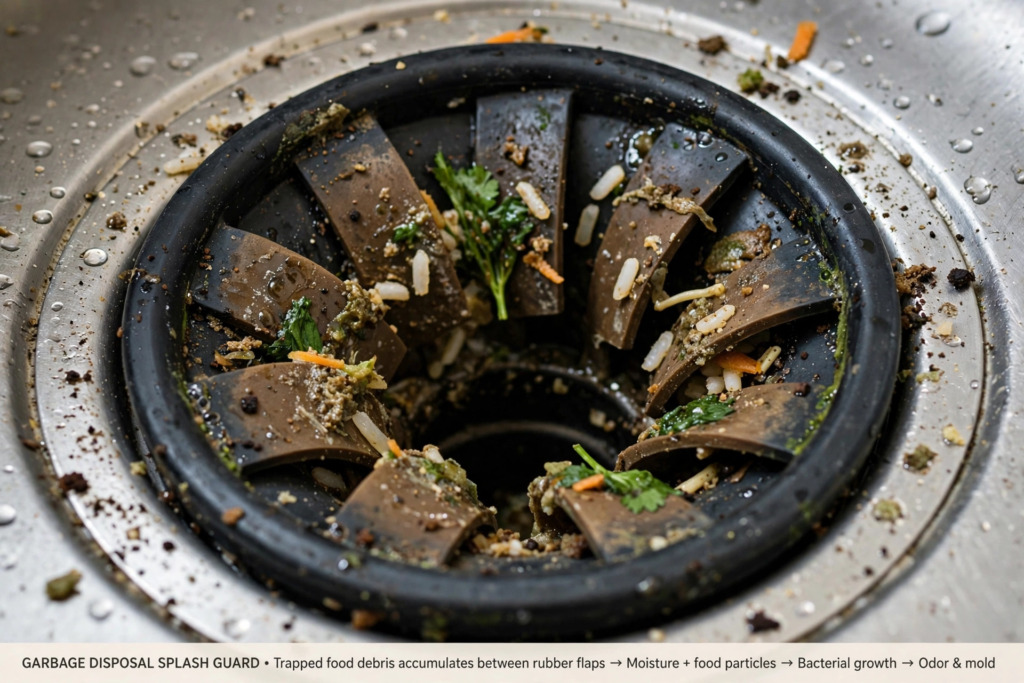
4. Your Garbage Disposal Needs Cleaning
Garbage disposals are one of the most common sources of persistent kitchen odors.
Food particles often become trapped beneath the rubber splash guard where they remain hidden from view. Even if the disposal seems to work normally, residue underneath the flaps can produce a strong smell.
How to fix it
Lift the rubber flaps carefully and scrub both the top and underside with a soft brush. Remove any visible food debris before running cold water through the disposal according to the manufacturer’s instructions.
5. Bacteria Have Built Up Inside the Overflow Channel
Some kitchen sinks include an overflow channel that prevents water from spilling over the edge.
Because this passage stays damp and is rarely cleaned, bacteria and organic residue can build up inside and create unpleasant odors.
How to fix it
Flush the overflow opening with warm water and gently clean around it using a narrow cleaning brush if accessible.
6. A Partial Drain Clog Is Holding Debris
Your sink doesn’t have to be completely blocked to smell.
Even a partial clog slows water flow enough for food particles and grease to remain inside the pipe longer, allowing odors to develop.
Common signs include:
- Water drains more slowly than usual
- Gurgling sounds after draining
- The smell returns soon after cleaning
7. The P-Trap Has Dried Out
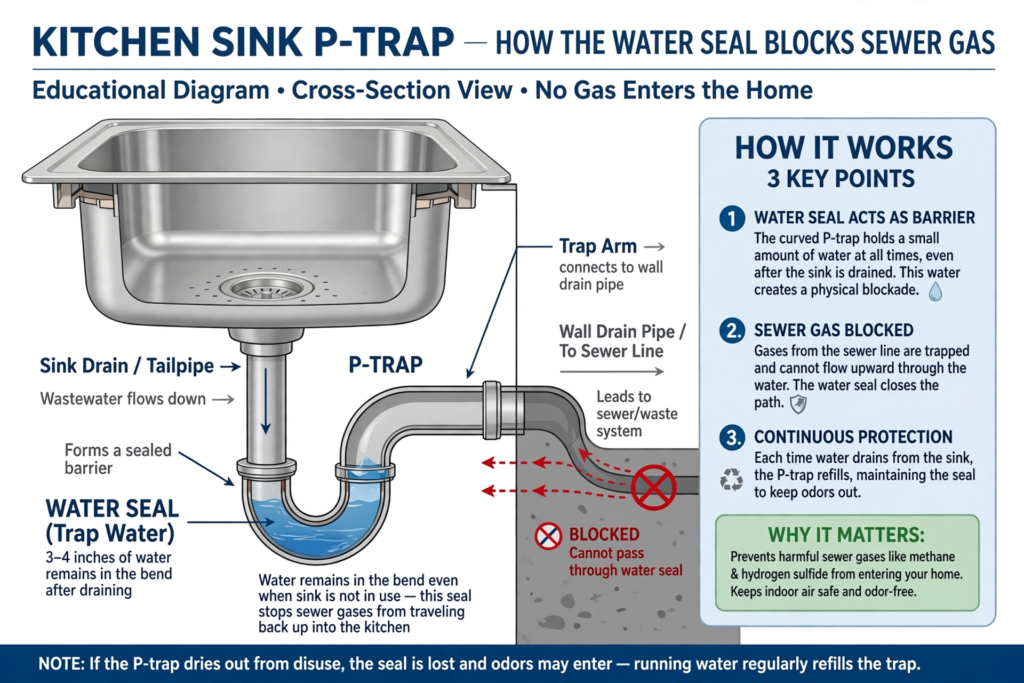
The curved section of pipe beneath the sink is called the P-trap.
It normally holds a small amount of water that acts as a barrier, preventing sewer gases from traveling back into your home.
If the sink hasn’t been used for a long time, that water can evaporate and allow unpleasant odors to escape through the drain.
How to fix it
Run water into the sink for about 20 seconds to refill the trap and restore the water seal.
8. Sewer Gas Is Escaping Into the Kitchen
If the odor smells more like rotten eggs than spoiled food, sewer gas may be entering through the plumbing.
Possible causes include:
- Loose drain connections
- Worn seals or gaskets
- A blocked plumbing vent
- A damaged drain pipe
If multiple drains in your home smell at the same time, the issue is more likely to be related to the plumbing system than the kitchen sink itself.
9. There May Be a Hidden Plumbing Problem
Sometimes the smell isn’t caused by dirt or grease at all.
Small leaks inside the cabinet, damaged drain pipes, or ventilation problems can create persistent odors that ordinary cleaning won’t solve.
If the smell continues after thoroughly cleaning the drain, disposal, and P-trap, it’s worth inspecting the plumbing more closely or contacting a licensed plumber.
How to Get Rid of Kitchen Sink Odors: 6 Steps
Once you identify the source of the smell, fixing it is usually much easier.
Start with the areas where food, grease, and bacteria are most likely to collect.
Step 1: Clean the Drain Opening and Stopper
The drain opening is one of the first places to check.
Remove the drain stopper or strainer and look underneath. Food particles often collect around this hidden area even when the sink surface looks clean.
Use a small brush or sponge to scrub:
- The underside of the stopper
- The drain opening
- The area around the drain seal
Rinse thoroughly with warm water afterward.
Step 2: Remove Grease and Residue Inside the Drain
Grease buildup can continue causing odors even after visible food is removed.
To clean the drain:
- Run warm water through the sink
- Use a drain brush if accessible
- Remove visible residue from the pipe entrance
- Flush with plenty of water
Avoid pouring cooking oil or grease into the sink because it can continue building up inside the pipes.
Step 3: Clean the Garbage Disposal Splash Guard
If your sink has a garbage disposal, the splash guard deserves special attention.
Food residue commonly collects underneath the rubber flaps, creating odors that are easy to miss.
To clean it:
- Turn off the disposal before cleaning
- Lift the splash guard carefully
- Scrub underneath each flap
- Remove trapped food particles
- Run cold water through the disposal according to the manufacturer’s instructions
Never place your hands inside the disposal opening.
Step 4: Flush the Overflow Channel
If your sink has an overflow opening, clean this hidden area as well.
Pour warm water into the overflow opening and allow it to flush through the channel.
A small brush can help remove residue around the opening if accessible.
This step is often overlooked because the buildup is hidden inside the sink structure.
Step 5: Use an Enzyme-Based Cleaner for Organic Buildup
For odors caused by food residue and organic buildup, an enzyme-based drain cleaner may help break down the material inside the pipe.
Unlike harsh chemical drain cleaners, enzyme products work by using biological agents to break down organic matter.
Always follow the product instructions and avoid mixing different drain cleaners together.
Step 6: Check the P-Trap and Plumbing Connections
Look underneath the sink for signs of a plumbing issue.
Check for:
- Leaks around pipe connections
- Loose fittings
- Water stains inside the cabinet
- Unusual odors coming directly from the pipes
If the P-trap has dried out, running water for a short time can restore the water seal.
If odors continue after cleaning, the problem may require a plumbing inspection.
How to Prevent Kitchen Sink Odors
Preventing odors is easier than repeatedly removing them.
Simple habits can make a noticeable difference:
- Do not pour cooking grease or oil down the drain
- Remove food scraps before washing dishes
- Clean the drain stopper regularly
- Clean the garbage disposal splash guard weekly if you have one
- Run water after washing greasy dishes
- Avoid allowing food debris to sit in the drain
- Flush unused sinks occasionally to keep P-traps filled
- Use an enzyme cleaner periodically if buildup returns
A few minutes of maintenance each week can prevent many recurring sink odors.
When to Call a Professional
Most kitchen sink odors can be solved with cleaning and basic maintenance.
However, professional help may be needed if you notice:
- The smell returns shortly after cleaning
- Multiple drains in the home smell bad
- Water drains slowly or backs up frequently
- You hear repeated gurgling sounds
- There are leaks under the sink
- The odor strongly resembles sewer gas
These symptoms may indicate a plumbing problem involving the drain system, venting, or sewer connection.
FAQ
Why does my kitchen sink smell even though it looks clean?
Because the odor usually comes from hidden areas rather than the visible sink surface.
Food particles, grease, and bacteria can collect inside the drain pipe, garbage disposal, or P-trap where normal cleaning cannot reach.
Will baking soda and vinegar permanently remove sink odors?
Baking soda and vinegar may help with mild odors or light residue, but they usually do not remove heavy grease buildup or established biofilm inside drain pipes.
If the smell keeps returning, the hidden source needs to be cleaned or inspected.
Why does my sink smell worse after running hot water?
Hot water can temporarily release trapped odors from grease and organic buildup inside the drain.
The smell may become stronger for a short time before the residue is flushed away.
Can a garbage disposal cause a bad smell?
Yes.
Food particles trapped under the splash guard or inside the disposal chamber are one of the most common causes of kitchen sink odors.
Regular cleaning of the splash guard can prevent many problems.
Is a sewer smell from my kitchen sink dangerous?
A persistent sewer smell should not be ignored.
It may be caused by a simple issue such as a dry P-trap, but it can also indicate a plumbing problem that allows sewer gases to enter the home.
If the odor continues after cleaning, professional inspection is recommended.
How often should I clean my kitchen sink drain?
For most households, cleaning the drain opening and stopper once a week helps prevent buildup.
Garbage disposal splash guards should also be checked regularly, especially if food odors appear.
Conclusion
A kitchen sink that smells even after cleaning usually has a hidden source.
The problem is often caused by food trapped below the drain, grease buildup inside the pipe, bacteria growing in damp areas, or residue inside a garbage disposal.
Start by cleaning the drain opening, checking hidden buildup, and inspecting the plumbing underneath the sink. Regular maintenance can prevent most odors from returning.
A clean-looking sink is only the beginning. Keeping the hidden parts of the drain system clean is what keeps your kitchen smelling fresh.
How This Article Was Prepared
This article was prepared through AI-assisted research and human editorial review.
The research process included reviewing plumbing maintenance guidance, manufacturer care information for garbage disposals, and public resources about drain traps and sewer gas prevention.
The author did not personally inspect every plumbing system or sink configuration. Drain designs, disposal models, and household plumbing conditions vary, so always follow manufacturer instructions and local plumbing guidance when performing maintenance.
Sources reviewed:
- Plumbing maintenance information about drain traps and sewer gas prevention
- Garbage disposal manufacturer cleaning recommendations
- Public resources about moisture-related buildup and household maintenance
Editorial Note:
Avoid mixing chemical drain cleaners or using products that are not recommended for your plumbing system. If you notice persistent sewer odors, leaks, repeated backups, or multiple affected drains, consult a licensed plumbing professional.
Visuals used in this article are AI-assisted illustrations created to explain maintenance steps clearly.

James L is the founder and editor of Clever Nest Lab, an independent home care website focused on practical, research-based household advice. He reviews manufacturer guidance, official documentation, and reliable sources to turn useful information into clear, practical guides.
Clever Nest Lab distinguishes between first-hand testing and research-based recommendations. The goal is to help readers better understand common household problems, follow safer cleaning and maintenance practices, and make informed decisions.