A little water left in a dishwasher after a cycle isn’t always a sign of a problem. Some models intentionally retain a small amount of water around the filter or sump to help protect seals and internal components. Whirlpool notes that a limited amount of water in the filter area can be normal on some models.
But if water is pooling across the bottom of the tub, the dishwasher is draining more slowly than usual, or dirty water returns after draining, something in the drainage system may be restricted.
Why Is My Dishwasher Not Draining Completely?
A dishwasher removes wastewater through a drainage system that typically includes a drain pump, drain hose, and connection to the sink drain, garbage disposal, or air gap.
If food debris, grease, a kinked hose, or another obstruction restricts that path, water can remain inside the tub.
The good news is that many dishwasher drainage problems begin with parts that are accessible without taking the appliance apart.
The Short Answer
If your dishwasher isn’t draining completely, check these areas first:
- Dishwasher filter: Food particles and grease can restrict water flow.
- Sump area: Small pieces of food, labels, seeds, or broken glass can collect near the drain pump.
- Drain hose: A kink, sag, or blockage can slow drainage.
- Air gap: If your sink has one, debris can block the connection.
- Garbage disposal: A clogged disposal or an installation knockout plug can prevent drainage.
- Drain pump: A jammed or failing pump can leave substantial water behind.
- Sink plumbing: A blockage downstream of the dishwasher can cause wastewater to back up.
- Cycle interruption: Stopping a cycle before the drain phase is complete can also leave water in the tub.
A small amount of water around the filter or sump may be normal on some models, so check your owner’s manual if you’re unsure how much water should remain.
Why This Happens
Dishwashers don’t simply allow wastewater to flow out by gravity. At the end of a cycle, the drain pump actively moves wastewater through the drainage system.
That means a restriction anywhere along the route can affect how completely the dishwasher drains.
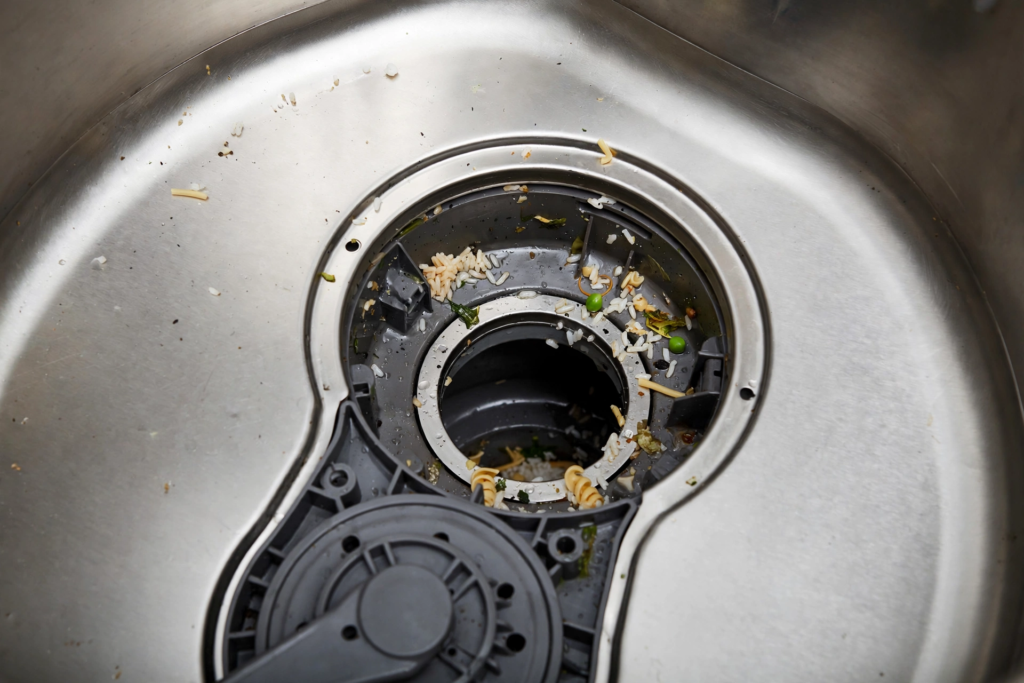
A dirty filter is one of the easiest problems to overlook. Food debris that isn’t removed can accumulate around the sump and restrict water flow toward the pump.
A drain hose can also become pinched underneath the sink, particularly after plumbing work or when items stored beneath the sink push against the hose.
Drainage can also be affected by the way the dishwasher connects to the kitchen plumbing. Depending on the installation, manufacturers may specify a properly routed high loop or an air gap to help prevent wastewater from flowing back into the dishwasher.
| What you notice | Possible cause | First thing to check |
|---|---|---|
| Small amount of water around filter | Normal design or minor restriction | Owner’s manual and filter |
| Water covering the tub bottom | Drain restriction | Filter, sump, hose |
| Water returns after draining | Backflow or plumbing blockage | Hose routing, air gap, disposal |
| Humming but little water movement | Pump obstruction | Sump and pump area |
| Problem started after disposal installation | Knockout plug or connection issue | Disposal inlet |
1. A Clogged Dishwasher Filter
The filter should be one of the first places to look on most modern dishwashers with a removable filter.
Food particles, grease, detergent residue, and other debris can accumulate over time. When the filter becomes heavily coated, water may not move through the drainage system as efficiently.
Remove the lower rack and inspect the filter according to your owner’s manual. Many filters twist out, but the design varies by model.
Rinse the filter under warm running water and use a soft brush to remove stubborn residue. Avoid aggressive scrubbing that could damage the filter material.
If the filter is visibly dirty, cleaning it may improve drainage without requiring any further repair.
2. Debris in the Sump or Drain Area
Cleaning the filter doesn’t necessarily remove everything underneath it.
Small pieces of food, labels, seeds, toothpicks, or even fragments of glass can make their way into the sump area.
With the dishwasher disconnected from power, inspect the area around the filter opening with a flashlight. Don’t reach blindly into an area that could contain broken glass.
If you find obvious debris, remove it carefully and check whether the dishwasher drains normally afterward.
3. A Kinked or Blocked Drain Hose
The drain hose connects the dishwasher to the sink drain, garbage disposal, or another plumbing connection.
A hose that has been sharply bent, crushed, or incorrectly routed can restrict wastewater flow. A low or improperly routed hose can also contribute to wastewater flowing back into the dishwasher.
Look underneath the sink for:
- Sharp bends
- Pinched sections
- Sagging sections
- Visible buildup
- Loose connections
Don’t assume the hose is clear simply because the dishwasher eventually drains. A partial obstruction can cause slow drainage rather than a complete blockage.
After checking the filter, sump, and drain hose, the next step is to look at the dishwasher’s connection to the sink plumbing.
4. A Blocked Air Gap
Some dishwashers connect through an air gap mounted near the sink faucet.
The air gap helps prevent contaminated sink water from flowing backward into the dishwasher. If the air gap or its connected hose becomes clogged, drainage can be affected.
If your dishwasher has an air gap, follow the air-gap manufacturer’s instructions for removing the cover and clearing debris. The exact construction can vary.
If you don’t have an air gap, your dishwasher may use a high-loop drain hose arrangement instead. Check the installation instructions for your model rather than changing the plumbing configuration on your own.
5. A Garbage Disposal Connection Problem
Dishwashers are often connected to garbage disposals.
If the disposal is clogged, dishwasher wastewater may have nowhere to go.
There’s another particularly important issue with a newly installed or recently replaced disposal: the dishwasher inlet knockout plug must be removed before connecting the drain hose.
If that plug remains in place, water cannot drain through the disposal connection.
This is especially worth checking if the drainage problem began immediately after installing or replacing a garbage disposal.
6. A Drain Pump Problem
The drain pump is responsible for moving wastewater out of the dishwasher.
If the pump is obstructed, damaged, or failing electrically, cleaning the filter and hose may not solve the problem.
A humming sound without effective water movement can sometimes indicate an obstruction near the pump or impeller. Grinding or unusual mechanical noises are another reason to stop and investigate rather than repeatedly running the dishwasher.
Pump replacement or electrical diagnosis is generally better left to a qualified appliance technician unless the manufacturer’s instructions specifically provide a safe procedure for your model.
How to Fix a Dishwasher That Isn’t Draining Completely
Before working inside the dishwasher, disconnect its power. If it’s hard-wired, turn off the appropriate circuit breaker.
Don’t rely only on the control panel being switched off when you’re inspecting components.
Then work through these steps:
- Remove standing water.
Use a cup, shallow container, or suitable hand pump to remove excess water. - Remove and clean the filter.
Follow the owner’s manual for proper removal and cleaning. - Inspect the sump.
Use a flashlight to look for food debris or other obstructions. Be particularly careful around broken glass. - Check the drain hose.
Look underneath the sink for kinks, crushing, sagging, or obvious blockage. - Inspect the sink connection.
Check the garbage disposal connection or sink drain connection for an obstruction. - Check the air gap if present.
Clean it according to the manufacturer’s instructions. - Run a short cycle or drain function.
Observe whether water moves out normally. - Check for backflow.
If water drains but later returns to the dishwasher, investigate the hose routing, air gap, disposal connection, and sink plumbing.
Don’t Use Chemical Drain Cleaner
Do not pour chemical drain cleaner into the dishwasher.
Drain cleaners are designed for specific plumbing applications and aren’t intended to be poured into a dishwasher. GE Appliances specifically warns against using drain cleaner in a dishwasher.
If the problem is caused by a physical obstruction, inspect and clear the appropriate part of the drainage system instead.
How to Prevent Dishwasher Drainage Problems
A few simple habits can reduce the chance of recurring drainage problems:
- Clean the dishwasher filter according to the owner’s manual.
- Remove large food particles from dishes before loading.
- Don’t put large labels, bones, toothpicks, or similar debris into the dishwasher.
- Check the drain hose after plumbing work under the sink.
- Keep the hose properly routed according to the installation instructions.
- Clean an installed air gap when necessary.
- Keep the garbage disposal connection free of obvious debris.
- Use only automatic dishwasher detergent.
- Don’t use excessive detergent, which can create unwanted suds.
- Pay attention to unusual draining noises or recurring standing water.
For many households, checking the filter regularly is one of the simplest maintenance tasks because it can catch problems before food debris reaches deeper into the drainage system.
When to Call a Professional
If the dishwasher still leaves substantial water after the filter, sump, hose, and sink connection have been checked, the problem may involve the drain pump, wiring, controls, or another internal component.
Professional help is especially appropriate if:
- The dishwasher makes grinding or burning noises.
- The circuit breaker repeatedly trips.
- You see damaged wiring.
- Water is leaking underneath the appliance.
- The drain pump doesn’t operate.
- An error code repeatedly returns.
- The dishwasher won’t drain after basic troubleshooting.
- Accessing the pump requires significant disassembly.
Manufacturer recommendations can differ by model, so check the owner’s manual before removing panels or attempting component-level repairs.
FAQ
Is it normal to have a little water in the bottom of a dishwasher?
It can be.
Some dishwasher models intentionally retain a small amount of water in the filter or sump area. Whirlpool notes that a limited amount of water in the filter area can be normal on some models because it helps keep seals from drying out.
If you’re unsure whether the amount of water you’re seeing is normal, check your owner’s manual for model-specific guidance.
Why does my dishwasher drain but still leave water behind?
It may have a partial blockage rather than a complete clog.
A dirty filter, restricted sump, partially blocked drain hose, or plumbing restriction can allow some water to drain while preventing the dishwasher from emptying completely.
Start with the filter and work outward through the drainage path.
Why does dirty water come back into my dishwasher?
Backflow can occur when the drain connection isn’t routed correctly or when there is a blockage in the air gap, drain hose, garbage disposal connection, or sink plumbing.
A properly installed high loop or air gap helps prevent wastewater from returning to the dishwasher.
How often should a dishwasher filter be cleaned?
There’s no single schedule that works for every household.
Cleaning frequency depends on the dishwasher, how often it runs, and how much food residue enters the machine. Follow the owner’s manual and clean the filter whenever you notice visible buildup or declining drainage performance.
Conclusion
A dishwasher that doesn’t drain completely is often dealing with a restriction somewhere between the filter and the kitchen drain.
The filter, sump, drain hose, air gap, and garbage disposal connection are the most practical places to start.
Don’t confuse a small amount of water in the filter area with a completely blocked dishwasher. If water covers the bottom of the tub or repeatedly returns after a cycle, work through the drainage path systematically.
If those checks don’t solve the problem, a failing drain pump or another internal issue may require professional service.
The best first step is simple: check and clean the dishwasher filter, then inspect the drain hose and sink connection before assuming the drain pump has failed.

James L is the founder and editor of Clever Nest Lab, an independent home care website focused on practical, research-based household advice. He reviews manufacturer guidance, official documentation, and reliable sources to turn useful information into clear, practical guides.
Clever Nest Lab distinguishes between first-hand testing and research-based recommendations. The goal is to help readers better understand common household problems, follow safer cleaning and maintenance practices, and make informed decisions.