A dishwasher can only clean dishes as well as its filter allows. If you’ve noticed cloudy glasses, food particles left behind, or an unpleasant smell when you open the door, a dirty filter is often the culprit.
The good news is that learning how to clean a dishwasher filter takes less than 15 minutes and requires only a few household items. Regular maintenance keeps your dishwasher working efficiently while helping you avoid costly repairs.
Why Cleaning Your Dishwasher Filter Matters
Most modern dishwashers use a removable filter that traps food particles before they can clog the drain or recirculate onto your dishes.
When the filter becomes clogged, you may notice:
- Dishes that don’t come out completely clean
- White residue on glasses
- Slow draining after a wash cycle
- Musty or sour odors
- Longer wash cycles
- Reduced water circulation
Ignoring the filter doesn’t just affect cleaning performance—it can also put extra strain on the dishwasher’s pump over time.
What You’ll Need
Fortunately, you don’t need any special products.
Gather:
- Warm water
- Dish soap
- Soft sponge
- Soft-bristle toothbrush or small cleaning brush
- Microfiber cloth
- Rubber gloves (optional)
Avoid steel wool, wire brushes, or abrasive scrubbers that may damage the filter mesh.
How to Clean a Dishwasher Filter Properly
Knowing how to clean a dishwasher filter properly is the key to maintaining your appliance’s performance.
Step 1: Turn Off the Dishwasher
Make sure the dishwasher is off and completely cool before beginning.
For added safety, avoid cleaning immediately after a hot wash cycle.
Step 2: Remove the Bottom Rack
Slide out the lower rack to access the bottom of the dishwasher.
The filter is usually located beneath the lower spray arm in the center of the tub.
Step 3: Remove the Filter
Most dishwasher filters twist counterclockwise before lifting out.
Some models have two pieces:
- Upper cylindrical filter
- Lower flat mesh filter
Remove both if applicable.
Tip: Check your owner’s manual if you’re unsure how your model comes apart.
For more brand-specific instructions, you can also consult the official maintenance guides from Whirlpool
or Bosch to ensure proper handling.
Step 4: Rinse Away Loose Debris
Hold the filter under warm running water.
Use your fingers to remove:
- Rice
- Seeds
- Pasta
- Small food scraps
- Grease buildup
Never force hardened debris through the mesh.
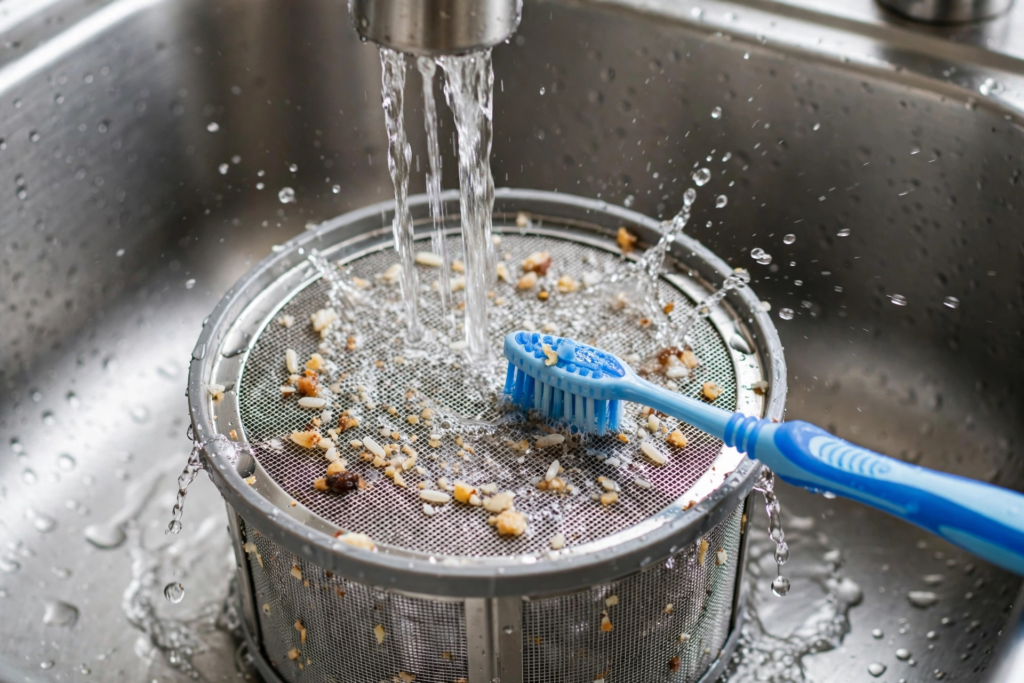
Step 5: Scrub Gently
Apply a small amount of dish soap.
Use a soft toothbrush to clean:
- Mesh screen
- Plastic frame
- Crevices
- Locking tabs
Work gently to avoid tearing the fine filter screen.
Step 6: Clean the Filter Housing
Many people skip this step, but it’s one of the most important.
Before reinstalling the filter:
- Wipe the filter compartment.
- Remove any trapped food.
- Check for broken glass.
- Wipe away grease around the drain.
This prevents odors from returning quickly.
Step 7: Reinstall the Filter
Place the filter back exactly as it was removed.
Twist clockwise until it locks securely.
A loose filter may reduce cleaning performance or even damage the dishwasher during operation.
Common Mistakes to Avoid
Many dishwasher problems come from simple maintenance mistakes.
Avoid these common errors:
Using Bleach on Stainless Steel Interiors
Bleach may damage stainless steel components and rubber seals.
Stick with mild dish soap unless your manufacturer specifically recommends another cleaner.
Using Wire Brushes
A damaged mesh filter won’t trap food effectively.
Always use soft cleaning tools.
Forgetting to Lock the Filter
An improperly installed filter can allow debris into the pump, leading to expensive repairs.
Always check that it is fully locked before running the dishwasher.
Waiting Until the Dishwasher Smells
Bad odors mean food has already begun decomposing.
Prevent the problem by cleaning the filter regularly instead of waiting for noticeable smells.
How Often Should You Clean a Dishwasher Filter?
The ideal schedule depends on how often you run your dishwasher.
| Usage | Cleaning Frequency |
|---|---|
| Daily | Every month |
| 3–5 times per week | Every 2 months |
| Occasional use | Every 3 months |
If you rarely rinse dishes before loading them, clean the filter more often.
Three Tips Most Homeowners Miss
1. Scraping Plates Is Enough
Many people completely pre-rinse dishes before loading them.
Modern detergents actually work better when a small amount of food soil is present. Simply scrape large food scraps instead of thoroughly rinsing everything.
2. Hard Water Can Make Filters Look Dirtier
If you live in an area with hard water, mineral deposits may build up on the filter.
Occasionally soaking the filter in warm water mixed with white vinegar for about 15–20 minutes can help dissolve mineral buildup. Do not soak it if your manufacturer advises against vinegar.
3. A Dirty Spray Arm Can Mimic a Dirty Filter
If cleaning the filter doesn’t improve performance, inspect the spray arms.
Small food particles often clog the spray holes, reducing water pressure and leaving dishes dirty even with a clean filter.
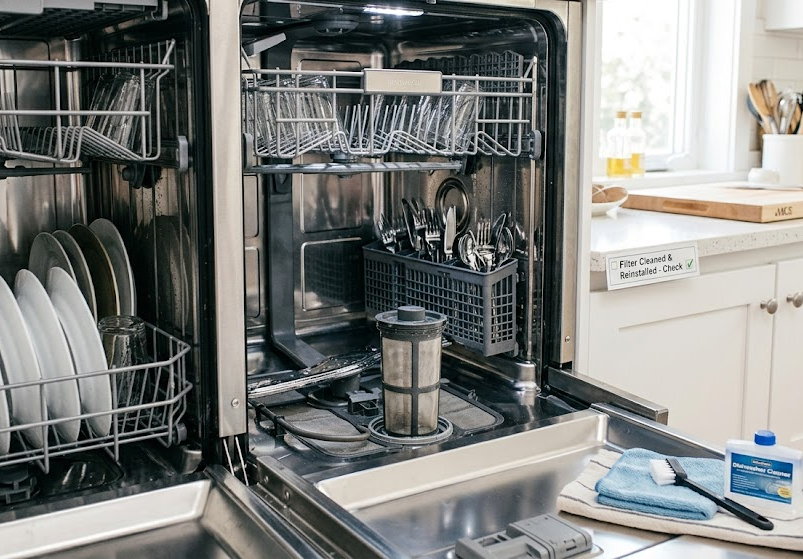
Signs Your Dishwasher Filter Needs Immediate Cleaning
Clean the filter as soon as possible if you notice:
- Standing water after a cycle
- Food particles on clean dishes
- Cloudy glasses
- Musty odors
- Dishwasher making unusual grinding noises
- Longer-than-normal wash cycles
Addressing these signs early can prevent larger mechanical problems.
Extra Maintenance Tips
Cleaning the filter is only one part of dishwasher care.
For best performance:
- Wipe the door gasket monthly.
- Run a dishwasher cleaner every 1–2 months if recommended by the manufacturer.
- Clean spray arms twice a year.
- Check the drain for debris.
- Leave the door slightly open after a cycle to reduce moisture and odors.
These simple habits help extend the appliance’s lifespan.
Safety Tips
- Always turn the dishwasher off before removing the filter.
- Wear gloves if reaching into the drain area, as broken glass can become trapped beneath the filter.
- Never run the dishwasher without the filter installed unless your manufacturer specifically allows it.
- Avoid harsh chemicals that may damage plastic or rubber components.
Conclusion
Mastering how to clean a dishwasher filter is one of the easiest ways to improve your dishwasher’s performance. A quick monthly cleaning removes trapped food, eliminates unpleasant odors, and helps dishes come out cleaner every time.
By pairing regular filter maintenance with occasional spray arm and interior cleaning, you can keep your dishwasher running efficiently for years while reducing the risk of expensive repairs.
If you want to keep your entire kitchen fresh, don’t forget to check out our guide on Why Does My Dishwasher Leave White Residue? Causes and Easy Fixes.
Frequently Asked Questions
How long does it take to clean a dishwasher filter?
Most filters can be cleaned in 10–15 minutes.
Can I wash the dishwasher filter in the dishwasher?
No. Hand washing is recommended because high heat and strong water pressure may damage some filters.
Why does my dishwasher still smell after cleaning the filter?
Food debris may also be trapped in the drain, spray arms, door gasket, or drain hose. Check these areas if odors persist.
Can I soak the filter overnight?
It’s generally unnecessary. A 15–20 minute soak in warm, soapy water is usually enough. Follow your manufacturer’s care instructions before using vinegar or other cleaners.
What happens if I never clean the dishwasher filter?
The filter can become clogged, reducing cleaning performance, causing odors, slowing drainage, and potentially increasing wear on the pump.

James L is the founder and editor of Clever Nest Lab, an independent home care website focused on practical, research-based household advice. He reviews manufacturer guidance, official documentation, and reliable sources to turn useful information into clear, practical guides.
Clever Nest Lab distinguishes between first-hand testing and research-based recommendations. The goal is to help readers better understand common household problems, follow safer cleaning and maintenance practices, and make informed decisions.