Knowing how often should you clean your dishwasher is key to keeping your kitchen running smoothly. It’s easy to forget that a dishwasher needs cleaning too. Because it washes dishes every day, many people assume the inside stays clean automatically.
However, food particles, grease, detergent residue, and hard water minerals can slowly collect inside the appliance even when dishes appear clean after a cycle.
Regular maintenance helps prevent odors, improves cleaning performance, and keeps the dishwasher working reliably over time.
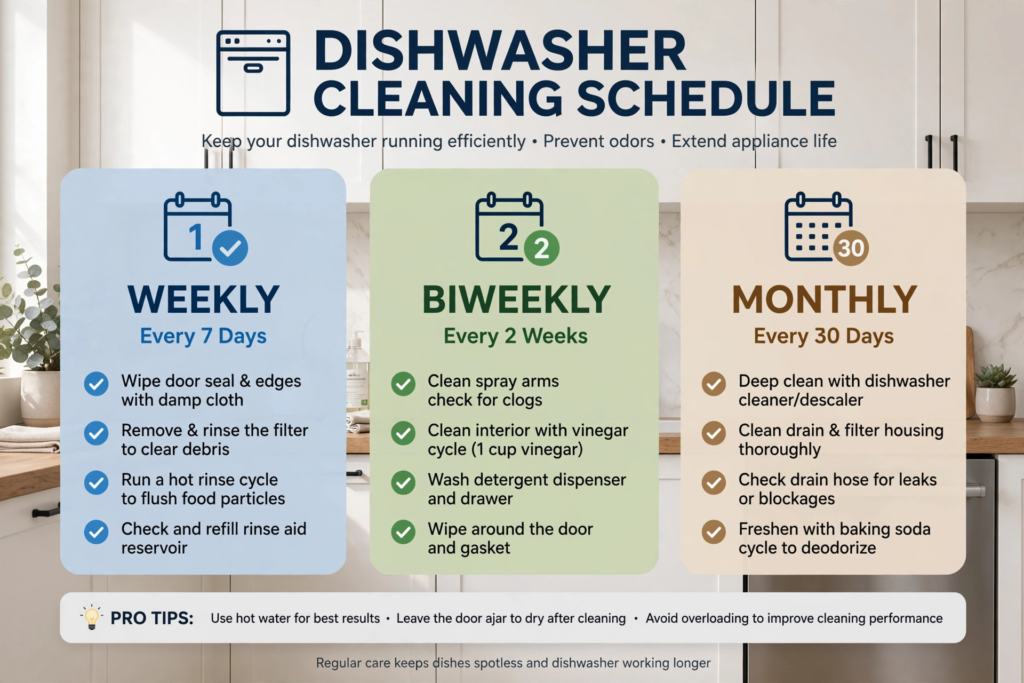
For most households, a simple cleaning schedule works well:
- Wipe the door and gasket weekly
- Clean the filter every one to two weeks
- Check the drain area monthly
- Run a deep cleaning cycle about once a month
- Inspect spray arms every few months
- Check visible hoses and connections if you notice leaks or drainage issues
Always follow the maintenance recommendations in your dishwasher owner’s manual because cleaning needs can vary by model and usage.
Why Cleaning Your Dishwasher Matters
Many people only clean their dishwasher after noticing a bad smell or dirty dishes.
By that point, food residue, grease, and mineral buildup may already have accumulated in areas that are not easy to see.
Common areas where buildup develops include:
- Dishwasher filter
- Spray arms
- Door gasket
- Drain area
- Interior walls
- Detergent dispenser
Regular maintenance helps prevent small amounts of residue from becoming larger cleaning problems.
Quick Dishwasher Cleaning Schedule
| Task | How Often | Time Needed | Why It Matters |
|---|---|---|---|
| Wipe door and gasket | Weekly | 2 minutes | Removes residue and moisture |
| Clean the filter | Every 1–2 weeks | 5 minutes | Removes trapped food particles |
| Check drain area | Monthly | 3 minutes | Helps prevent drainage problems |
| Deep clean interior | Monthly | 20–30 minutes | Removes grease and buildup |
| Clean spray arms | Every 2–3 months | 10 minutes | Helps maintain water coverage |
| Check visible hoses and connections | When needed | Few minutes | Helps identify leaks early |
The Short Answer
For most homes, this routine is enough:
- Wipe the door edges and rubber gasket once a week
- Clean the filter every one to two weeks
- Remove visible debris around the drain monthly
- Run a dishwasher cleaning cycle about once a month
- Check spray arms every two to three months
- Inspect for leaks or drainage issues when problems appear
If you run your dishwasher several times a day or frequently wash greasy cookware, you may need to clean it more often.
Weekly Dishwasher Cleaning Tasks
Weekly maintenance only takes a few minutes and prevents residue from building up.
Wipe the Door and Door Seal
Food particles and moisture often collect around the door edges and rubber gasket.
Use a damp microfiber cloth to remove visible residue before it turns into odor-causing buildup.
Pay special attention to:
- Bottom edge of the door
- Rubber folds in the gasket
- Corners where moisture collects
Remove Visible Food Debris
Large food particles can collect around the drain area.
Remove obvious debris such as:
- Rice
- Pasta pieces
- Vegetable scraps
- Labels from containers
A dishwasher does not need to be perfectly spotless after every cycle, but removing large debris helps prevent buildup.
Every One to Two Weeks: Clean the Filter
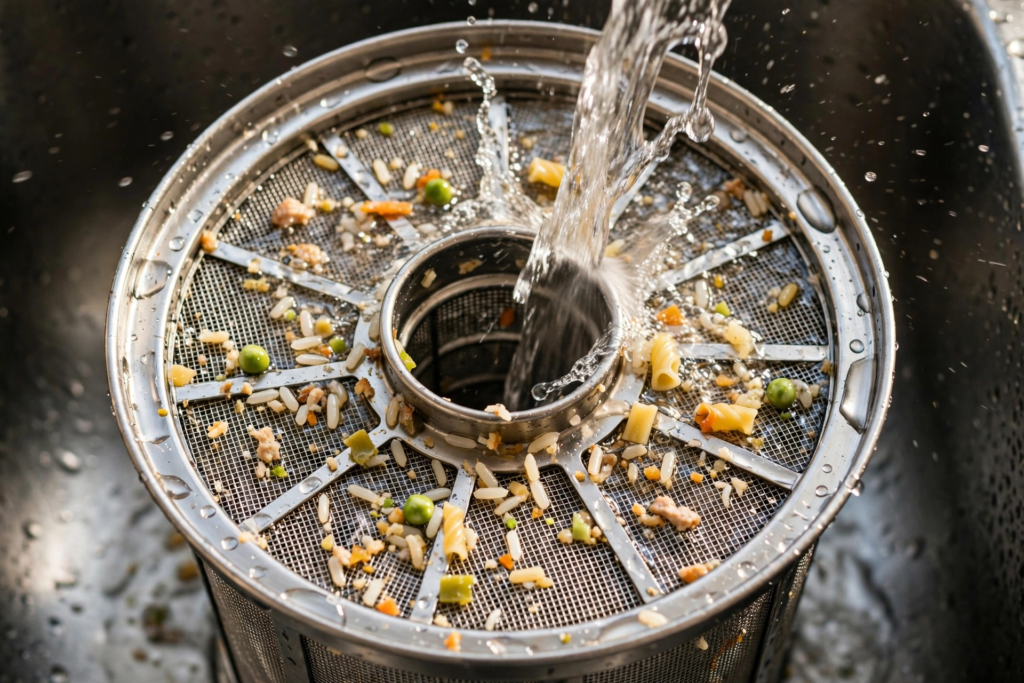
The dishwasher filter is one of the most important parts to maintain.
Modern dishwashers use filters to trap food particles so they do not circulate back onto clean dishes.
A dirty filter can contribute to:
- Musty odors
- Food remaining on dishes
- Poor cleaning performance
- Longer wash times
Most filters can be removed by twisting them out, but the exact method depends on the model.
For detailed step-by-step instructions, read our guide on How to Clean a Dishwasher Filter in 7 Easy Steps.
Rinse the filter under warm water and gently clean it with a soft brush if needed.
Always check your owner’s manual before removing dishwasher parts.
Once a Month: Deep Clean the Dishwasher
A monthly deep clean helps remove residue that normal washing may leave behind.
A basic cleaning routine includes:
- Empty the dishwasher completely.
- Remove and clean the filter.
- Wipe interior walls and door edges.
- Clean the door gasket.
- Check the drain area.
- Run a cleaning cycle using a dishwasher cleaner recommended by the manufacturer.
If you notice white chalky deposits, the issue may be hard water buildup.
See our guide on How to Remove Hard Water Build-Up Inside a Dishwasher for more information.
Some homeowners use household products such as vinegar, but recommendations vary between manufacturers. Always check your owner’s manual before using any cleaning product.
The American Cleaning Institute also recommends following your appliance manufacturer’s instructions and the cleaning product label when maintaining household appliances. Learn more in Laundry & Household Cleaning Tips.
Every Two to Three Months: Clean the Spray Arms
The small openings in dishwasher spray arms can become blocked by:
- Food particles
- Hard water minerals
- Detergent residue
When spray holes become blocked, water may not reach dishes evenly.
If your model allows spray arm removal, clean the openings with a wooden toothpick or soft brush.
Avoid metal tools because they may damage or enlarge the holes.
For detailed steps, see our guide on How to Clean Dishwasher Spray Arms Properly.
Check the Drain Area and Visible Connections
Most people do not inspect the drain area until a problem appears.
Look for:
- Food debris near the drain
- Standing water after cycles
- Visible leaks under the sink
- Loose or damaged connections
If a new garbage disposal was recently installed, check that the dishwasher knockout plug was removed. A leftover plug can prevent proper drainage.
Signs Your Dishwasher Needs Cleaning More Often
Your dishwasher may need more frequent maintenance if you notice:
- Musty odors
- White mineral deposits
- Greasy interior surfaces
- Food left on dishes
- Cloudy glasses
- Residue around the door seal
- Slow drainage
These problems usually develop gradually, so small changes in performance can be easy to overlook.
How to Prevent Dishwasher Buildup
Simple habits can reduce how often deep cleaning is needed:
- Remove large food scraps before loading
- Avoid overloading racks
- Clean the filter regularly
- Wipe the gasket weekly
- Use the correct amount of dishwasher detergent
- Leave the door slightly open after cycles when practical
- Follow the manufacturer’s cleaning recommendations
When Should You Clean Your Dishwasher More Often?
Some households may need a shorter cleaning schedule.
Consider more frequent cleaning if you:
- Run the dishwasher every day
- Have a larger household
- Wash greasy pots and pans often
- Live in an area with hard water
- Frequently wash baking dishes or casserole pans
- Notice recurring odors
More frequent use naturally creates more opportunities for food and mineral buildup.
When to Call a Professional
Regular maintenance solves many dishwasher problems, but some issues require professional inspection.
Consider contacting a technician if:
- Water remains after cleaning the filter
- The dishwasher leaks repeatedly
- Grinding or unusual noises occur
- Error codes continue appearing
- Water does not heat properly
- Cleaning performance suddenly decreases
Problems involving pumps, heating systems, electrical components, or damaged parts usually require repair rather than additional cleaning.
FAQ
Can I clean my dishwasher too often?
Regular wiping and filter cleaning are generally safe.
However, avoid harsh chemicals, abrasive tools, or cleaning methods that are not recommended by the manufacturer.
Is monthly deep cleaning necessary?
For many households, a monthly deep clean is a practical schedule.
Homes with lighter use may need it less often, while households with frequent cooking or hard water may need more frequent maintenance.
Should I rinse dishes before loading them?
Most modern dishwashers work best when large food scraps are removed but dishes are not completely pre-rinsed.
Dishwasher detergents are designed to work with some food residue remaining.
Can I use vinegar every month?
Recommendations vary by manufacturer.
Some dishwasher owners use vinegar occasionally, while others prefer dishwasher-specific cleaners.
Always check your owner’s manual before making vinegar part of your routine.
How long does dishwasher cleaning take?
Weekly maintenance usually takes only a few minutes.
A monthly deep clean typically takes around 20 to 30 minutes, depending on the condition of the dishwasher.
Conclusion
A dishwasher works best when it receives regular maintenance throughout the year.
Start with simple habits: wipe the door gasket weekly, clean the filter every one to two weeks, and perform a deeper cleaning about once a month.
This routine helps prevent odors, maintain cleaning performance, and reduce the chance of larger problems developing.
If your dishwasher still smells after cleaning, you may also want to read Why Does My Dishwasher Smell Bad?
How This Article Was Prepared
This article was prepared through AI-assisted research and human editorial review.
The research process included reviewing dishwasher manufacturer maintenance guidance, appliance care information, and public resources about dishwasher cleaning practices.
The author did not personally test every dishwasher model. Cleaning procedures vary by manufacturer, appliance design, and household use. Always consult your owner’s manual for specific maintenance recommendations.
Sources reviewed:
- Dishwasher manufacturer maintenance and cleaning guidance
- Appliance care information from public resources
- General dishwasher maintenance recommendations
Editorial Note:
Avoid abrasive tools or harsh chemicals that are not approved for your dishwasher model. If your dishwasher has persistent leaks, drainage problems, electrical concerns, or unusual noises, consult a qualified appliance professional.
Visuals used in this article are AI-assisted illustrations created to explain maintenance steps clearly.

James L is the founder and editor of Clever Nest Lab, an independent home care website focused on practical, research-based household advice. He reviews manufacturer guidance, official documentation, and reliable sources to turn useful information into clear, practical guides.
Clever Nest Lab distinguishes between first-hand testing and research-based recommendations. The goal is to help readers better understand common household problems, follow safer cleaning and maintenance practices, and make informed decisions.