Dealing with dirty dishes dishwasher problems after a full cycle can be incredibly frustrating when you expect clean plates.
The good news is that a dishwasher that leaves dishes dirty is often not completely broken. In many cases, the problem comes from a clogged filter, blocked spray arms, incorrect loading, detergent issues, or mineral buildup.
A dishwasher depends on several systems working together. Water needs to reach every surface, detergent must dissolve properly, and food particles need to be removed during the wash cycle.
When one part of this process is affected, dishes may come out with leftover food, cloudy spots, or greasy residue.
Common Causes at a Glance
| Possible Cause | How Common | Easy to Fix? | First Thing to Check |
|---|---|---|---|
| Clogged filter | Very High | Yes | Remove and rinse filter |
| Blocked spray arms | High | Yes | Check spray arm holes |
| Incorrect loading | High | Yes | Rearrange dishes |
| Weak or old detergent | Medium | Yes | Replace detergent |
| Hard water buildup | Medium | Usually | Check for mineral deposits |
| Low water temperature | Medium | Sometimes | Confirm hot water supply |
| Drainage issue | Low | Depends | Inspect drain area |
| Damaged components | Low | Sometimes | Check for unusual symptoms |
The Short Answer
Most dirty dishes after a wash cycle are caused by one or more of these issues:
- A clogged dishwasher filter
- Spray arms blocked by food particles or mineral deposits
- Dishes loaded in a way that blocks water spray
- Old or ineffective detergent
- Hard water mineral buildup
- Water that is not hot enough
- Drainage problems
- Worn dishwasher components
The filter and spray arms are usually the first places to check because they directly affect water circulation.
Why Dishwashers Sometimes Stop Cleaning Well
Dishwashers clean by spraying pressurized water while detergent breaks down grease and food residue. If water cannot circulate properly, some areas of the dishwasher may not receive enough cleaning power.
Greasy residue can also trap food particles and create odors over time. Simply rinsing dishes before loading may not solve the underlying problem because buildup can remain inside the dishwasher itself.
If your dishwasher also has an unpleasant smell, you may want to read our guide on Why Does My Dishwasher Smell Bad? Many odor problems are related to trapped food particles and grease buildup.
9 Reasons for Dirty Dishes Dishwasher Results
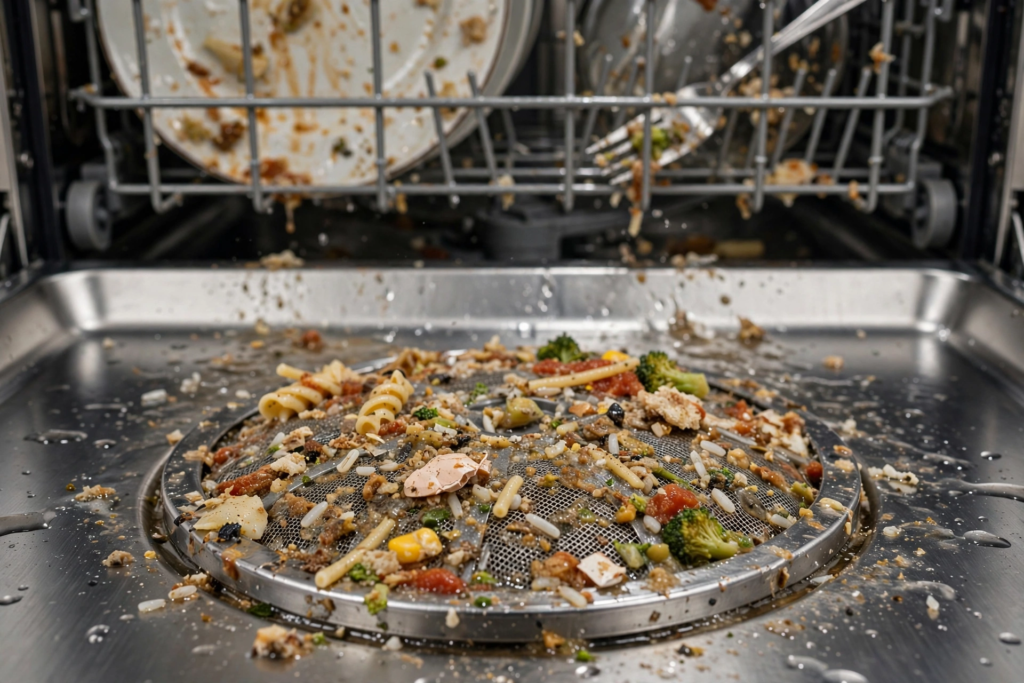
1. The Filter Is Clogged
Modern dishwashers use filters to capture food particles before water is recirculated.
When the filter becomes covered with debris, dirty water may circulate through the dishwasher instead of draining away properly. This can leave food residue on dishes after the cycle ends.
Cleaning the filter every few weeks can help maintain proper cleaning performance.
For detailed instructions, see our guide on How to Clean a Dishwasher Filter in 7 Easy Steps.
2. The Spray Arms Are Blocked
Spray arms contain small openings that distribute water throughout the dishwasher.
Over time, food particles, grease, and hard water minerals can block these openings. When that happens, water pressure decreases and some dishes may not receive enough spray.
If your dishwasher model allows spray arm removal, clean the openings with a wooden toothpick or soft brush.
For more details, see our guide on How to Clean Dishwasher Spray Arms Properly.
3. The Dishwasher Is Loaded Incorrectly
Even a properly working dishwasher cannot clean dishes that water cannot reach.
Common loading mistakes include:
- Placing bowls too close together
- Blocking spray arms with large pans
- Overloading racks
- Positioning tall items where they block water flow
Small changes in loading position can often improve cleaning performance.
4. The Detergent Is Not Working Properly
Dishwasher detergent can lose effectiveness when it becomes old or absorbs moisture.
Check that:
- The detergent is fresh
- It is stored in a dry location
- The dispenser opens completely during the cycle
Using more detergent is not always the solution. Follow the manufacturer’s recommendations for your dishwasher model and water conditions.
5. The Water Is Not Hot Enough
Dishwashers generally perform best when incoming water is around 120°F (49°C).
If water enters the dishwasher too cold, grease may not dissolve effectively and detergent performance can decrease.
Running the kitchen faucet with hot water briefly before starting the dishwasher may help provide hotter water during the initial fill.
The U.S. Department of Energy provides general guidance on household water heating practices that balance performance and energy use.
6. Hard Water Is Leaving Mineral Deposits
Hard water contains minerals that can gradually build up inside appliances and leave cloudy residue on dishes.
Signs of hard water problems include:
- White spots on glasses
- Cloudy dishes
- Mineral buildup around dishwasher parts
Possible solutions include:
- Using rinse aid as recommended
- Cleaning mineral deposits when needed
- Following manufacturer cleaning recommendations
7. Food Is Trapped Around the Drain Area
Small food particles can collect around the dishwasher drain even when the filter appears clean.
Inspect the drain area after removing the lower rack. Avoid forcing objects into openings because internal components can be damaged.
8. The Dishwasher Is Not Draining Properly
If dirty water cannot leave the dishwasher, cleaning performance can suffer.
Possible causes include:
- A blocked drain hose
- A kinked drain hose
- A blocked air gap (if installed)
- A garbage disposal knockout plug that was not removed after installation
Standing water after a cycle is a sign that the drainage system may need attention.
9. Internal Parts May Be Wearing Out
Sometimes routine cleaning is not enough.
Older dishwashers may experience problems with:
- Circulation pumps
- Water inlet valves
- Wash motors
- Damaged spray arms
If cleaning the filter, spray arms, and drain area does not improve performance, the issue may involve a mechanical component.
How to Get Your Dishwasher Cleaning Again
Follow these steps in order:
Step 1: Clean the dishwasher filter.
Step 2: Check spray arms for blocked holes.
Step 3: Inspect the drain area for trapped debris.
Step 4: Confirm that detergent is fresh and stored correctly.
Step 5: Adjust dish placement to improve water coverage.
Step 6: Run a dishwasher cleaning cycle using a cleaner recommended for your model.

Dishwasher designs vary between manufacturers. Always check the owner’s manual before removing internal parts or using cleaning products that are not recommended for your appliance.
How to Prevent Dirty Dishes in the Future
Regular maintenance can prevent many cleaning problems.
- Clean the filter every few weeks
- Check spray arms monthly
- Avoid overloading racks
- Use fresh detergent
- Refill rinse aid when needed
- Remove large food scraps before loading
- Run a dishwasher cleaning cycle periodically
When to Call a Professional
Some dishwasher problems require more than basic maintenance.
Consider professional service if:
- The dishwasher does not fill with enough water
- Spray arms do not rotate after cleaning
- Water remains after every cycle
- The circulation pump makes unusual noises
- Cleaning performance suddenly drops after years of normal operation
- There are leaks or electrical concerns
These symptoms may indicate damaged components that require repair or replacement.
FAQ
Why are my dishes still dirty after cleaning the filter?
The filter is only one part of the dishwasher cleaning system. Blocked spray arms, incorrect loading, detergent problems, hard water, or mechanical issues can also affect performance.
Should I rinse dishes before putting them in the dishwasher?
Most modern dishwashers work best when large food scraps are removed, but completely rinsing dishes is usually unnecessary. Many detergents are designed to work with some food residue remaining.
Can hard water affect dishwasher performance?
Yes. Mineral deposits from hard water can reduce cleaning effectiveness and leave cloudy residue on dishes and dishwasher components.
Why are the top rack dishes dirty but the bottom rack is clean?
This can happen when the upper spray arm is blocked, dishes are blocking water flow, or the dishwasher is not distributing water evenly.
How often should I clean my dishwasher?
For most households, cleaning the filter every few weeks and checking spray arms regularly helps maintain good performance.
Conclusion
When dishes remain dirty after a dishwasher cycle, the solution is often simpler than replacing the appliance.
Start with the filter, then check the spray arms, loading arrangement, detergent condition, and drainage system. Regular maintenance helps keep water circulation strong and improves long-term dishwasher performance.
How This Article Was Prepared
This article was prepared through AI-assisted research and human editorial review.
The research process included reviewing dishwasher manufacturer guidance, appliance maintenance information, and public resources related to water temperature, detergent performance, and hard water buildup.
The author did not personally test every dishwasher model. Cleaning procedures vary by manufacturer and appliance design. Always consult your owner’s manual before removing parts or changing maintenance procedures.
Sources reviewed:
- Dishwasher manufacturer manuals and maintenance guidance
- U.S. Department of Energy water heating guidance
- Public information about hard water and appliance care
Editorial Note:
Maintenance procedures can vary between dishwasher brands and models. If your appliance has persistent drainage problems, unusual noises, leaks, or electrical issues, consult a qualified appliance professional.

James L is the founder and editor of Clever Nest Lab, an independent home care website focused on practical, research-based household advice. He reviews manufacturer guidance, official documentation, and reliable sources to turn useful information into clear, practical guides.
Clever Nest Lab distinguishes between first-hand testing and research-based recommendations. The goal is to help readers better understand common household problems, follow safer cleaning and maintenance practices, and make informed decisions.