Opening the dishwasher only to find white spots or a chalky film on your dishes can be frustrating. The residue may appear on glasses, plates, silverware, or even the inside walls of the dishwasher.
The good news is that this problem is usually easy to solve once you know what’s causing it. In most homes, the issue comes down to mineral deposits from hard water, detergent problems, or poor dishwasher maintenance.
This guide explains why your dishwasher leaves white residue, how to identify the real cause, and the best ways to fix it without replacing your appliance.
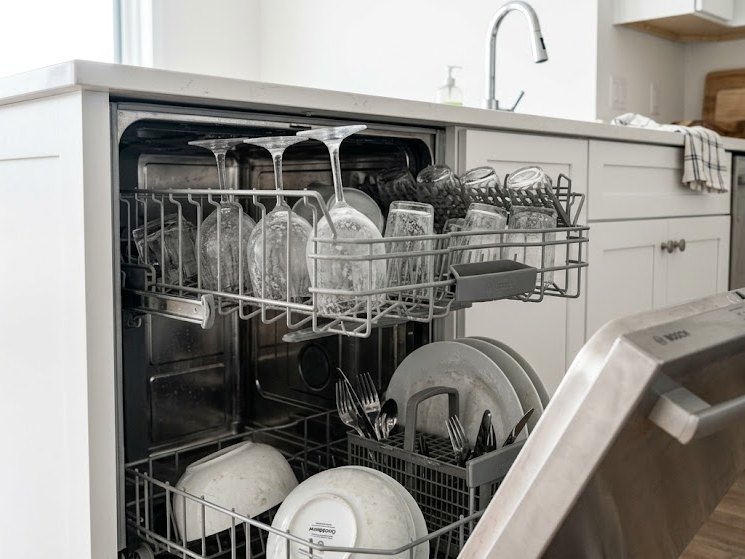
What Does the White Residue Look Like?
Before trying different cleaning methods, it’s helpful to identify what you’re actually seeing.
White residue isn’t always the same problem.
| Appearance | Most Likely Cause |
|---|---|
| Chalky white film | Hard water minerals |
| Powdery residue | Too much detergent |
| White spots on glass | Calcium deposits |
| Cloudy glasses | Mineral buildup or glass etching |
| White buildup inside dishwasher | Limescale accumulation |
A quick test can help.
If the residue wipes away easily with vinegar, hard water is usually the culprit. If it feels like powder and washes off with water, excess detergent is more likely.
The Most Common Cause: Hard Water
Hard water is responsible for most cases of white residue.
If your dishwasher leaves white residue on your plates and glasses, hard water contains dissolved minerals like calcium and magnesium. During the wash cycle, water evaporates but these minerals stay behind, leaving a white coating on dishes and inside the dishwasher.
The harder your water, the faster these deposits build up.
Common signs include:
- White spots on glasses
- Chalky plates
- White deposits around the heating element
- Mineral buildup around the spray arms
- Cloudy dishwasher walls
Homes supplied by well water often experience this problem more frequently, but many municipal water systems also have moderately hard water.
How to Confirm Hard Water
Try placing a few drops of white vinegar on the residue.
If it dissolves within a minute or two, mineral deposits are almost certainly the cause.
This simple test can save you from replacing detergent or dishwasher parts unnecessarily.
Too Much Dishwasher Detergent
More detergent doesn’t always mean cleaner dishes.
Modern dishwasher detergents are highly concentrated. Using more than recommended is another common reason why your dishwasher leaves white residue on dishes, leaving behind undissolved detergent that dries into a white powder.
This is especially common when:
- The dishwasher isn’t fully loaded
- Water temperature is too low
- The wash cycle is too short
- Soft water is used with the same detergent amount
If you recently switched detergents and the problem started soon afterward, reducing the amount may solve it immediately.
Low Rinse Aid Can Make Residue Worse
Rinse aid doesn’t actually clean dishes.
Instead, it helps water sheet off surfaces instead of forming droplets.
Without enough rinse aid:
- Water dries slowly.
- Minerals stay behind.
- Glasses develop white spots.
- Plastic containers hold more water after washing.
Many homeowners overlook this because the dishwasher still seems to clean normally.
Simply refilling the rinse aid dispenser often makes a noticeable difference after just one or two wash cycles.
A Dirty Dishwasher Can Leave Deposits Behind
Ironically, a dishwasher also needs regular cleaning.
Over time, grease, food particles, detergent residue, and hard water minerals build up inside the appliance.
These deposits can circulate during every wash cycle.
Check these areas first:
- Filter
- Spray arms
- Door gasket
- Drain
- Heating element
- Interior walls
Even a partially clogged spray arm can reduce cleaning performance and contribute to residue.
Spray Arms May Be Partially Blocked
Dishwasher spray arms contain small holes that distribute water throughout the machine.
Mineral deposits can gradually clog these openings.
When that happens:
- Water pressure drops.
- Some dishes receive less cleaning.
- Detergent doesn’t rinse away completely.
- White residue becomes more noticeable.
Remove the spray arms if your model allows it and inspect the holes.
A wooden toothpick works well for clearing mineral buildup without damaging the plastic.
Water Temperature Matters More Than You Think
Dishwasher detergent is designed to dissolve in hot water.
If the incoming water isn’t hot enough, detergent may not fully dissolve.
The result is often:
- White powder
- Cloudy glasses
- Poor cleaning performance
- Greasy dishes
Most dishwasher manufacturers recommend incoming water around 120°F (49°C).
Running the kitchen faucet until the water becomes hot before starting the dishwasher can improve results, especially during winter.
Could It Be Etched Glass Instead?
Sometimes what looks like residue isn’t residue at all.
Glass etching is permanent damage caused by repeated exposure to overly aggressive detergents, very soft water, or high temperatures.
Unlike mineral deposits, etched glass won’t wipe away.
A simple comparison helps:
| White Residue | Glass Etching |
|---|---|
| Can be removed | Permanent |
| Feels rough | Feels smooth |
| Dissolves with vinegar | No change |
| Usually from hard water | Usually from chemical wear |
If vinegar doesn’t improve cloudy glasses, etching may be the real issue.
Unfortunately, etched glass cannot be repaired.
How to Remove White Residue from Your Dishwasher
When your dishwasher leaves white residue due to hard water buildup, cleaning the dishwasher itself should be your first step.
A simple deep-clean routine includes:
- Empty the dishwasher completely.
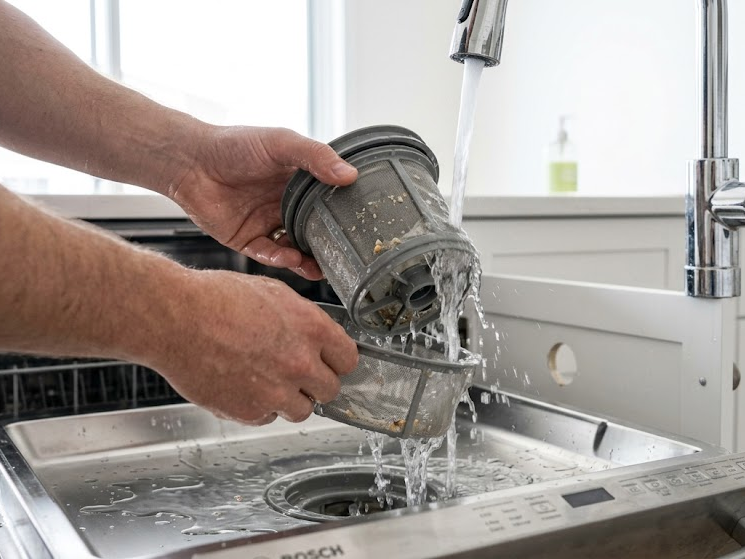
- Remove and rinse the filter.
- Clean the spray arms.
- Place a dishwasher-safe bowl filled with white vinegar on the top rack.
- Run the hottest cycle without detergent.
- Sprinkle baking soda across the bottom and run a short hot cycle afterward.
This combination helps dissolve mineral deposits, remove odors, and restore cleaning performance.
How to Prevent White Residue from Coming Back
Once you’ve removed the existing residue, a few simple habits can help keep your dishwasher performing at its best.
Use the Right Amount of Detergent
Many people assume more detergent means cleaner dishes, but that’s rarely true.
Always follow the detergent manufacturer’s recommendations and adjust the amount if your water is very soft or very hard. If you’re using detergent pods, avoid adding extra detergent unless your dishwasher’s manual specifically recommends it.
Keep the Rinse Aid Dispenser Filled
Rinse aid reduces water spots by helping water drain off dishes more evenly.
Check the dispenser every few weeks, especially if you run your dishwasher daily. Many newer dishwashers have an indicator light that lets you know when it’s time to refill.
Clean the Filter Every Month
The dishwasher filter traps food particles before they can circulate through the wash cycle.
A clogged filter can reduce cleaning performance and leave residue on dishes.
A monthly rinse under warm water is usually enough for most households. If you cook frequently or don’t rinse dishes before loading, you may need to clean it more often.
Run a Cleaning Cycle Regularly
Even if your dishwasher appears clean, minerals and grease slowly build up inside.
A good maintenance routine is:
- Run a vinegar cleaning cycle once a month.
- Deep clean the filter monthly.
- Inspect the spray arms every few months.
- Wipe the door seal occasionally.
These small tasks take only a few minutes and can significantly extend your dishwasher’s lifespan.

Should You Install a Water Softener?
If your dishwasher leaves white residue even after multiple cleanings and you constantly battle hard water, a water softener may be worth considering.
A whole-house water softener can help reduce:
- White residue on dishes
- Limescale inside appliances
- Mineral buildup on faucets
- Soap scum in showers
- Reduced efficiency in water heaters
However, it’s not the right solution for everyone.
A Water Softener May Be Worth It If:
- Your water is consistently classified as hard or very hard.
- White residue returns quickly after cleaning.
- Multiple appliances show mineral buildup.
- You replace dishwashers, coffee makers, or kettles more often than expected because of scale.
It May Not Be Necessary If:
- The problem only appeared recently.
- You simply need to adjust detergent or rinse aid.
- Your dishwasher hasn’t been cleaned in months.
- Your local water supply is only moderately hard.
If you’re unsure, consider testing your home’s water hardness first. An inexpensive test kit can help you determine whether hard water is actually the source of the problem.
Common Mistakes That Make White Residue Worse
Many homeowners unintentionally make the problem harder to solve.
Avoid these common mistakes:
- Using more detergent than recommended.
- Skipping rinse aid.
- Ignoring the dishwasher filter.
- Running very short wash cycles.
- Loading dishes so tightly that water can’t circulate.
- Never cleaning the spray arms.
- Assuming every cloudy glass is caused by hard water.
One overlooked mistake is mixing different detergent brands during the same cleaning cycle. Different formulations can leave unexpected residue, especially in areas with hard water.
When to Call a Professional
Most cases of white residue can be resolved with routine maintenance and a few adjustments.
However, professional service may be necessary if:
- Residue appears immediately after every wash despite proper cleaning.
- The dishwasher isn’t heating the water.
- Spray arms aren’t spinning correctly.
- The appliance isn’t draining completely.
- Mineral buildup repeatedly clogs internal components.
- Error codes accompany poor cleaning performance.
A technician can test the heating element, circulation pump, water inlet valve, and other components that aren’t easily accessible.
Final Thoughts
If your dishwasher leaves white residue, don’t assume the appliance is failing.
In most cases, the cause is surprisingly simple: hard water minerals, excessive detergent, insufficient rinse aid, or a dishwasher that needs a thorough cleaning.
Start with the easiest fixes first. Clean the filter, inspect the spray arms, refill the rinse aid dispenser, and run a cleaning cycle with white vinegar. These steps solve the problem for many households without the need for expensive repairs.
If the residue keeps returning despite regular maintenance, testing your water hardness may reveal that a long-term solution—such as adjusting your detergent or installing a water softener—is the best investment.
A little preventative care goes a long way toward keeping your dishes clear, your dishwasher efficient, and your kitchen routine frustration-free.
By following these simple steps, you can often identify the cause of white residue and improve your dishwasher’s cleaning performance.
How This Article Was Prepared
The research process included:
- Reviewing dishwasher manufacturer cleaning guidance and hard water information
- Comparing recommendations from detergent manufacturers and water quality agencies
- Organizing symptoms into a diagnosis table to help readers identify the cause
The author did not personally test every method described here. Information may vary by dishwasher model, water hardness, and detergent formula. Always check your dishwasher manual before cleaning.
Sources reviewed:
- Dishwasher manufacturer manuals (filter cleaning, spray arm maintenance)
- Public water hardness guidance
- Detergent manufacturer dosage instructions
Frequently Asked Questions
Why does my dishwasher leave white residue only on glassware?
Glass surfaces make it obvious when your dishwasher leaves white residue, as mineral deposits stand out more on clear glass than on ceramic or stainless steel.
Can white vinegar damage my dishwasher?
For many dishwashers, an occasional cleaning cycle with diluted white vinegar is generally considered acceptable, but manufacturer instructions should come first. Avoid frequent or prolonged use because some materials and seals may not tolerate repeated exposure well. However, avoid using vinegar too frequently, as repeated exposure over long periods may affect certain rubber seals. Once a month is typically sufficient for routine maintenance.
Is baking soda enough to remove white residue?
Baking soda helps eliminate odors and loosen light buildup, but it doesn’t dissolve hard water minerals as effectively as white vinegar. Using both in separate cleaning cycles often provides the best results.
Why are my dishes still cloudy after cleaning the dishwasher?
If vinegar doesn’t remove the cloudiness, your glasses may be permanently etched rather than covered with mineral deposits. Etching cannot be reversed and usually results from prolonged exposure to harsh detergents or improper wash conditions.
How often should I clean my dishwasher?
For most households, cleaning the filter monthly and running a cleaning cycle every four to six weeks helps prevent mineral buildup and maintain peak performance.
Can hard water shorten my dishwasher’s lifespan?
Yes. Over time, mineral deposits can clog spray arms, reduce heating efficiency, restrict water flow, and force the dishwasher to work harder. Regular maintenance and, if necessary, water treatment can help extend the appliance’s service life.

James L is the founder and editor of Clever Nest Lab, an independent home care website focused on practical, research-based household advice. He reviews manufacturer guidance, official documentation, and reliable sources to turn useful information into clear, practical guides.
Clever Nest Lab distinguishes between first-hand testing and research-based recommendations. The goal is to help readers better understand common household problems, follow safer cleaning and maintenance practices, and make informed decisions.