Hard water can slowly leave mineral deposits inside a dishwasher, especially in areas where water repeatedly evaporates during wash cycles.
These deposits are usually caused by minerals such as calcium and magnesium that remain after water dries. Over time, they can collect on dishwasher surfaces and affect cleaning performance.
Common areas where hard water buildup appears include:
- Interior walls
- Spray arms
- Heating element
- Filter housing
- Door gasket
- Dishwasher racks
- Detergent dispenser
- Drain area
Unlike food residue, mineral deposits do not always rinse away easily. Regular maintenance and proper descaling can help prevent buildup from becoming a larger problem.
The Short Answer
The best way to remove hard water buildup inside a dishwasher is to:
- Remove loose food debris first.
- Clean the filter and spray arms.
- Use a dishwasher descaler according to the manufacturer’s instructions.
- Wipe away loosened mineral residue.
- Maintain the dishwasher regularly to prevent new deposits.
The correct cleaning method depends on your dishwasher model and the type of buildup present.
Where Hard Water Deposits Usually Form
| Area | Common Build-Up | Difficulty | Maintenance |
|---|---|---|---|
| Spray arms | Mineral deposits | Easy | Check monthly |
| Filter | Food particles + minerals | Easy | Clean regularly |
| Heating element | White scale | Moderate | Inspect when needed |
| Door gasket | Mineral film | Easy | Wipe monthly |
| Interior walls | Chalky residue | Easy | Clean periodically |
| Detergent dispenser | Mineral residue | Easy | Inspect regularly |
Hidden areas around the spray arm base and filter housing may collect buildup because water does not always reach these surfaces evenly.
Why Hard Water Leaves Mineral Deposits
Hard water contains dissolved minerals, mainly calcium and magnesium. According to the U.S. Geological Survey (USGS), hard water contains dissolved minerals such as calcium and magnesium that can leave deposits as water evaporates. Learn more in Hardness of Water.
During repeated dishwasher cycles, water is heated, sprayed, and dried. Over time, mineral residue can accumulate on internal surfaces.
Hard water buildup can affect dishwasher performance by:
- Reducing water flow through spray holes
- Leaving cloudy residue on dishes
- Reducing detergent effectiveness
- Creating visible white deposits inside the appliance
7 Ways to Remove Hard Water Build-Up Inside a Dishwasher
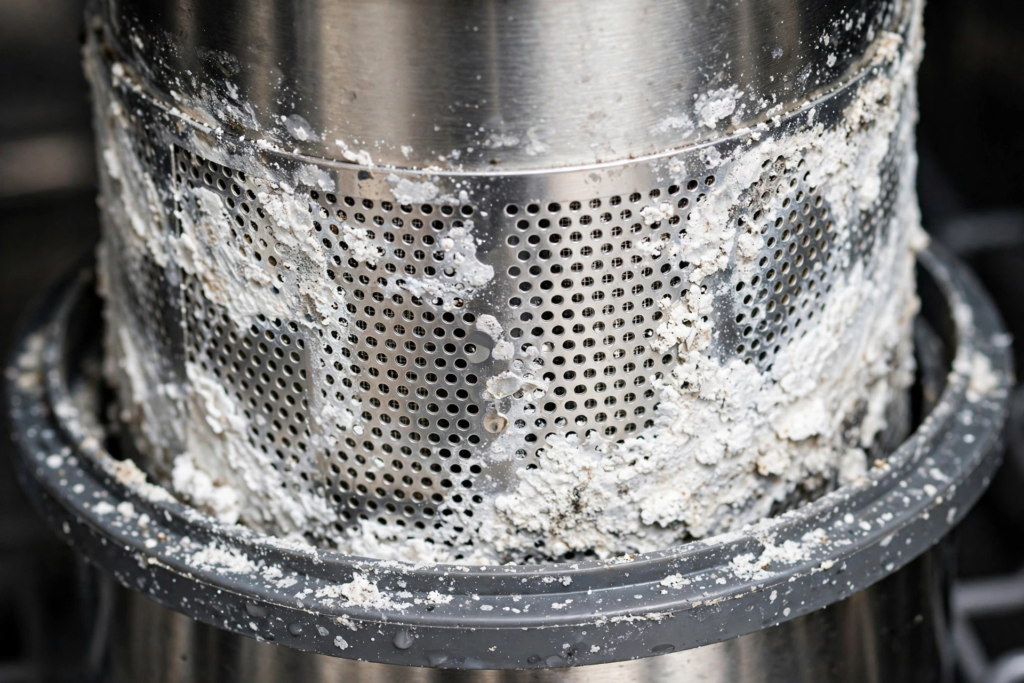
1. Clean the Filter First
Before removing mineral deposits, clean the dishwasher filter.
Food particles trapped in the filter can combine with mineral residue and reduce cleaning performance.
Remove the filter according to the owner’s manual, then rinse away debris with warm water.
For a complete walkthrough, read How to Clean a Dishwasher Filter in 7 Easy Steps.
2. Use a Dishwasher Descaler
Dishwasher descalers are designed to dissolve mineral deposits caused by hard water.
Always follow:
- The cleaner manufacturer’s instructions
- Your dishwasher manufacturer’s recommendations
- The correct amount and cleaning cycle settings
Using more cleaning product than recommended does not necessarily improve results and may leave residue behind.
3. Clean the Spray Arms
Mineral deposits can block the small openings in dishwasher spray arms.
Blocked spray holes reduce water coverage and may leave some dishes dirty after a cycle.
If your dishwasher model allows spray arm removal:
- Remove the spray arms carefully
- Clear openings with a wooden toothpick or soft brush
- Rinse the inside with warm water
For more details, see our guide on How to Clean Dishwasher Spray Arms Properly.
4. Wipe the Interior Walls
After descaling, loosened mineral residue may remain on dishwasher surfaces.
Use a soft microfiber cloth to wipe:
- Interior walls
- Door edges
- Rack surfaces
Avoid abrasive scrubbers that can scratch stainless steel or coated surfaces.
5. Check the Heating Element Area
The heating element is exposed to repeated heating and water evaporation, which can contribute to mineral deposits over time.
Do not scrape thick buildup aggressively because the surface can be damaged.
If deposits remain after cleaning, follow the dishwasher manufacturer’s recommended cleaning procedure.
6. Clean the Door Gasket and Edges
Mineral residue can collect around door seals and edges where water remains after cycles.
Use a soft cloth or soft toothbrush to gently clean these areas.
Allowing the dishwasher interior to dry completely after cleaning may help reduce remaining moisture.
7. Prevent Future Hard Water Build-Up
Once mineral deposits are removed, regular maintenance can slow future buildup.
Helpful habits include:
- Cleaning the filter regularly
- Checking spray arms for blocked openings
- Using rinse aid if recommended by the manufacturer
- Running dishwasher cleaning cycles when needed
- Using the recommended detergent amount
How to Remove Hard Water Build-Up Step by Step
Step 1: Empty the dishwasher completely.
Step 2: Remove and clean the filter.
Step 3: Inspect spray arms for mineral buildup or blocked holes.
Step 4: Run a descaling cycle using a product recommended for your dishwasher.
Step 5: Wipe interior surfaces after the cleaning cycle.
Step 6: Allow the dishwasher interior to dry completely.
How to Prevent Hard Water Build-Up
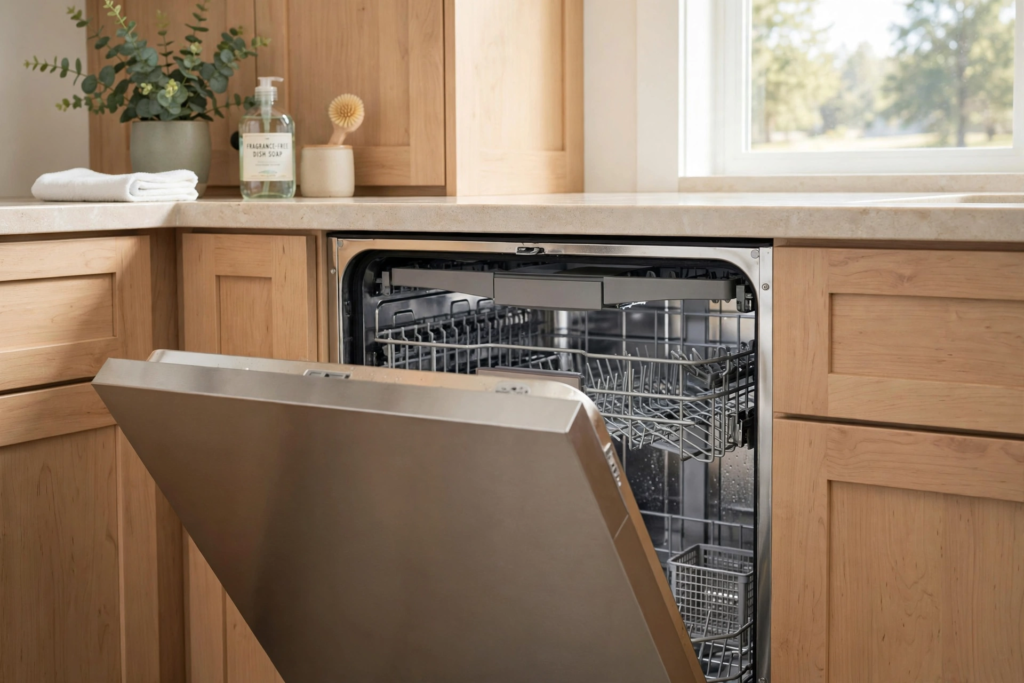
Regular maintenance helps prevent mineral deposits from returning quickly.
- Clean the dishwasher filter every few weeks
- Inspect spray arms regularly
- Use the correct amount of detergent
- Refill rinse aid when needed
- Clean the door gasket periodically
- Check water hardness if buildup returns quickly
Homes with very hard water may require more frequent descaling than homes with softer water.
When to Call a Professional
Hard water is not always the only cause of dishwasher problems.
Consider professional service if:
- Mineral buildup returns unusually quickly
- The dishwasher does not drain properly
- Spray arms no longer rotate correctly
- Heating performance appears reduced
- You notice leaks or unusual operating noises
Persistent problems may indicate a mechanical issue rather than simple mineral buildup.
FAQ
Can I use white vinegar to remove hard water buildup from a dishwasher?
Some homeowners use white vinegar as a household cleaning method, but recommendations vary between dishwasher manufacturers.
Always check your owner’s manual before using vinegar or any cleaning product inside your appliance.
Why does my dishwasher still have white residue after cleaning?
Older mineral deposits may require more than one cleaning cycle. White residue can also be caused by detergent issues, rinse aid problems, or water hardness.
How often should I descale my dishwasher?
The frequency depends on your water hardness and dishwasher usage. Homes with hard water may need more frequent descaling, while softer water areas may require less frequent cleaning.
Does rinse aid help with hard water stains?
Rinse aid helps water flow off surfaces more evenly, which can reduce water spots and mineral residue on dishes.
Can hard water damage a dishwasher?
Mineral buildup usually develops gradually. Heavy deposits may reduce cleaning performance by blocking spray openings or affecting water flow.
Conclusion
Hard water buildup inside a dishwasher can reduce cleaning performance and leave behind white mineral residue.
The most effective approach is to clean the filter, inspect spray arms, remove mineral deposits with an appropriate descaling method, and maintain the appliance regularly.
Because dishwasher designs vary between manufacturers, always check your owner’s manual before removing parts or using cleaning products.
If white residue continues after cleaning, the issue may be related to water hardness, detergent performance, or another dishwasher component.
How This Article Was Prepared
This article was prepared through AI-assisted research and human editorial review.
The research process included reviewing dishwasher manufacturer maintenance guidance, appliance care information, and public resources about hard water minerals.
The author did not personally test every dishwasher model. Cleaning procedures vary by manufacturer, appliance design, and water conditions. Always consult your owner’s manual before using cleaning products or removing dishwasher components.
Sources reviewed:
- U.S. Geological Survey (USGS) – information about hard water and dissolved minerals
- Dishwasher manufacturer maintenance guidance
- Public information about appliance care and water hardness
Editorial Note:
Avoid abrasive tools that may scratch dishwasher surfaces. If mineral deposits return quickly or the appliance shows signs of leaks, unusual noises, or mechanical problems, consult a qualified appliance professional.

James L is the founder and editor of Clever Nest Lab, an independent home care website focused on practical, research-based household advice. He reviews manufacturer guidance, official documentation, and reliable sources to turn useful information into clear, practical guides.
Clever Nest Lab distinguishes between first-hand testing and research-based recommendations. The goal is to help readers better understand common household problems, follow safer cleaning and maintenance practices, and make informed decisions.