Why Do Dishwasher Spray Arms Get Clogged?
Dishwasher spray arms constantly force water through dozens of tiny holes. Over time, small food particles, grease, hard water minerals, and even pieces of broken glass can block those openings.
When enough holes become clogged, water pressure drops and dishes don’t receive enough spray to wash away food.
Greasy residue acts like glue, trapping tiny food particles inside the spray arm openings and making simple rinsing much less effective.
Dishwasher filters also trap a surprising amount of food, which can contribute to spray arm blockages if not cleaned regularly.
Quick Diagnosis
| Problem | Likely Cause | Difficulty | Fix |
|---|---|---|---|
| Dishes still dirty | Clogged spray holes | Easy | Clean holes |
| White residue | Hard water minerals | Easy | Soak in vinegar solution |
| Weak water spray | Internal blockage | Moderate | Flush spray arm thoroughly |
| Spray arm won’t spin | Food debris or obstruction | Easy | Remove blockage |
| Bad odor | Grease buildup | Easy | Deep clean spray arms and filter |
The Short Answer
Cleaning dishwasher spray arms usually involves just a few simple steps:
- Empty the dishwasher.
- Remove the lower rack.
- Take out the spray arms if they’re removable.
- Clean each spray hole carefully.
- Flush the inside with warm water.
- Remove mineral buildup if needed.
- Reinstall everything and run a hot cycle.
Regular maintenance of this kind often restores cleaning performance effectively.
7 Steps to Clean Dishwasher Spray Arms Properly
Step 1. Turn Off the Dishwasher
Make sure the dishwasher has finished its cycle and has cooled down. Avoid working on the appliance while it’s actively running.
Step 2. Remove the Lower Dish Rack
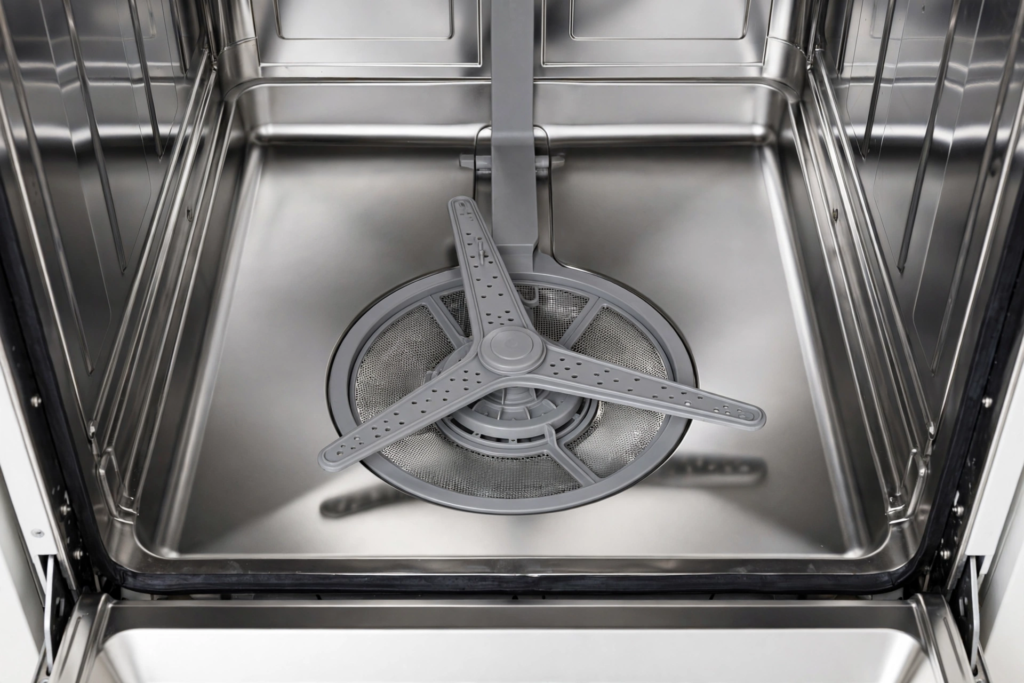
Pull out the bottom rack completely. This gives clear access to the lower spray arm, which is usually the easiest one to remove.
Step 3. Remove the Spray Arms
Every dishwasher model is slightly different. Some spray arms simply pull upward, while others twist off with a locking nut or plastic cap. If unsure, check the owner’s manual before forcing anything.
Whirlpool also recommends checking your model’s instructions before removing spray arms, since the attachment method can vary by dishwasher. See the official guide: Whirlpool – Spray Arm Not Working.
The small locking tab can be confusing for first-time removal.
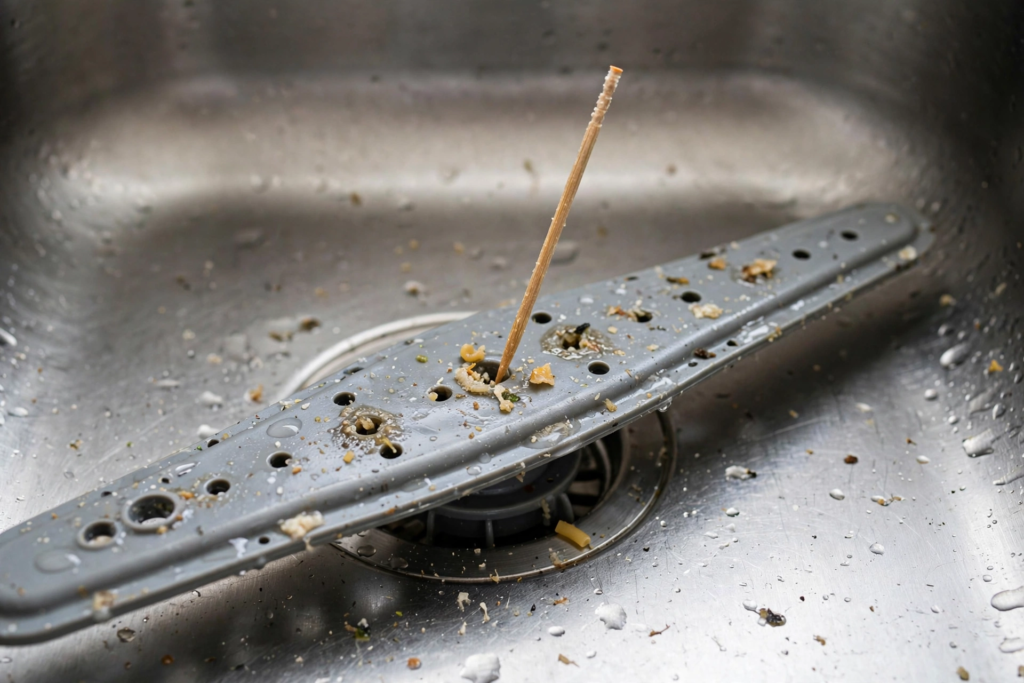
Step 4. Clear Every Spray Hole
Use one of these tools:
- Wooden toothpick
- Soft nylon brush
- Plastic dental pick
- Thin piece of flexible plastic
Avoid using metal needles whenever possible. Metal can enlarge or damage the tiny spray holes, affecting the spray pattern. Turn the spray arm over and inspect every opening carefully.
Step 5. Flush Out the Inside
After clearing the holes, run warm water through both ends of the spray arm. Shake it gently while rinsing to remove loose debris trapped inside.
If water doesn’t flow freely, continue flushing until the blockage comes out.
Step 6. Remove Hard Water Deposits
If white mineral buildup is visible, soak the spray arm for about 20 to 30 minutes in a mixture of :
Hard water deposits can affect more than just the spray arms. If you’re also seeing a white film on your dishes or inside the appliance, our guide on why dishwashers leave white residue explains the most common causes and how to fix them.
- 1 part white vinegar
- 1 part warm water
For severe mineral deposits, gently scrubbing with a soft toothbrush afterward can help. Leaving the door cracked open for an hour after cleaning helps the inside dry more completely.
Step 7. Reinstall and Test
Secure each spray arm exactly as it was before. Before replacing the racks, spin each spray arm by hand. It should rotate smoothly without rubbing against anything.
Run an empty hot-water cycle to confirm everything works properly.
Common Mistakes to Avoid
Many people accidentally make the problem worse. Here are the most common mistakes:
- Using metal wire that enlarges spray holes
- Forgetting to flush debris from inside the spray arm
- Reinstalling the spray arm incorrectly
- Ignoring the dishwasher filter
- Skipping regular maintenance
A clogged filter often sends food particles right back into the spray arms, so cleaning both parts together saves time later.
How Often Should You Clean Dishwasher Spray Arms?
A good maintenance schedule looks like this:
- Check spray holes every month.
- Deep clean every 2–3 months.
- Clean sooner if you have hard water.
- Inspect after washing heavily soiled cookware.
Regular maintenance keeps water flowing evenly and helps detergent work the way it’s designed to.
When Cleaning Isn’t Enough
Sometimes clean spray arms don’t solve the problem. Additional troubleshooting may be needed if:
- Water isn’t entering the dishwasher properly.
- The circulation pump has failed.
- Spray arms no longer spin during the cycle.
- The spray arm is cracked or damaged.
- Water pressure in the home is unusually low.
If cleaning performance still hasn’t improved after thorough cleaning, it may be time to schedule service or replace damaged components.
FAQ
Can I clean dishwasher spray arms without removing them?
Sometimes, yes. The outside and visible holes can be wiped, but removing them allows flushing debris from the inside, which is often where the real blockage is.
Can I use vinegar every time?
For many dishwashers, white vinegar is suitable for soaking mineral deposits. However, checking the owner’s manual is recommended because some manufacturers have specific cleaning recommendations.
Why are my dishes still dirty after cleaning the spray arms?
The filter, drain, circulation pump, water inlet valve, or detergent could also be contributing. Spray arms are only one part of the cleaning system.
What should I never use to clean spray arm holes?
Avoid nails, drill bits, sewing needles, or anything that can permanently enlarge the openings. Wooden or plastic tools are much safer.
How long does the entire cleaning process take?
Most people can finish the job in about 20 to 30 minutes, depending on how much buildup has accumulated.
Conclusion
A dishwasher that suddenly stops cleaning dishes effectively can be frustrating. Fortunately, clogged spray arms are one of the easiest problems to fix.
Start by removing the spray arms, clearing every spray hole, and flushing out the inside thoroughly. Then clean the filter at the same time since the two parts work together. A little maintenance every couple of months can keep a dishwasher running efficiently and help avoid bigger problems later.
How This Article Was Prepared
This article was prepared through AI-assisted research and human editorial review.
The research process included reviewing dishwasher manufacturer guidance for spray arm removal and cleaning and general maintenance recommendations.
The author did not personally test every dishwasher model. Procedures vary by manufacturer and water conditions. Always check your owner’s manual before removing parts.
Sources reviewed:
Dishwasher manufacturer manuals – spray arm maintenance
Public guidance on hard water mineral deposits
Editorial Note: Avoid using metal tools that can enlarge spray holes. Test any cleaning method on a small area first. If the dishwasher shows signs of pump failure or persistent drainage issues, consult a professional.

James L is the founder and editor of Clever Nest Lab, an independent home care website focused on practical, research-based household advice. He reviews manufacturer guidance, official documentation, and reliable sources to turn useful information into clear, practical guides.
Clever Nest Lab distinguishes between first-hand testing and research-based recommendations. The goal is to help readers better understand common household problems, follow safer cleaning and maintenance practices, and make informed decisions.