If your dishwasher smells bad, it is supposed to make your kitchen cleaner, not fill it with an unpleasant smell every time you open the door. If yours has started smelling musty, sour, or even like rotten eggs, you’re definitely not the only one.
The good news is that most dishwasher odors don’t mean the appliance is broken. In many cases, a little cleaning and a few simple habits are enough to solve the problem.
Why Does My Dishwasher Smell Bad?
The Short Answer
Most dishwasher odors come from food residue, grease, moisture, or drainage problems. Here are the most common causes:
- Dirty dishwasher filter
- Food trapped around the drain
- Grease buildup inside the tub
- Mold or mildew growth
- Standing water
- Clogged spray arms
- Dirty door gasket
- Garbage disposal issues
- Sewer or plumbing problems
Based on common maintenance guides, the filter and drain are frequently reported as the most common sources.
| Cause | How Common | Easy to Fix? | Typical Smell |
|---|---|---|---|
| Dirty Filter | Very High | ✅ Yes | Sour, rotten food |
| Drain Debris | High | ✅ Yes | Musty |
| Grease Buildup | High | ✅ Yes | Stale, oily |
| Mold | Medium | ✅ Yes | Mildew |
| Standing Water | Medium | Sometimes | Rotten water |
| Spray Arms | Medium | Yes | Musty |
| Door Gasket | Medium | Yes | Moldy |
| Garbage Disposal | Low | Sometimes | Food waste |
| Plumbing Issue | Low | No | Sewer gas |
Why Dishwashers Develop Odors
Dishwashers create the perfect environment for odors. Warm temperatures, leftover moisture, tiny food particles, and soap residue all combine to create an ideal place for bacteria to grow.
Greasy residue acts like glue, so rinsing alone often leaves the smell behind. Even dishes that look clean can leave behind a thin layer of grease that slowly collects food particles over time.
Many homeowners find more trapped food than expected when they remove the filter for the first time.
9 Common Reasons Your Dishwasher Smells Bad
1. The Filter Is Full of Food Debris (Most Common)
Most modern dishwashers have a removable filter that catches food particles before they enter the drain. If it isn’t cleaned regularly, leftover food begins to rot and creates an unpleasant odor.
Remove the filter according to your owner’s manual, rinse it under warm water, and gently scrub it with a soft brush.
2. Food Is Trapped Around the Drain
Small pieces of food can settle around the drain opening even if the filter looks clean. These bits slowly decompose and create sour smells.
Check the drain carefully after removing the bottom rack and filter.
3. Grease Has Built Up Inside (Easy to Miss)
The inside walls of the dishwasher may look clean, but grease can build up over months of daily use.
Wipe the interior with a damp microfiber cloth and a manufacturer-approved cleaner if needed.
4. Mold or Mildew Is Growing
Moisture trapped inside a closed dishwasher creates a perfect environment for mold.
Pay special attention to corners, the detergent dispenser, and the rubber seals around the door.
5. Standing Water Isn’t Draining Properly
Water should completely drain after every cycle. If it doesn’t, bacteria quickly multiply.
If you installed a new garbage disposal recently, the dishwasher knockout plug might still be inside, preventing drainage.
If standing water remains after cleaning the filter, inspect the drain hose for kinks or blockages.
6. The Spray Arms Are Clogged
Tiny holes in the spray arms can become blocked by food particles or hard water deposits.
If you’re not sure how to remove buildup safely, our guide on how to clean dishwasher spray arms walks through the process step by step.
Remove the spray arms if your model allows it and clean the openings with a wooden toothpick.
Sometimes several small issues combine to create one big odor problem.
7. The Door Gasket Needs Cleaning
The rubber gasket around the door traps moisture, grease, and tiny food particles.
Wipe it regularly using a soft cloth, especially around the bottom edge where debris often collects.
8. Your Garbage Disposal Is Causing the Smell
If your dishwasher drains through the garbage disposal, unpleasant odors inside the disposal can travel back into the dishwasher.
Run the disposal with plenty of cold water before starting a dishwasher cycle.
9. Sewer Gas or Plumbing Problems
If the smell resembles sewage or rotten eggs and returns immediately after cleaning, the issue may not be inside the dishwasher at all.
A damaged drain hose, dry trap, or plumbing vent problem may require professional attention.
How to Get Rid of Dishwasher Odors
- Empty and rinse the dishwasher filter.
- Remove food from the drain area.
- Clean the spray arms.
- Wipe the interior walls and door gasket.
- Run a cleaning cycle following your dishwasher manufacturer’s recommendations.
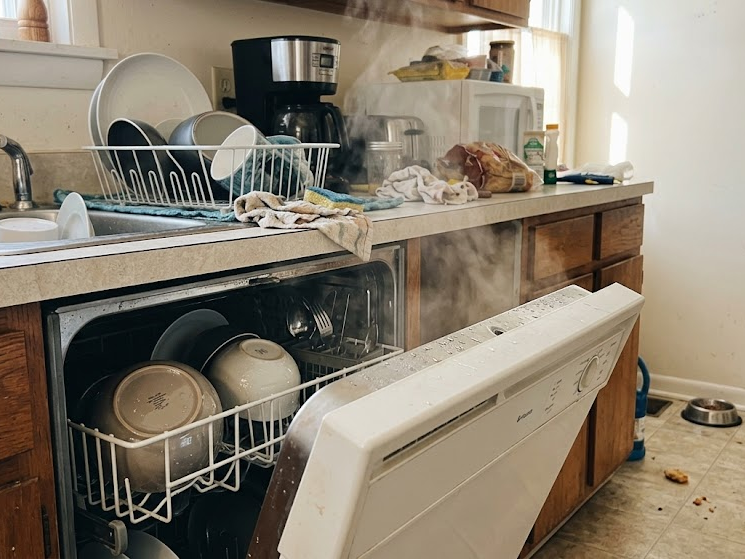
- Leave the door slightly open after the cycle finishes so moisture can escape.
Leaving the door slightly open after a cycle can help reduce moisture and mildew growth.
How to Prevent Dishwasher Smells
- Clean the filter every few weeks.
- Remove large food scraps before loading dishes.
- Wipe the door gasket regularly.
- Keep the spray arms clean.
- Run a dishwasher cleaner periodically if recommended by the manufacturer.
- Leave the door slightly open after each cycle.
- Check the drain area for trapped debris once a month.
When to Call a Professional
Some odors won’t disappear with routine cleaning. If you’ve thoroughly cleaned the filter, drain, spray arms, and gasket but the smell keeps returning, there could be a plumbing or mechanical issue.
It’s also worth calling a technician if you notice standing water after every cycle, repeated drainage errors, leaks, or a persistent sewer gas smell. Those problems often require tools or repairs beyond normal home maintenance.
How This Article Was Prepared
This article was prepared through AI-assisted research and human editorial review.
The research process included:
- Reviewing dishwasher manufacturer cleaning guidance and maintenance documentation
- Comparing recommendations for filter care, spray arm maintenance, and odor prevention
- Organizing common symptoms into a diagnosis table to help readers identify the cause
The author did not personally test every method described here. Information may vary by dishwasher model, plumbing configuration, and home conditions. Always check your dishwasher manual before cleaning or disassembling parts.
Sources reviewed:
- Major dishwasher manufacturer manuals (filter cleaning, spray arm care)
- Plumbing safety guidelines regarding sewer gas and drainage
- General appliance maintenance documentation
FAQ
Can I use vinegar to clean my dishwasher?
For many dishwashers, yes. An occasional cleaning cycle with white vinegar is often suggested, but check your owner’s manual because some manufacturers discourage it.
How often should I clean the dishwasher filter?
For most households, every two to four weeks works well. If you cook often or don’t rinse dishes before loading them, you may need to clean it more frequently.
Why does my dishwasher smell like rotten eggs?
That smell is often linked to bacteria, standing water, or even sewer gas. Start by cleaning the filter and checking the drain before assuming it’s a plumbing problem.
Should I leave the dishwasher door open after every cycle?
Yes, if possible. Allowing the interior to dry reduces moisture, making it much harder for mold and mildew to grow.
Is a bad smell a sign my dishwasher is failing?
Usually not. Most unpleasant odors come from buildup or poor drainage rather than a major mechanical failure.
Conclusion
A bad dishwasher smell is unpleasant, but the fix is usually simpler than expected.
Start with the filter. Then check the drain, spray arms, and door gasket before assuming something is seriously wrong. A little maintenance every few weeks can keep your dishwasher smelling fresh and working efficiently for years.

James L is the founder and editor of Clever Nest Lab, an independent home care website focused on practical, research-based household advice. He reviews manufacturer guidance, official documentation, and reliable sources to turn useful information into clear, practical guides.
Clever Nest Lab distinguishes between first-hand testing and research-based recommendations. The goal is to help readers better understand common household problems, follow safer cleaning and maintenance practices, and make informed decisions.