Opening a washing machine should not create an unpleasant sewer-like smell. If your washer smells bad, the cause is often related to moisture, detergent residue, mold, trapped debris, or buildup inside parts that are easy to overlook.
In many cases, the problem is caused by areas such as the rubber door gasket, drain pump filter, detergent dispenser, or drum. Less commonly, the odor may come from connected plumbing, such as a drain issue or sewer gas entering through the drain system.
The good news is that many washing machine odors can be improved with regular cleaning and maintenance. However, if a strong sewage smell continues after cleaning, the problem may require further inspection.
Why Washing Machines Develop Sewage-Like Odors
A washing machine can develop unpleasant odors when moisture, detergent residue, body oils, lint, and small debris remain inside the appliance.
Moist environments can also encourage mold growth over time. The CDC recommends keeping damp areas clean and dry to help reduce mold problems. Learn more in Mold.
Some high-efficiency washing machines use less water than older models. While this improves efficiency, certain designs may require more attention to moisture control because water and residue can remain in hidden areas.
Common places where odor buildup occurs include:
- Rubber door gasket
- Detergent dispenser
- Drum interior
- Drain pump filter
- Drain hose
- Areas around the washer drain connection
If the odor seems stronger near the wall drain rather than inside the washing machine, the plumbing system may be contributing to the smell.
Common Causes of Washing Machine Sewage Smells
| Cause | Difficulty | First Step | How Common |
|---|---|---|---|
| Dirty rubber gasket | Easy | Clean the seal folds | Very common |
| Detergent residue buildup | Easy | Run a cleaning cycle | Very common |
| Dirty drain pump filter | Easy | Remove trapped debris | Common |
| Standing water | Moderate | Check drainage | Common |
| Dirty drain hose | Moderate | Inspect hose condition | Common |
| Sewer odor from plumbing | Moderate | Check drain connection | Less common |
| Dry P-trap | Moderate | Restore water seal | Occasional |
| Drain pipe blockage | Difficult | Inspect plumbing | Occasional |
| Venting problem | Difficult | Contact a plumber | Less common |
9 Common Reasons Your Washing Machine Smells Like Sewage
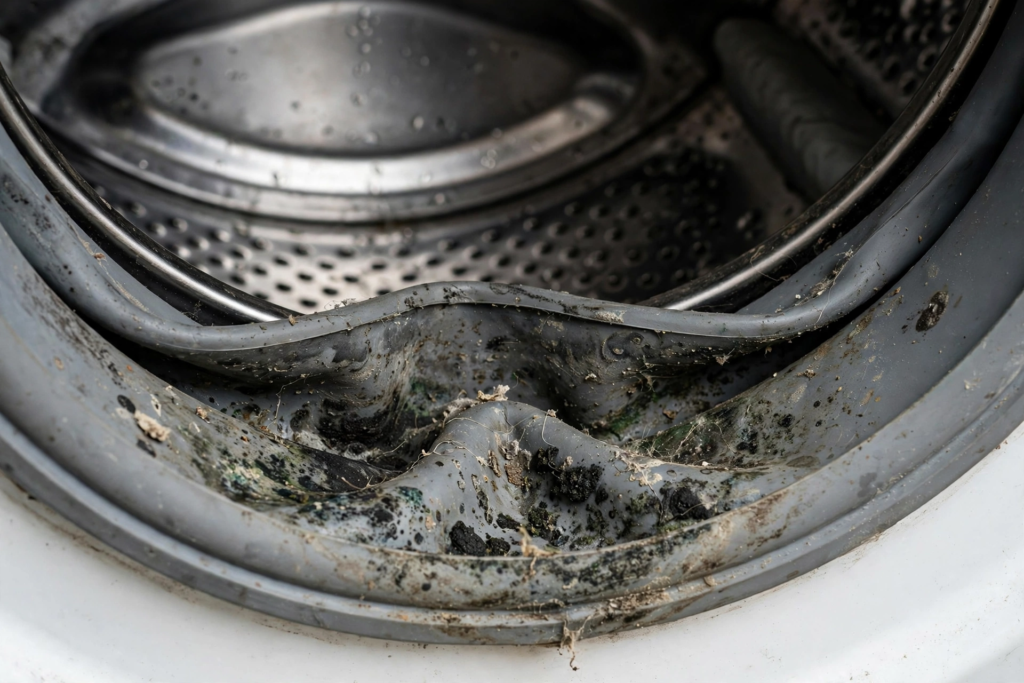
1. Mold and Residue Around the Door Gasket
Front-load washing machines are especially likely to collect moisture around the rubber door seal.
The folds of the gasket can trap:
- Lint
- Hair
- Detergent residue
- Water droplets
- Body oils from clothing
Over time, this buildup can create unpleasant odors.
Wipe inside every fold of the gasket regularly with a soft cloth. Follow your manufacturer’s recommendations for approved cleaning methods.
If you notice black spots or mildew around the rubber seal, our guide on Why Is There Black Mold on My Washing Machine Gasket? explains how to remove it safely and help prevent it from returning.
2. Detergent Residue Inside the Washer
Using too much detergent does not always make clothes cleaner.
Excess detergent can leave behind residue inside the drum, dispenser, and internal areas where bacteria may grow.
High-efficiency (HE) washers often require less detergent than many people expect.
Always follow the detergent instructions and your washer manufacturer’s recommendations.
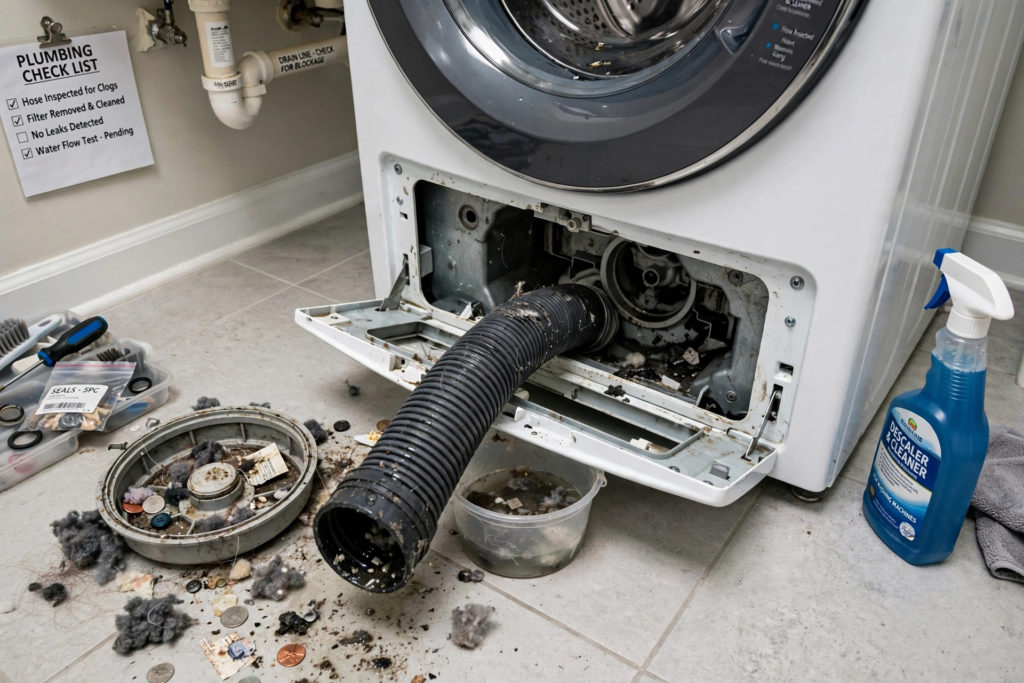
3. Dirty Drain Pump Filter
Many washing machines have a drain pump filter designed to catch small objects before they reach the pump.
The filter may collect:
- Coins
- Buttons
- Lint
- Pet hair
- Small debris
When organic material remains trapped, it can create strong odors.
Before cleaning the filter, check your owner’s manual because some water may spill out during removal.
Place towels nearby and clean the area carefully.
4. Water Is Not Draining Completely
A small amount of moisture remaining after a cycle is normal.
However, standing water inside the washer can create an environment where odors develop more easily.
Check for:
- Slow drainage
- A kinked drain hose
- Visible water remaining after cycles
If drainage problems continue after cleaning, further inspection may be needed.
5. The Drain Hose Has Buildup
Over time, detergent residue, lint, and organic material can collect inside the drain hose.
A dirty hose may contribute to unpleasant smells, especially if water flow becomes restricted.
Also check that the drain hose is installed correctly according to the manufacturer’s instructions.
6. The Odor Is Coming From the Plumbing
Sometimes the washing machine is not the actual source of the smell.
A drain connection problem, plumbing buildup, or sewer odor entering through the drain system may make the laundry area smell unpleasant.
Signs the plumbing may be involved include:
- The smell is strongest near the wall drain
- Other drains in the home also smell bad
- Water drains slowly in multiple areas
If the odor continues after cleaning the washer, the plumbing connection may need inspection.
7. Using Too Much Detergent
More detergent does not always mean cleaner clothes.
Excess soap can leave residue that traps moisture and odors.
This is especially common with HE washing machines because they are designed to use lower detergent amounts.
Use the recommended amount for your detergent type and washer model.
8. A Partially Blocked Drain
A slow household drain can contribute to unpleasant odors.
If several drains in your home have similar smells or drainage problems, the issue may be outside the washing machine.
A plumbing inspection may be needed if cleaning the appliance does not solve the problem.
9. A Plumbing Vent Issue
Home plumbing systems use vents to help control air pressure and move sewer gases safely.
If there is a venting problem, odors may sometimes travel back through drain connections.
Persistent sewer smells that remain after thorough washer cleaning may indicate a plumbing issue rather than an appliance issue.
How to Get Rid of Washing Machine Sewage Odors
Follow these steps:
Step 1: Remove all clothing from the washer.
Step 2: Clean the rubber door gasket, including the inside folds.
Step 3: Clean the detergent dispenser and remove visible residue.
Step 4: Check and clean the drain pump filter according to the owner’s manual.
Step 5: Run a cleaning cycle using a washing machine cleaner recommended for your model.
Step 6: Inspect the drain hose and nearby drain connection if the smell continues.
For a simpler cleaning routine, see our guide on How to Fix a Smelly Washer in 4 Easy Steps.
How to Prevent Washing Machine Sewage Smells
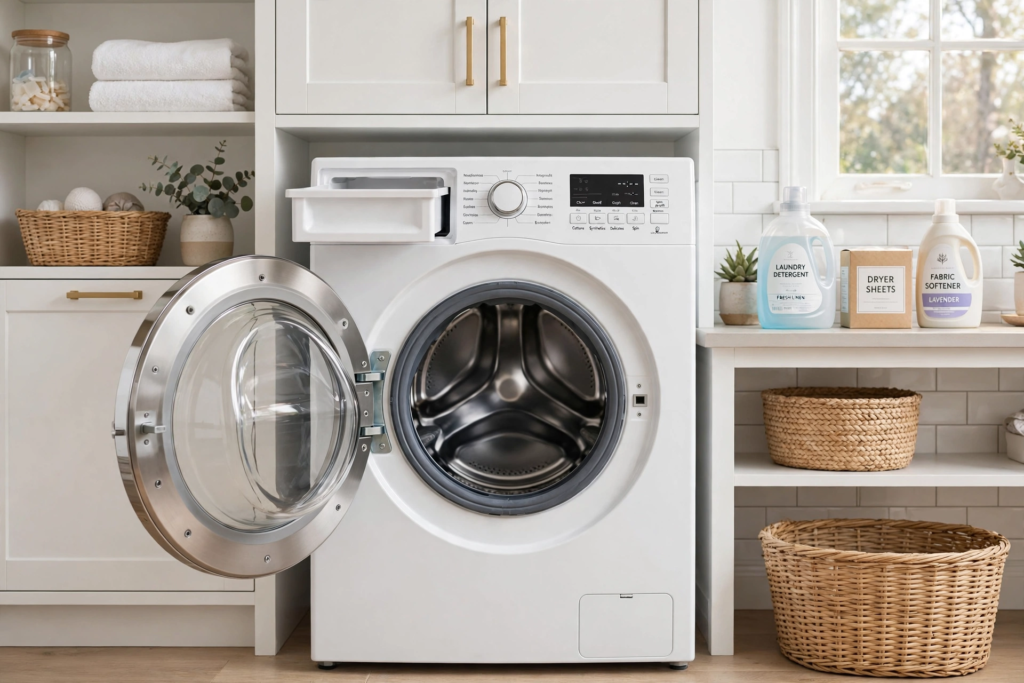
Simple habits can prevent many odor problems:
- Leave the washer door slightly open after loads when practical
- Wipe the rubber gasket regularly
- Remove visible water and residue
- Clean the drain pump filter according to the manufacturer’s schedule
- Use the correct amount of detergent
- Run a washer cleaning cycle about once a month if recommended
- Remove damp laundry promptly after washing
Allowing the washer interior to dry between loads is one of the easiest ways to reduce odor buildup.
When to Call a Professional
Most washing machine odors improve after cleaning and maintenance.
However, consider contacting a technician or plumber if:
- The sewage smell returns quickly after cleaning
- Multiple drains in the home have unpleasant odors
- Water drains slowly throughout the home
- The washer leaks
- Standing water remains after cycles
- The odor is strongest near the plumbing connection
These symptoms may indicate a drainage or plumbing issue that requires additional inspection.
FAQ
Can a washing machine really smell like sewage?
Yes. A washer can develop sewage-like odors from mold, detergent residue, trapped debris, or drainage problems.
In some cases, the smell may actually come from the connected plumbing rather than the washing machine itself.
Is bleach the best way to remove washing machine odors?
Not always.
Some manufacturers allow specific bleach cleaning methods, while others recommend dedicated washing machine cleaners. Always follow your owner’s manual before using bleach or other cleaning products.
Never mix bleach with vinegar or other cleaning chemicals.
Why do my clean clothes still smell bad?
If odor-causing residue remains inside the washer, clothing can absorb those smells during the wash cycle.
Cleaning the gasket, filter, dispenser, and drum often improves the problem.
How often should I clean my washing machine?
For many households, wiping the gasket regularly and running a cleaning cycle about once a month is a practical routine.
Heavy use or frequent odor problems may require more frequent maintenance.
Is a sewer smell from a washing machine dangerous?
A bad smell is often caused by normal buildup inside the appliance.
However, persistent sewer odors in the home should be investigated because they may indicate a plumbing issue.
Conclusion
A washing machine that smells like sewage is often caused by buildup that develops over time.
Start with the most common areas: the rubber gasket, detergent dispenser, drain pump filter, and drum.
If cleaning and regular maintenance do not solve the problem, check whether the odor is coming from the connected plumbing system.
Following a simple maintenance routine can help keep your washer cleaner, reduce odors, and improve laundry results.
How This Article Was Prepared
This article was prepared through AI-assisted research and human editorial review.
The research process included reviewing washing machine manufacturer maintenance guidance, appliance care information, and general plumbing information related to drainage systems and odor prevention.
The author did not personally inspect every washing machine model or household plumbing configuration. Procedures vary by appliance design, installation method, and home plumbing conditions. Always consult your owner’s manual and contact a qualified professional when needed.
Sources reviewed:
- Washing machine manufacturer cleaning and maintenance guidance
- Appliance care information from public resources
- General plumbing information about drains, P-traps, and odor prevention
Editorial Note:
Avoid harsh chemicals or cleaning methods that are not approved for your washing machine model. If you notice persistent sewer odors, leaks, slow drainage, or other plumbing-related problems, consult a qualified appliance technician or licensed plumber.
Visuals used in this article are AI-assisted illustrations created to explain maintenance steps clearly.

James L is the founder and editor of Clever Nest Lab, an independent home care website focused on practical, research-based household advice. He reviews manufacturer guidance, official documentation, and reliable sources to turn useful information into clear, practical guides.
Clever Nest Lab distinguishes between first-hand testing and research-based recommendations. The goal is to help readers better understand common household problems, follow safer cleaning and maintenance practices, and make informed decisions.