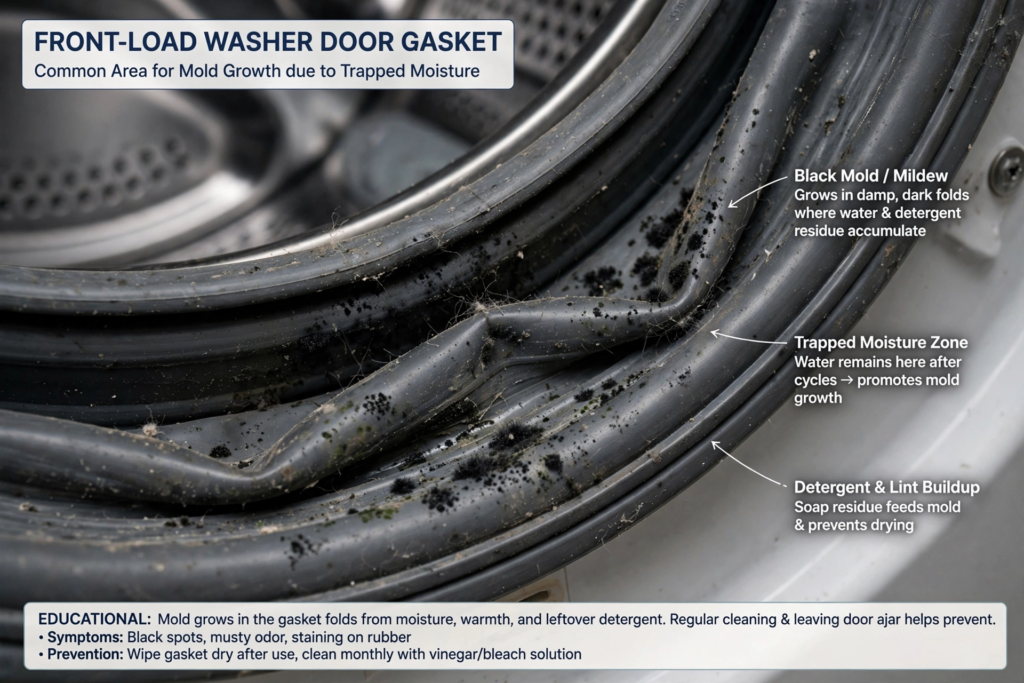
Finding black mold on washing machine gasket can be frustrating, especially when your laundry starts to smell musty even after washing.
This problem is especially common with front-load washing machines because the rubber door gasket can trap moisture, detergent residue, lint, and small debris after every cycle.
The good news is that most gasket mold problems can be improved with regular cleaning and better drying habits. However, if mold returns quickly after cleaning, the cause may be deeper residue buildup or a drainage-related issue.
If your washer also has a strong unpleasant odor, you may want to read our guide on Why Does My Washing Machine Smell Like Sewage? 9 Common Causes and Easy Fixes.
Why Washing Machine Gaskets Develop Mold
The rubber gasket around a front-load washer door creates a watertight seal during washing.
However, the folds of the gasket can also collect:
- Water left after a wash cycle
- Detergent residue
- Fabric softener buildup
- Lint and pet hair
- Small clothing fibers
Because the gasket stays warm and damp after washing, these areas can become a place where mold and odor-causing buildup develops.
According to the CDC, mold commonly grows in areas where moisture remains for extended periods. The CDC recommends controlling moisture and drying damp areas promptly to help prevent mold growth. Learn more in Mold Cleanup in Your Home. Reducing moisture is one of the most important steps in preventing mold from returning.
Common Areas Where Buildup Collects
- Inside the folds of the rubber gasket
- Bottom section of the gasket where water collects
- Detergent dispenser drawer
- Around the drum opening
- Drain pump filter area
Quick Overview: Why Mold Appears
| Cause | Why It Happens | Prevention |
|---|---|---|
| Moisture trapped in gasket | Water remains after washing | Dry gasket and leave door open |
| Too much detergent | Extra residue remains inside | Use recommended amount |
| Fabric softener buildup | Leaves coating on rubber | Clean gasket regularly |
| Lint and hair | Holds moisture | Remove debris weekly |
| Poor ventilation | Washer stays damp | Improve airflow |
9 Common Reasons Your Washing Machine Gasket Has Black Mold
1. Moisture Remains Inside the Gasket
One of the most common reasons mold appears is moisture trapped inside the rubber folds.
After a wash cycle, small amounts of water often remain at the bottom of the gasket. If the washer door is closed immediately, the moisture has little chance to evaporate.
2. Too Much Detergent Is Being Used
Using extra detergent does not always make clothes cleaner.
Excess detergent can leave residue inside the washer, which may trap dirt, lint, and moisture.
High-efficiency (HE) washers often require less detergent than many people expect, so always follow the detergent manufacturer’s instructions.
3. Fabric Softener Leaves Residue
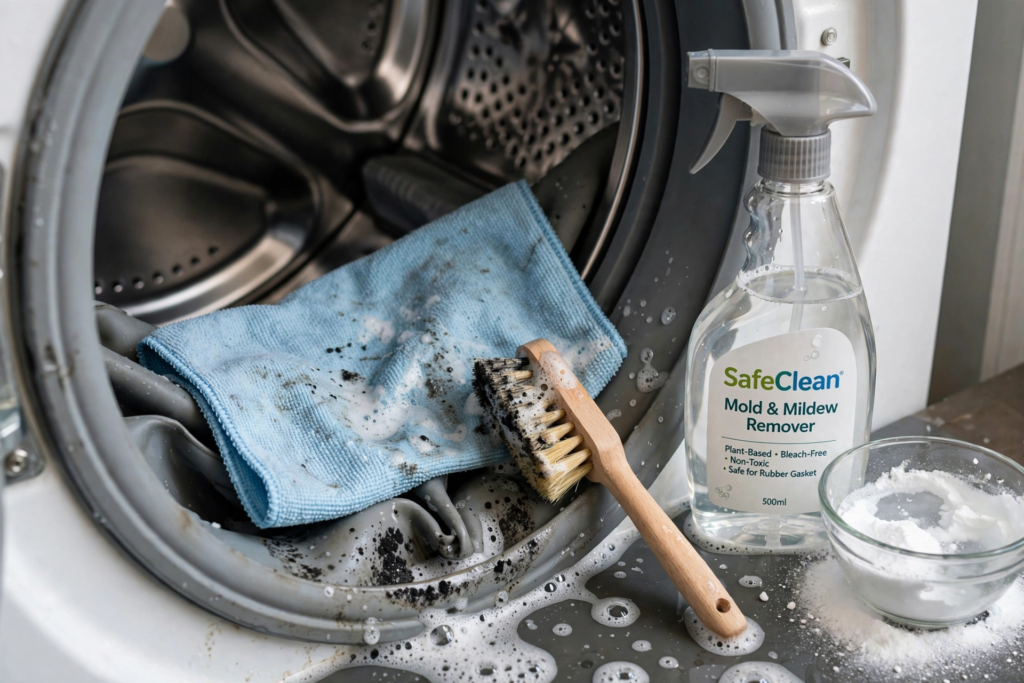
Fabric softener can leave a thin coating on the gasket and inside the detergent drawer.
Over time, this residue can collect lint and create additional buildup.
File: cleaning-black-mold-washing-machine-gasket-safe-method.webp
ALT: Cleaning mold buildup from a washing machine rubber gasket using a soft brush and washer-safe cleaner)
4. Lint, Hair, and Debris Are Trapped
Small particles from clothing can collect inside gasket folds.
Common examples include:
- Pet hair
- Tissue pieces
- Lint
- Clothing fibers
Removing these regularly makes cleaning much easier.
5. Wet Laundry Stays Inside Too Long
Leaving wet clothes inside the washer for hours increases humidity inside the drum.
Removing laundry soon after the cycle finishes helps reduce moisture buildup.
6. Cold Washes Are Used Exclusively
Cold washing is useful for saving energy, but residue may accumulate faster when the washer never runs warmer maintenance cycles.
If recommended by your manufacturer, an occasional cleaning cycle can help remove buildup.
7. The Gasket Is Not Cleaned Regularly
The rubber seal does not clean itself completely during normal washing.
A quick weekly wipe can prevent residue from becoming difficult buildup.
8. The Washer Door Is Always Closed
Closing the door immediately after washing traps humid air inside.
Leaving the door slightly open after cycles allows the interior to dry.
9. The Laundry Area Has High Humidity
Poor ventilation can slow drying and allow moisture to remain longer.
Small laundry rooms, closets, and humid areas may need additional airflow.
How to Remove Mold From a Washing Machine Gasket
Step 1: Wear Gloves Before Cleaning
Wear protective gloves before handling moldy areas or cleaning products.
Step 2: Inspect the Entire Gasket
Pull back each fold of the rubber seal.
Pay special attention to:
- Bottom folds
- Hidden corners
- Areas with standing water
Step 3: Clean With a Washer-Safe Product
Use a cleaner recommended for your washing machine model.
If using bleach or another household cleaner, check the owner’s manual first because recommendations vary by manufacturer.
Never mix bleach with vinegar or other cleaning chemicals.
Step 4: Scrub Gently
Use a soft cloth or soft brush to remove visible buildup.
Avoid abrasive tools that may damage the rubber seal.
Step 5: Dry the Gasket Completely
After cleaning:
- Wipe all gasket folds
- Remove remaining moisture
- Dry the door glass
Keeping the gasket dry is one of the best ways to prevent mold from returning.
Step 6: Run a Cleaning Cycle
If your washer has a Tub Clean or Drum Clean cycle, use it according to the manufacturer’s instructions.
For a complete step-by-step maintenance routine, read our guide on How to Clean a Front-Load Washing Machine to remove hidden residue and keep your washer fresh.
For more detailed washer maintenance, see our complete guide:
How to Clean a Front-Load Washing Machine (6 Easy Steps)
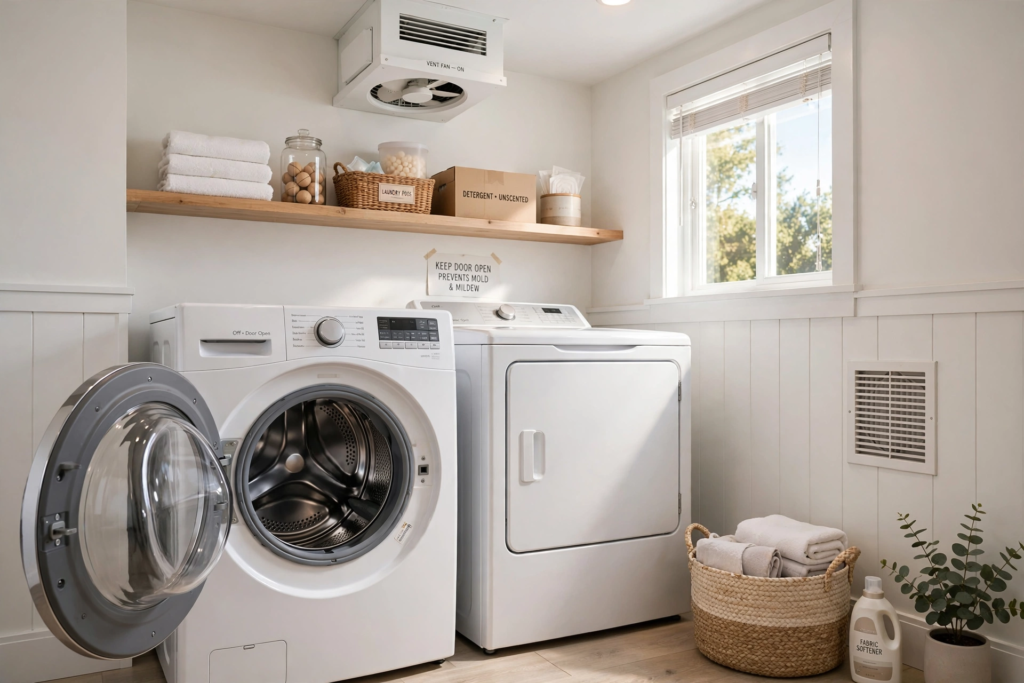
How to Prevent Mold on a Washing Machine Gasket
Simple habits can greatly reduce future buildup:
- Leave the washer door slightly open after loads
- Wipe the gasket weekly
- Remove visible lint and hair
- Clean the detergent drawer regularly
- Use the recommended detergent amount
- Run a cleaning cycle when recommended
- Remove laundry promptly after washing
For a broader cleaning schedule, see:
How Often Should You Clean Your Washing Machine?
When to Replace the Gasket or Seek Help
Cleaning is usually enough for surface mold, but replacement may be needed if:
- The gasket is cracked or torn
- Water leaks around the door
- Mold returns very quickly after cleaning
- Odors continue despite maintenance
- The washer has drainage problems
A damaged gasket cannot always be restored through cleaning alone.
FAQ
Is mold on a washing machine gasket dangerous?
Mold on a washer gasket is usually a maintenance and cleanliness issue. Removing buildup and reducing moisture are important steps.
People with mold sensitivity or health concerns should review information from reliable public health resources.
Can I use bleach to clean washing machine gasket mold?
Some manufacturers allow diluted bleach, while others recommend washer-specific cleaners.
Always check your owner’s manual before using bleach.
Never mix bleach with vinegar or other cleaners.
Why does mold keep coming back after cleaning?
The most common reason is that moisture remains trapped inside the gasket.
If the rubber seal stays wet after every wash, buildup can return even after cleaning.
How often should I clean the washing machine gasket?
For most households, wiping the gasket once a week is a good maintenance habit.
Homes with pets, frequent laundry loads, or high humidity may need more frequent checks.
Can vinegar remove mold from a washing machine gasket?
Vinegar may help with some odors and light residue, but heavier buildup may require a cleaner recommended for your washer.
Always check manufacturer guidance first.
Conclusion
Black mold on a washing machine gasket usually develops because moisture, detergent residue, and debris remain trapped inside the rubber seal.
The most effective solution is not only removing existing buildup but also preventing the conditions that allow it to return.
Regular gasket cleaning, proper detergent use, and allowing the washer to dry between loads can help keep your washing machine cleaner and fresher.
How This Article Was Prepared
This article was prepared through AI-assisted research and human editorial review.
The research process included reviewing washing machine manufacturer maintenance guidance, appliance care information, and public information about mold growth in damp environments.
The author did not personally test every washing machine model. Cleaning procedures vary depending on appliance design, manufacturer recommendations, and household conditions.
Always check your owner’s manual before using cleaning products.
Sources reviewed:
- Washing machine manufacturer maintenance guidance
- Appliance care information about gasket cleaning and washer maintenance
- Public information about mold growth in damp environments
Editorial Note:
Avoid abrasive tools or cleaning methods not approved for your washer model. If leaks, drainage problems, or persistent odors continue after cleaning, the washer may need further inspection.
Visuals used in this article are AI-assisted illustrations created to explain maintenance steps clearly.

James L is the founder and editor of Clever Nest Lab, an independent home care website focused on practical, research-based household advice. He reviews manufacturer guidance, official documentation, and reliable sources to turn useful information into clear, practical guides.
Clever Nest Lab distinguishes between first-hand testing and research-based recommendations. The goal is to help readers better understand common household problems, follow safer cleaning and maintenance practices, and make informed decisions.