Learning how to deep clean front load washing machine units is essential for maintaining efficient performance. Front-load washing machines are excellent at saving water and cleaning efficiently, but they have one common weakness: moisture can remain trapped inside after a wash cycle.
Over time, detergent residue, fabric softener buildup, lint, and moisture can collect around areas that are easy to overlook, especially the rubber door gasket and detergent drawer.
If your washer has a musty smell, dark spots around the door seal, or clothes that no longer smell fresh after washing, a thorough cleaning may help restore better performance.
Most routine maintenance does not require special tools. A few simple cleaning steps and a manufacturer-approved cleaning cycle are usually enough for regular care.
Why Do Front-Load Washing Machines Get Dirty?
Front-load washers use a rubber door gasket to create a watertight seal during operation. While this design prevents leaks, the folds of the gasket can also trap moisture, lint, hair, and detergent residue.
Because the inside of the washer often stays warm and damp after a cycle, residue can gradually build up and create unpleasant odors.
Common areas where buildup develops include:
- Rubber door gasket
- Detergent dispenser drawer
- Washer drum
- Drain pump filter
- Door glass
- Drain hose connection area
The outside of the washer may look clean while buildup is developing in these hidden areas.
Quick Checklist Before Deep Cleaning
| Area | Why It Gets Dirty | How Often to Check |
|---|---|---|
| Door gasket | Moisture, lint, and residue | Weekly |
| Detergent drawer | Soap and fabric softener buildup | Monthly |
| Drum | Odor-causing residue | Monthly |
| Drain pump filter | Trapped debris and small objects | Every 1–2 months |
| Door glass | Water spots and detergent film | Weekly |
How to Deep Clean a Front-Load Washing Machine
Step 1: Empty the Washer Completely
Remove all clothing from the drum before cleaning.
Check inside the washer for small items that may have been left behind, such as coins, tissues, or lint buildup.
If you plan to clean the drain pump filter, place towels nearby because a small amount of water may come out during the process.
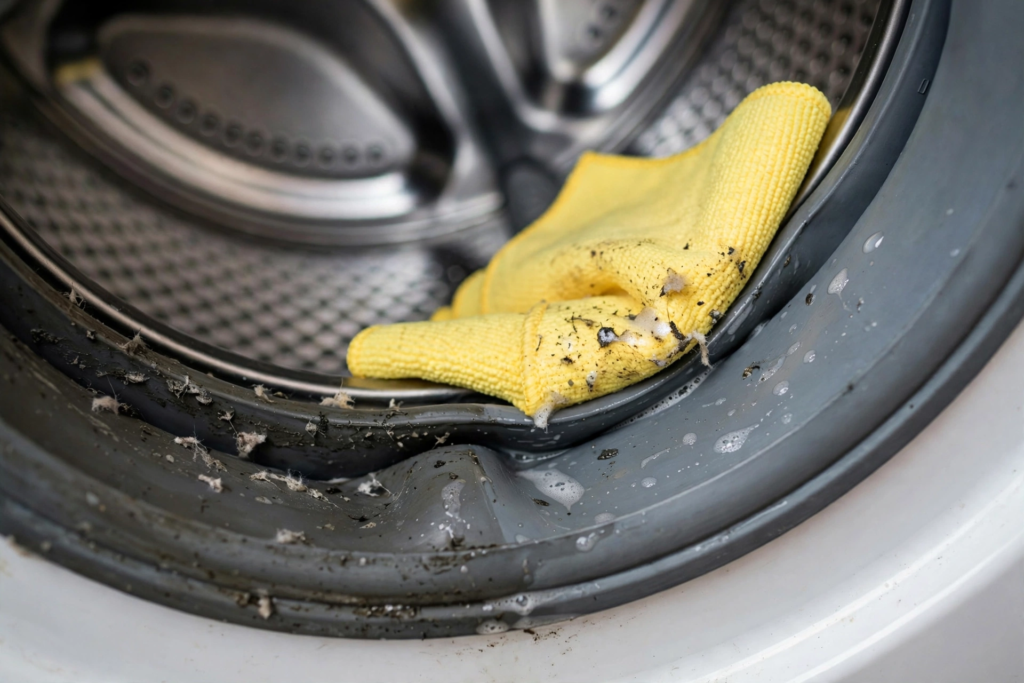
Step 2: Clean the Door Gasket Thoroughly
The rubber gasket is one of the most common places where residue collects.
Pull back the folds of the seal and check for:
- Hair
- Lint
- Pet fur
- Small fabric pieces
- Detergent residue
- Standing water
Use a soft cloth or sponge to wipe inside every fold. Pay extra attention to the bottom section because water often remains there after washing.
A quick weekly wipe can prevent buildup from becoming a larger odor problem.
If you notice black spots or persistent mildew around the rubber seal, see our guide on Why Is There Black Mold on My Washing Machine Gasket? for step-by-step cleaning and prevention tips.
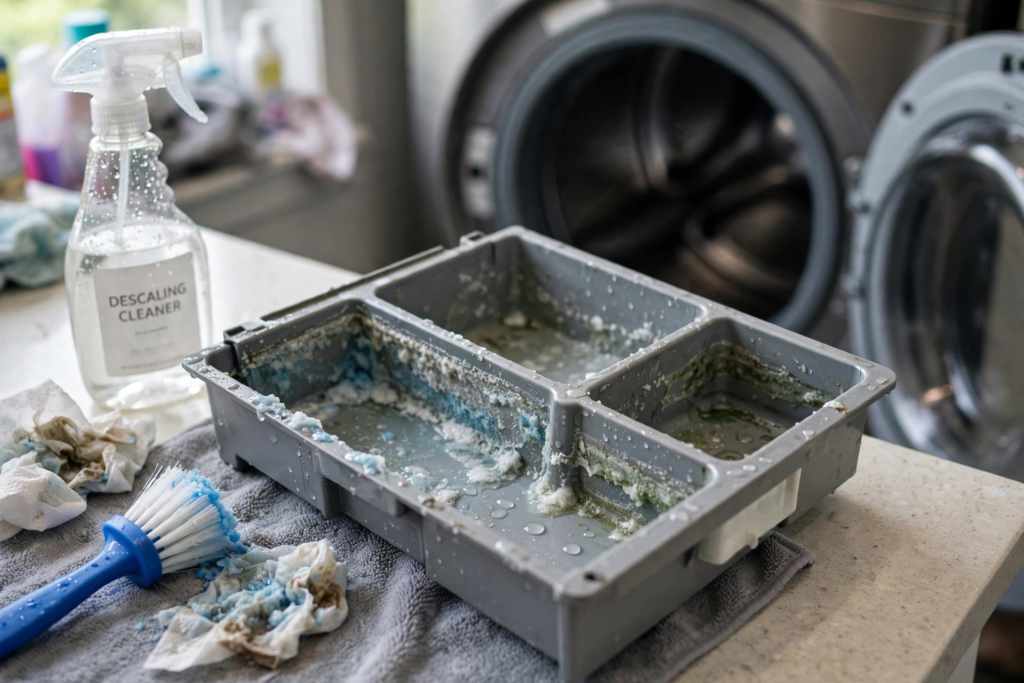
Step 3: Remove and Clean the Detergent Drawer
Detergent drawers often collect more residue than people expect.
Liquid detergent and fabric softener can leave behind a sticky layer that attracts dirt and bacteria.
Remove the drawer according to your owner’s manual and clean it with warm water and a soft brush.
Also clean the inside compartment where the drawer sits. Residue hidden inside this area is easy to miss.
Step 4: Clean the Drain Pump Filter
Many front-load washers have a drain pump filter near the bottom front of the machine.
This filter catches small objects and debris before they reach the pump.
Before opening the filter:
- Place towels on the floor
- Prepare a shallow container for water
- Check your owner’s manual for the correct procedure
Common items found inside include:
- Coins
- Buttons
- Hair
- Lint
- Small debris
After cleaning, reinstall the filter securely to help prevent leaks.
Step 5: Clean the Washer Drum
Once the gasket, drawer, and filter are clean, clean the inside of the drum.
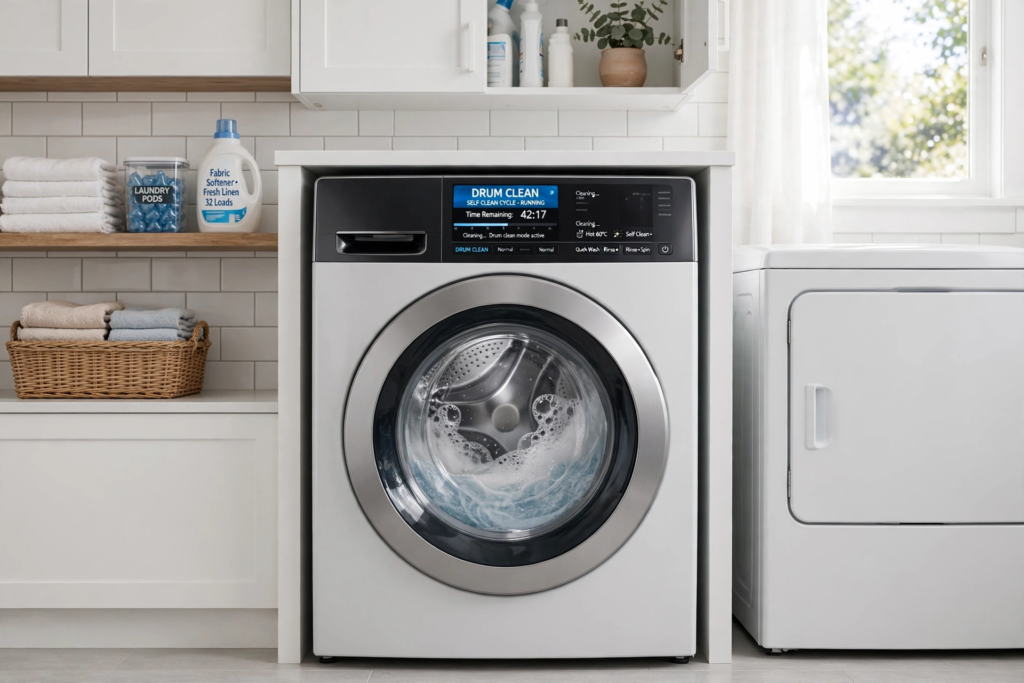
If your washer has a Tub Clean or Drum Clean cycle, use that program according to the manufacturer’s instructions.
If your model does not have a dedicated cleaning cycle, follow the owner’s manual recommendations for cleaning the drum.
Use only cleaners approved for your specific appliance. For general washer maintenance guidance, the American Cleaning Institute recommends following both your appliance manufacturer’s instructions and the cleaning product label. Learn more in Laundry Basics.
Some manufacturers recommend avoiding frequent use of household acids or harsh chemicals because repeated exposure may affect certain components.
Step 6: Dry the Washer and Improve Airflow
After cleaning:
- Wipe the drum with a clean cloth
- Dry the rubber gasket
- Wipe the inside of the door glass
- Leave the door slightly open when practical
Allowing airflow into the washer helps reduce trapped moisture between cycles.
This small habit is one of the easiest ways to prevent musty smells from returning.
How Often Should You Deep Clean a Front-Load Washer?
A practical maintenance schedule for many households is:
- Wipe the gasket: Weekly
- Clean the detergent drawer: Monthly
- Clean the drain pump filter: Every 1–2 months
- Run a drum cleaning cycle: About once a month
- Inspect visible hoses: Every 6 months
Homes that run several loads each day or have hard water may need more frequent maintenance.
Common Mistakes That Cause Odors
Many washing machine smells return because of simple habits.
Avoid:
- Leaving wet laundry inside overnight
- Using more detergent than recommended
- Closing the door immediately after every load
- Ignoring the detergent drawer
- Skipping filter cleaning
- Allowing residue to remain around the gasket
Using extra detergent does not always make clothes cleaner. In many cases, excess detergent creates more residue that can trap odors.
How to Keep a Front-Load Washer Fresh
Simple habits can prevent many common problems:
- Leave the door slightly open after washing
- Pull out the detergent drawer so it can dry
- Use the recommended amount of HE detergent
- Wipe the gasket regularly
- Remove finished laundry promptly
- Run cleaning cycles according to manufacturer recommendations
Small maintenance tasks usually take only a few minutes but can prevent larger cleaning problems later.
When to Call a Professional
Deep cleaning solves many odor problems, but some issues require professional attention.
Consider contacting a technician if:
- Water does not drain properly
- The washer leaks underneath
- Grinding or unusual noises occur
- Error codes continue appearing
- Strong odors return immediately after cleaning
- Mold keeps coming back despite regular maintenance
These symptoms may indicate a clogged drain, damaged pump, or another mechanical issue.
FAQ
Can I use vinegar to clean my front-load washer?
Some homeowners use vinegar occasionally, but recommendations vary by manufacturer. Some brands recommend approved washing machine cleaners instead. Always check your owner’s manual before using vinegar regularly.
Why does my washer still smell after cleaning?
The odor may be coming from the drain pump filter, drain hose, or plumbing connection rather than the drum itself.
If the smell returns quickly after cleaning, inspect those areas as well.
How often should I clean the rubber gasket?
A quick wipe once a week helps prevent moisture and residue buildup. Households that use the washer frequently may need to check it more often.
Is bleach better than washing machine cleaner?
Not always. Many manufacturers recommend cleaners specifically designed for washing machines because they are formulated for appliance materials.
Follow your owner’s manual for approved cleaning methods.
Why is there water inside the rubber gasket?
A small amount of water can remain inside the gasket folds after washing. Drying the area and leaving the door slightly open helps reduce moisture buildup.
Conclusion
A front-load washing machine works best when the areas that trap moisture and residue receive regular attention.
Start with the rubber gasket, then clean the detergent drawer, drain pump filter, and drum. A manufacturer-approved cleaning cycle and better airflow after washing can help prevent many common odor problems.
Regular maintenance takes only a few minutes but can make a noticeable difference in washing performance and freshness.
How This Article Was Prepared
This article was prepared through AI-assisted research and human editorial review.
The research process included reviewing front-load washing machine manufacturer maintenance guidance, appliance care information, and general recommendations for cleaning cycles and filter maintenance.
The author did not personally test every washing machine model. Procedures vary by manufacturer, model, and household conditions. Always consult your owner’s manual for specific maintenance instructions.
Sources reviewed:
- Front-load washing machine manufacturer cleaning and maintenance guidance
- Appliance care information about Tub Clean and Drum Clean cycles
- General information about drain pump filter and detergent drawer maintenance
Editorial Note:
Avoid abrasive tools or cleaning methods that are not approved for your appliance model. If your washer has persistent leaks, drainage problems, or unusual noises, consult a qualified appliance professional.
Visuals used in this article are AI-assisted illustrations created to explain maintenance steps clearly.

James L is the founder and editor of Clever Nest Lab, an independent home care website focused on practical, research-based household advice. He reviews manufacturer guidance, official documentation, and reliable sources to turn useful information into clear, practical guides.
Clever Nest Lab distinguishes between first-hand testing and research-based recommendations. The goal is to help readers better understand common household problems, follow safer cleaning and maintenance practices, and make informed decisions.