Learning how to remove fabric softener build up in washing machine units is essential to keep your laundry fresh. Fabric softener can make clothes feel softer and reduce static, but leftover product can sometimes collect inside a washing machine over time.
When too much fabric softener is used or the dispenser is not cleaned regularly, residue may build up in areas such as the dispenser drawer, siphon cap, and rubber door gasket.
The good news is that most fabric softener residue can be removed with simple cleaning steps. Regular maintenance also helps prevent unpleasant odors and dispensing problems.
Why Does Fabric Softener Residue Build Up?
Fabric softener contains conditioning ingredients that are designed to stay on fabric fibers. Because of this, small amounts of leftover product may remain in the dispenser or mix with moisture and other laundry residue.
Common areas where buildup appears include:
- Fabric softener dispenser drawer
- Siphon cap inside the dispenser
- Rubber door gasket
- Drum surfaces
- Detergent drawer housing
Residue is more noticeable when:
- Too much softener is used
- The dispenser is rarely cleaned
- The washer stays closed and damp after use
- Laundry products are mixed excessively
Quick Overview
| Area | What You May Notice | Cleaning Frequency |
|---|---|---|
| Dispenser drawer | Sticky residue or clogged opening | Monthly |
| Siphon cap | Softener not dispensing correctly | Monthly |
| Rubber gasket | Film, lint, or odor | Every few weeks |
| Drum | Residue or unpleasant smell | Monthly check |
How to Remove Fabric Softener Build Up in Washing Machine
Step 1: Remove and Clean the Dispenser Drawer
Remove the detergent and fabric softener drawer according to your owner’s manual.
Soak the drawer in warm water for 15 to 30 minutes to loosen hardened residue.
Use a soft brush or old toothbrush to clean:
- Fabric softener compartment
- Corners of the drawer
- Small openings where liquid flows
Rinse thoroughly before reinstalling.
Step 2: Clean the Siphon Cap
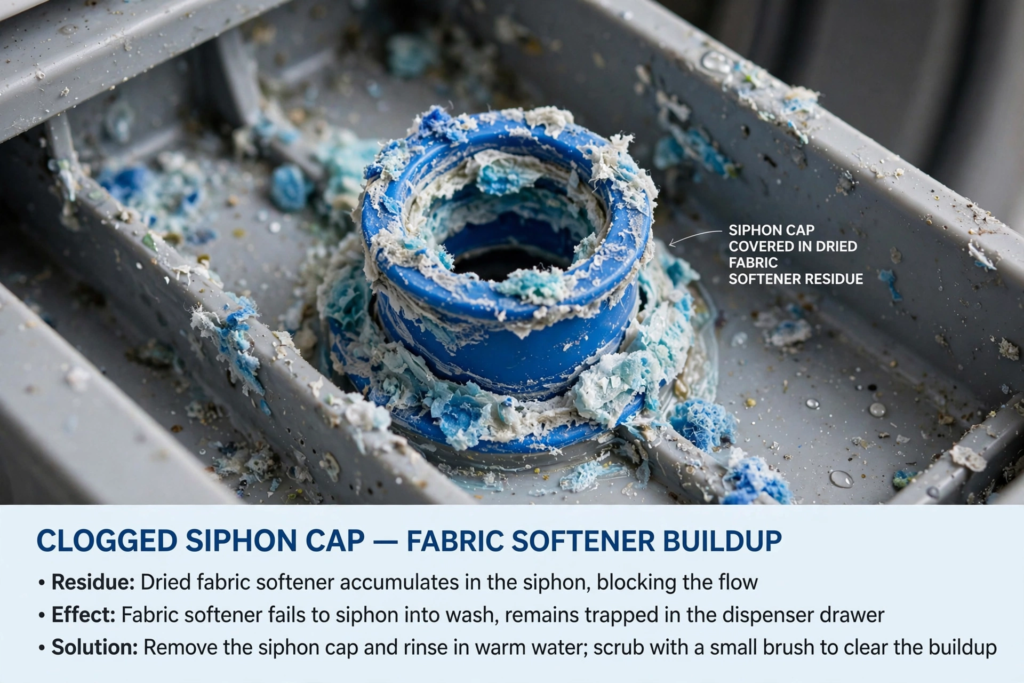
Many washing machines use a small siphon insert inside the fabric softener compartment.
This part helps move fabric softener into the wash at the correct time, but residue can collect underneath it.
Remove the cap if your model allows it, rinse it with warm water, and remove any visible buildup.
Step 3: Clean the Rubber Door Gasket
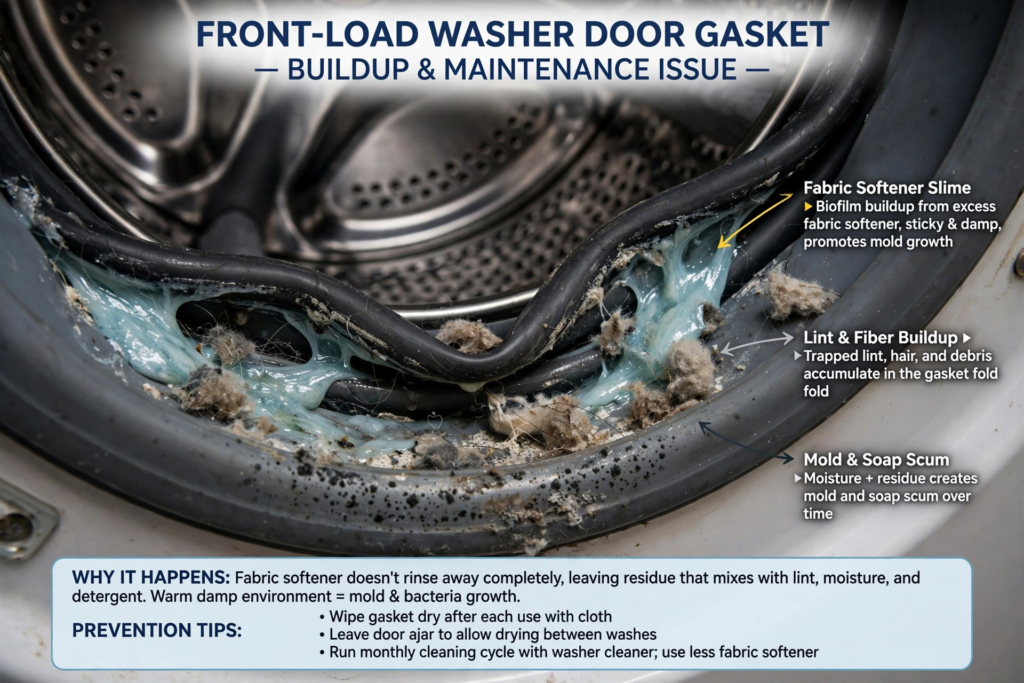
Front-load washers commonly collect residue around the rubber seal.
Pull back the folds and check for:
- Sticky film
- Lint
- Hair
- Standing water
Wipe the gasket with a microfiber cloth and dry it completely afterward.
If you notice dark spots or mold-like buildup, see our guide on Why Is There Black Mold on My Washing Machine Gasket?
Step 4: Run a Washer Cleaning Cycle
After cleaning visible residue, run a cleaning cycle using a washer cleaner recommended by your manufacturer.
If your machine has a Tub Clean or Drum Clean setting, follow the instructions in your owner’s manual. For a complete maintenance routine, see our guide on how to clean a front-load washing machine to remove hidden buildup and keep your washer running efficiently.
Avoid using vinegar or other household cleaners regularly unless your manufacturer allows them. The American Cleaning Institute recommends following both your appliance manufacturer’s instructions and the laundry product label for proper use and maintenance. Learn more in Laundry Basics.
For a complete maintenance routine, see How to Clean a Front-Load Washing Machine (6 Easy Steps).
Step 5: Check the Drain Filter
Some washing machines have a drain pump filter that collects small objects and debris.
If your model includes a user-cleanable filter:
- Place towels underneath
- Open the filter area carefully
- Remove trapped debris
- Rinse and reinstall securely
Always check the owner’s manual because filter locations and cleaning methods vary by model.
Common Habits That Cause More Residue
Fabric softener buildup often returns because of everyday habits.
Common causes include:
- Using more softener than recommended
- Filling above the dispenser MAX line
- Never cleaning the dispenser drawer
- Closing the washer door immediately after every load
- Using too many laundry additives together
Using the recommended amount of fabric softener is usually enough.
How to Prevent Fabric Softener Buildup
Simple habits can help keep the washer cleaner:
- Clean the dispenser drawer once a month
- Check the siphon cap regularly
- Wipe the rubber gasket every few weeks
- Leave the washer door slightly open after use
- Remove finished laundry promptly
- Use the recommended amount of fabric softener
- Run a cleaning cycle when recommended by the manufacturer
For a complete maintenance schedule, see How Often Should You Clean Your Washing Machine?
When to Call a Professional
Most fabric softener residue can be removed with normal cleaning.
However, consider contacting a qualified appliance technician if:
- The dispenser still does not work after cleaning
- Water remains inside the washer
- The machine leaks
- Strong odors continue despite cleaning
- Error codes appear repeatedly
These problems may involve internal components that require professional service.
FAQ
Can vinegar remove fabric softener residue?
Some people use vinegar for cleaning laundry appliances, but recommendations vary between manufacturers. Always check your owner’s manual before using vinegar regularly.
Why is my fabric softener drawer sticky?
A sticky drawer usually happens when fabric softener residue combines with moisture and detergent buildup. Regular drawer cleaning helps prevent this.
Can too much fabric softener damage a washing machine?
Using excessive fabric softener may contribute to residue buildup inside accessible areas such as the dispenser drawer and gasket. Follow the product instructions for the correct amount.
How often should I clean my fabric softener dispenser?
For most households, cleaning it once a month is a practical schedule. Homes that do laundry frequently may need more frequent cleaning.
Do I need fabric softener?
Not always. Some people choose to reduce or stop using fabric softener to avoid residue buildup and simplify laundry maintenance.
Conclusion
Fabric softener residue is a common washing machine maintenance issue, but it is usually easy to manage.
Start by cleaning the dispenser drawer and siphon cap, then check the rubber gasket and run a manufacturer-approved cleaning cycle if needed.
Using the correct amount of fabric softener and keeping the washer dry between loads can help prevent buildup from returning.
How This Article Was Prepared
This article was prepared through AI-assisted research and human editorial review.
The research process included reviewing washing machine manufacturer maintenance guidance, appliance care information, and general information about laundry product residue.
The author did not personally test every washing machine model. Cleaning methods vary depending on appliance design and manufacturer recommendations.
Always consult your owner’s manual before using cleaning products or removing parts.
Sources reviewed:
- Washing machine manufacturer maintenance guidance
- Appliance care information about dispenser cleaning and washer maintenance
- General information about laundry product residue
Editorial Note:
Avoid abrasive tools and never mix cleaning chemicals. If leaks, drainage problems, or repeated mechanical issues occur, consult a qualified appliance professional.
Visuals used in this article are AI-assisted illustrations created to explain maintenance steps clearly.

James L is the founder and editor of Clever Nest Lab, an independent home care website focused on practical, research-based household advice. He reviews manufacturer guidance, official documentation, and reliable sources to turn useful information into clear, practical guides.
Clever Nest Lab distinguishes between first-hand testing and research-based recommendations. The goal is to help readers better understand common household problems, follow safer cleaning and maintenance practices, and make informed decisions.