Laundry should come out looking cleaner than when it went in. If you’ve ever wondered why your washer leaves white residue on clothes, you are not alone.
The good news is that this problem usually isn’t a sign that your washing machine is broken. In most cases, a few simple adjustments can stop white residue from appearing on your clothes.
Why Does My Washer Leave White Residue on Clothes?
White residue is usually left behind when something doesn’t fully rinse away during the wash cycle. That “something” could be detergent, minerals from hard water, fabric softener, or even buildup inside the washer itself.
Quick Diagnosis
| Possible Cause | How Common | Difficulty to Fix | Typical Solution |
|---|---|---|---|
| Too much detergent | Very High | Easy | Use less detergent |
| Hard water minerals | High | Easy | Add water softener |
| Overloaded washer | High | Easy | Wash smaller loads |
| Wrong detergent | Medium | Easy | Switch detergent |
| Dirty washer | Medium | Easy | Run cleaning cycle |
| Cold water issues | Medium | Easy | Use warm water occasionally |
| Fabric softener buildup | Medium | Easy | Clean dispenser |
| Clogged dispenser | Low | Moderate | Clean dispenser drawer |
| Drainage issues | Low | Moderate | Inspect drain system |
The Short Answer
The most common reasons your washer leaves white residue on clothes include:
- Using too much detergent
- Hard water mineral deposits
- Overloading the washer
- HE detergent used incorrectly
- Cold water not dissolving detergent completely
- Fabric softener buildup
- A dirty washing machine
- Clogged detergent dispenser
- Drainage or rinse problems
In my experience, that’s where the problem is more often than not.
Why White Residue Appears After Washing
Many people immediately assume their detergent is defective. In reality, the detergent often isn’t the real problem.
When detergent, minerals, body oils, and dirt combine inside the washer, they can stick to fabrics during the rinse cycle instead of washing away.
Mineral deposits from hard water can combine with detergent, creating a chalky residue that clings to clothing instead of rinsing away.
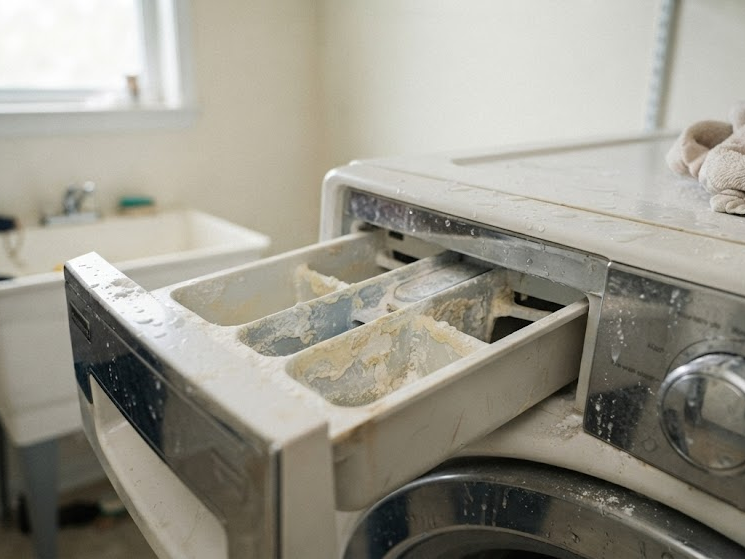
I was surprised the first time I cleaned my washer’s detergent drawer. There was far more buildup than I expected.
9 Common Reasons Your Washer Leaves White Residue on Clothes
1. You’re Using Too Much Detergent (Most Common)
More detergent doesn’t make clothes cleaner.
Modern washing machines use much less water than older models, especially high-efficiency (HE) washers. Excess detergent simply can’t rinse away completely.
If you regularly see white streaks, try reducing the amount of detergent by about 25%.
2. Hard Water Is Leaving Mineral Deposits
Hard water contains minerals such as calcium and magnesium. The U.S. Geological Survey explains how dissolved minerals such as calcium and magnesium create hard water and why they can affect cleaning performance. Learn more in the USGS guide to hard water.
These minerals react with detergent, leaving behind a white or gray film that’s especially noticeable on dark clothing.
If hard water is common in your area, consider using a laundry booster designed for hard water or installing a water softener.
3. The Washer Is Overloaded
Stuffing too many clothes into the drum prevents proper circulation.
Without enough room to move freely, detergent can’t rinse away effectively.
A good rule is to leave enough space to fit your hand comfortably at the top of the load.
That simple adjustment solves the problem more often than people expect.
4. The Detergent Isn’t Dissolving Completely
Powder detergent sometimes struggles to dissolve in cold water.
Undissolved particles can attach directly to clothing during the wash cycle.
If you prefer cold-water washing, consider switching to a quality liquid detergent.
5. Your Washing Machine Needs Cleaning
Even clean-looking washers develop buildup over time.
Soap scum, detergent residue, lint, and minerals accumulate inside the drum, hoses, and dispensers.
Running a washer cleaning cycle once a month helps remove hidden residue before it reaches your clothes.
Regular maintenance can also help prevent other washer performance issues. If your machine shakes or vibrates during high-speed spins, check out our guide on why your washing machine shakes during the spin cycle for simple troubleshooting steps.
6. Fabric Softener Has Built Up
Fabric softener can leave behind a waxy coating inside the dispenser.
Eventually, dried residue breaks loose and ends up on freshly washed clothing.
Cleaning the dispenser regularly prevents this problem.
That hidden buildup is surprisingly easy to overlook.
7. The Detergent Dispenser Is Clogged
Old detergent can harden inside the dispenser drawer.
Instead of flushing smoothly, chunks may fall into the washer later during the cycle.
Remove the drawer occasionally and rinse it thoroughly with warm water.
8. You’re Using the Wrong Type of Detergent
HE washers require HE detergent.
Regular detergent creates too many suds, making it harder for the washer to rinse everything away completely.
Using non-HE detergent in an HE washer can leave excess suds behind, allowing detergent residue to stick to fabrics after the rinse cycle.
9. There’s a Drainage or Rinse Problem
If rinse water isn’t draining properly, residue remains trapped with the clothes.
A partially clogged drain hose or filter can reduce rinse performance even if the washer appears to finish the cycle normally.
If residue continues after trying the simpler fixes, inspecting the drain system is worthwhile.
How to Remove White Residue from Clothes
- Shake off any loose residue before rewashing.
- Rewash the clothes without adding detergent.
- Use warm water if the fabric allows.
- Reduce detergent during future loads.
- Clean the washer with a washer cleaner or manufacturer-approved cleaning cycle. If your washer hasn’t been cleaned in a while, check out How to Clean Front-Load Washing Machine (6 Easy Steps) for a step-by-step deep cleaning routine.
- If hard water is the issue, add a water softener or laundry booster.
How to Prevent White Residue on Laundry
- Measure detergent carefully instead of guessing.
- Use HE detergent in HE washers.
- Avoid overloading the drum.
- Clean the detergent dispenser monthly.
- Run the washer cleaning cycle every month.
- Use warm water occasionally to reduce buildup.
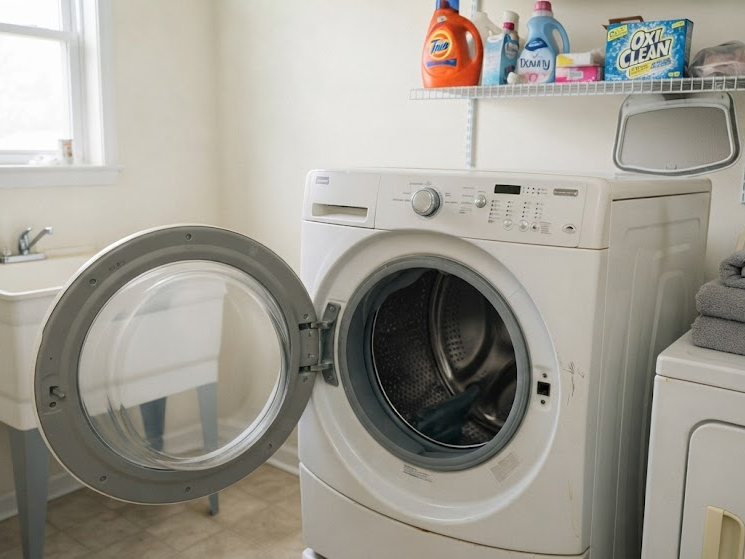
- Leave the washer door slightly open after each load to help the interior dry.
I usually leave the washer door cracked open for an hour afterward. It’s a simple habit that has made a noticeable difference in my own laundry routine.
When to Call a Professional
If you’ve reduced detergent, cleaned the washer, checked the dispenser, and still notice white residue after multiple loads, there may be a mechanical issue.
Consider contacting a qualified appliance technician if:
- The washer doesn’t rinse properly.
- Water isn’t draining completely.
- Error codes appear regularly.
- The machine leaves residue regardless of detergent type.
- You suspect problems with the water inlet or drain pump.
Mechanical issues are less common than detergent or maintenance problems, but they do happen.
FAQ
Why does white residue only appear on dark clothes?
Dark fabrics simply make residue much easier to see. The same residue may be present on lighter clothing without being noticeable.
Is powder detergent more likely to leave residue?
Sometimes. Powder detergent doesn’t always dissolve completely in cold water, especially if too much is used. Liquid detergent can reduce this issue for many households.
Can hard water really leave white spots on clothes?
Yes. Hard water minerals can combine with detergent during the wash cycle, creating a chalky film that sticks to fabric.
Should I run an empty wash to clean my washer?
Yes. Many manufacturers recommend running a dedicated cleaning cycle once a month using a washer cleaner or another approved cleaning product listed in your owner’s manual.
Will rewashing remove the residue?
Usually, yes. Rewashing the clothes without adding detergent often removes leftover detergent or mineral deposits.
Conclusion
I know it’s frustrating to find white residue on clothes after spending time washing them, but the solution is usually easier than it first appears.
Start by using less detergent, cleaning the washer, and making sure you’re not overloading the drum. If hard water is part of the problem, adding a water softener or laundry booster can make a noticeable difference. A little routine maintenance every few weeks goes a long way toward keeping both your washer and your clothes looking their best.

James L is the founder and editor of Clever Nest Lab, an independent home care website focused on practical, research-based household advice. He reviews manufacturer guidance, official documentation, and reliable sources to turn useful information into clear, practical guides.
Clever Nest Lab distinguishes between first-hand testing and research-based recommendations. The goal is to help readers better understand common household problems, follow safer cleaning and maintenance practices, and make informed decisions.