Many of us cook every day, but learning how to clean a gas stove naturally can save time, money, and hassle. Grease splatters, burnt food, and sticky spills seem to appear after almost every meal.
The good news is that you don’t need expensive cleaners or strong chemicals. With a few common pantry ingredients and a little patience, you can clean a gas stove naturally and restore it to a clean, fresh condition.
Why Does a Gas Stove Get So Dirty?
Cooking naturally produces grease, steam, and food splatters. Every time you fry, sauté, or boil something, tiny droplets settle across the stove surface.
Grease doesn’t only build up on stovetops. It can also collect inside nearby appliances, especially ones that use heat and circulate air, like an air fryer. Over time, these layers become harder to remove because heat repeatedly bakes them onto metal surfaces.
| Problem | Cause | Natural Solution | Difficulty |
|---|---|---|---|
| Greasy surface | Cooking oil | Dish soap + warm water | Easy |
| Burnt food | Food spills | Baking soda paste | Medium |
| Burner stains | Heat discoloration | Vinegar wipe | Easy |
| Dirty grates | Carbon and grease | Baking soda soak | Medium |
The Short Answer
Most gas stoves become dirty because of a combination of grease, food spills, and everyday cooking residue. The most effective ways to clean a gas stove naturally include:
- Warm water and dish soap
- Baking soda paste
- White vinegar
- Soft microfiber cloth
- Non-scratch sponge
- Old toothbrush for corners
- Dry microfiber towel for polishing
Using gentle cleaners consistently is generally easier than waiting until grease becomes difficult to remove.
Why Natural Cleaning Works
Baking soda is mildly abrasive, making it useful for lifting stuck-on food without excessive scrubbing. According to Whirlpool’s gas stove cleaning guidance, gentle cleaning methods and regular maintenance can help prevent stubborn grease buildup.
Vinegar can help dissolve mineral deposits and light residue, while dish soap is effective at breaking down cooking oils.
Grease can also trap food particles, especially when residue is left on surfaces during repeated cooking. Regular cleaning helps prevent these layers from becoming increasingly difficult to remove.
7 Ways to Clean a Gas Stove Naturally
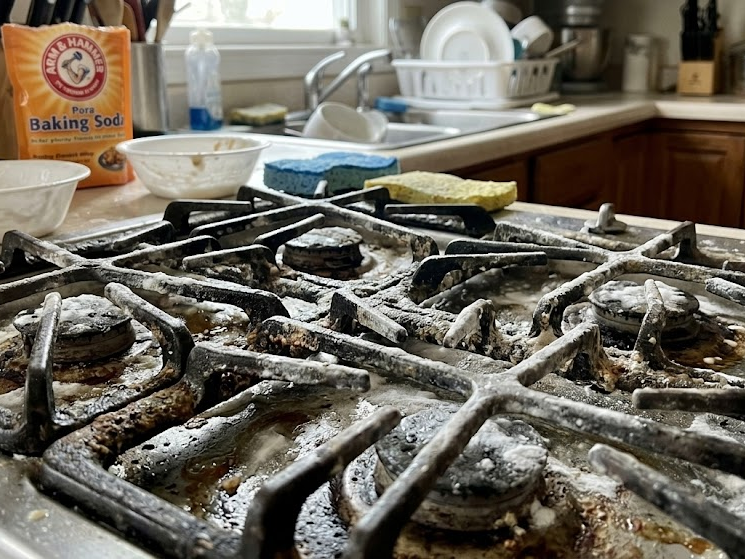
1. Remove Loose Crumbs First
Turn the stove off completely. Lift away loose food with a dry paper towel before introducing any water.
2. Wash the Surface with Warm Soapy Water
Mix warm water with a few drops of dish soap. Use a microfiber cloth to wipe the entire surface before tackling stubborn spots.
3. Make a Baking Soda Paste
Mix baking soda with a small amount of water until it forms a thick paste. Spread it over greasy areas and let it sit for 15–20 minutes. This waiting time can make scrubbing much easier.
4. Scrub Gently
Use a soft sponge or old toothbrush for stubborn areas and corners. Avoid steel wool because it can scratch stainless steel or enamel finishes.
5. Soak the Stove Grates
Remove the grates and soak them in hot water with dish soap. For heavier grease, sprinkle baking soda over the grates before scrubbing.
Stove grates can accumulate a surprising amount of grease after several weeks of regular cooking, so periodic soaking can reduce the amount of scrubbing required.
6. Wipe with Vinegar
Lightly spray white vinegar over the cleaned surface. This can help remove remaining baking soda residue and leave the stove looking brighter.
Avoid applying vinegar directly to surfaces if your manufacturer’s instructions advise against acidic cleaners.
7. Dry Everything Completely
Moisture left around the burners may affect ignition. Always dry every removable part completely before putting the stove back together.
How Often Should You Clean Your Gas Stove?
A simple routine prevents deep cleaning from becoming a major project.
- Wipe spills after every meal.
- Clean the surface every few days.
- Wash burner caps weekly.
- Deep-clean grates every two to four weeks.
- Remove grease before it hardens.
- Dry burner parts completely before reinstalling.
- Keep food from building up around the burners.
A consistent cleaning routine can make regular stove maintenance much easier and reduce the need for heavy scrubbing.
Mistakes to Avoid
Many people accidentally make cleaning harder by using products that are too aggressive. Try to avoid these common mistakes:
- Using steel wool on stainless steel.
- Mixing bleach and vinegar.
- Reassembling burners while they’re still wet.
- Spraying cleaner directly into burner openings.
- Waiting months between cleanings.
Always follow your stove manufacturer’s cleaning recommendations, especially if the cooktop has a special coating or finish.
When Should You Replace Burner Parts?
If your burners produce uneven flames even after cleaning, or the ignition keeps clicking without lighting, the problem may no longer be dirt.
Cracked burner caps, damaged igniters, or worn-out components should be inspected and replaced according to your stove manufacturer’s recommendations.
If you smell gas or suspect a leak, stop using the stove immediately and contact a qualified technician.
Frequently Asked Questions
Can I use vinegar on every gas stove?
Usually, vinegar is suitable for many stove surfaces, but it’s still a good idea to check your owner’s manual because some manufacturers have specific recommendations for coated finishes and other materials.
Is baking soda safe for stainless steel?
For many stainless steel gas stoves, baking soda can be used carefully. Use a soft sponge instead of anything abrasive, and avoid excessive pressure or repeated scrubbing in one area.
How do I remove burnt-on grease naturally?
A baking soda paste can help loosen many types of burnt grease. Let it sit for 15 to 20 minutes before scrubbing instead of trying to remove everything immediately.
Should I clean the burners every week?
If you cook daily, a quick weekly cleaning can help prevent clogged burner ports and maintain an even flame. Follow your manufacturer’s recommendations for removing and cleaning burner components.
Can I use lemon juice instead of vinegar?
You can use lemon juice for light cleaning. Lemon juice contains mild acids, although vinegar is generally a more practical option for routine cleaning.
How This Article Was Prepared
This article was prepared through AI-assisted research and human editorial review.
The research process included reviewing manufacturer guidance and reliable household cleaning information related to gas stove surfaces, burner components, grease buildup, and routine maintenance.
The author did not personally test every cleaning method described here. Results can vary depending on the stove’s surface material, finish, burner design, and manufacturer’s recommendations.
Editorial Note: Always turn off the stove and allow surfaces and removable components to cool before cleaning. Avoid abrasive materials that may scratch the cooktop or grates, and never mix vinegar with bleach or other chlorine-based cleaners. If you smell gas or suspect a gas leak, stop using the appliance and contact a qualified technician.
Conclusion
Cleaning a gas stove naturally doesn’t have to involve harsh chemicals or hours of scrubbing. Warm soapy water can handle routine grease, while baking soda can help loosen more stubborn residue. A light vinegar wipe may also help with certain types of residue when it is compatible with the stove’s surface.
A few minutes of regular maintenance can keep your gas stove cleaner, reduce hardened grease buildup, and make deeper cleaning easier when it is needed.

James L is the founder and editor of Clever Nest Lab, an independent home care website focused on practical, research-based household advice. He reviews manufacturer guidance, official documentation, and reliable sources to turn useful information into clear, practical guides.
Clever Nest Lab distinguishes between first-hand testing and research-based recommendations. The goal is to help readers better understand common household problems, follow safer cleaning and maintenance practices, and make informed decisions.