The basket is easy to wash. The heater above it is a different job, and the cleaning instructions depend on the air fryer you own.
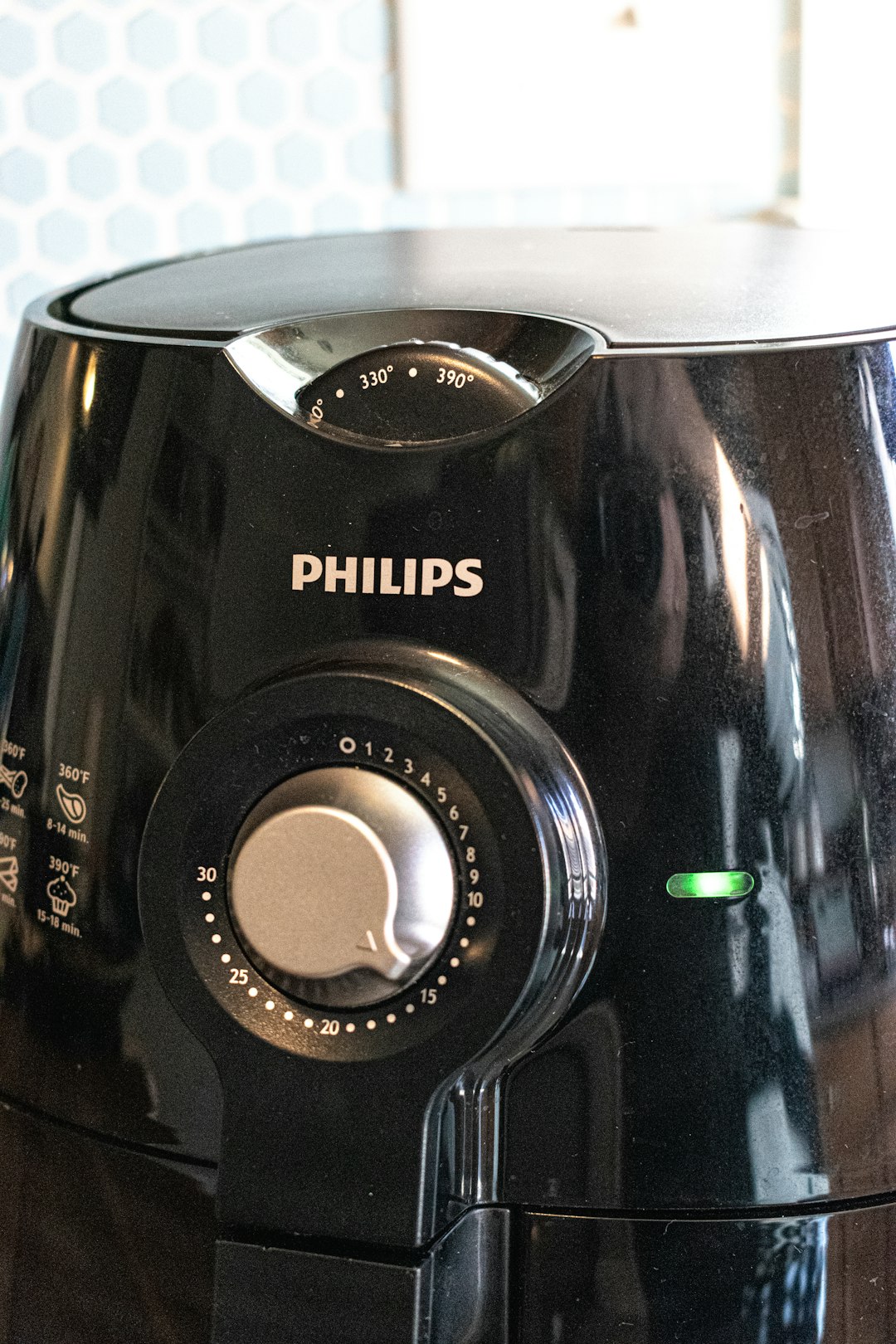
Before turning it upside down or reaching past a guard, find the full model number. Below, I’ve separated the basket, heater, and body, with a Philips example showing what a complete manufacturer procedure looks like.
Separate the three cleaning areas
| Part | The question to answer |
|---|---|
| Pan and basket | Are they hand-washable or dishwasher-safe, and with which tools? |
| Heating element and interior | What access and brush method does the model permit? |
| Main body, controls, and vents | What wiping method keeps liquid out of electrical areas? |
Grease in the pan and stuck residue on the heater are different targets. Clean the visible permitted part rather than treating smoke as proof that the heater needs dismantling.
Why an inversion tip needs a model match
Philips’ cleaning guidance describes an unplugged, cooled appliance and a supported inversion method for the relevant designs. It specifies soft tools and a post-clean procedure. That permission does not establish that every basket fryer can be turned over.
If your manual only authorizes upright wiping, stay within it. If reaching residue requires screws or a fixed guard to be removed, ask support. Hidden wiring and fan parts do not become safe to access because a photograph makes the opening look simple.
Philips HD9252/91: residue on the heater versus fat in the pan
Three cleaning zones — three different permissions
Removable food-contact parts. Remove accumulated fat and use their specified washing method. This permission does not extend to the body.
Use only the access and tools the manual permits. For this model the heater brush must have soft-to-medium bristles; no steel wire or hard bristles.
The body is not a washable basket. Do not open fixed parts or treat persistent unexplained smoke as permission to dismantle.
Choose the observation that fits
Fat visible in the pan: start with removable-part care after unplugging and cooling.
Residue visible on the heater: confirm the HD9252/91 manual and permitted brush method first.
Damaged electrical parts or persistent unexplained smoke: stop use and obtain support.
North American model; manual-based example. The HD9252/91 support page supplies the HD925X manual, document 3000.058.1926.3 A, January 16, 2023. Use printed English pages 14–15, not the PDF viewer’s page count.
- Before cleaning: unplug and cool completely.
- Pan and basket: remove accumulated fat; clean these removable parts as specified. Their dishwasher permission does not include the appliance body.
- Heating element: page 15 permits a cleaning brush, specifying soft-to-medium bristles and excluding steel wire or hard bristles.
- Interior: use the stated non-abrasive cleaning method; do not remove fixed parts.
Illustrative decision: visible pan fat and stuck heater residue call for different cleaning targets. The manual allows no other user-serviceable parts. Persistent unexplained smoke or damaged electrical parts needs support rather than dismantling.
The NA55x steam program below belongs to another family; it is not an HD9252/91 procedure. No household cleaning result is claimed here.
Source and printed page numbers checked October 8, 2026.
Keep moisture controlled
Unplug and cool completely. Use only the dampness, cleaner, and tool the applicable instructions permit. Do not immerse the body, pour water into it, or spray toward controls, vents, the fan, or heater connections.
A damp sponge and a dripping sponge introduce different amounts of water. Do not bend the element or scrape its coating to remove a stubborn mark. If liquid may have entered electrical areas, do not power the machine to dry it out.
Steam cleaning is a feature, not a general hack
The Philips support page also describes a steam-clean program for the NA55x family. That model-specific feature is not permission to add water and improvise steaming in another air fryer. Keep the instructions for the program, water tank, and drying stage together.
Return to cooking by the actual instructions
Refit accessories and follow the maker’s drying and post-clean steps. An empty heat run described by one manufacturer is not automatically appropriate for another.
If smoke, an electrical burning smell, or abnormal operation persists, stop and request assessment. Record the model, visible residue location, and cleaning product used. Do not keep heating an unexplained problem.
For the neighboring cooktop, use the separate gas-stove parts guide. Its removal and reassembly checks are different from an air fryer’s electrical access limits.
Which Philips instruction applies to your task?
| Instruction set | What it establishes | What to check before using it |
|---|---|---|
| HD925X manual supplied for HD9252/91 | Printed English pages 14–15 specify cleaning tools and separate removable parts from the heater and interior. | Match the model and region. Basket washing permission does not permit washing the body. |
| Philips heater-cleaning support procedure | A complete access and post-clean sequence for the models covered by that page. | Check its applicable-products list before adopting inversion or the empty-run step. |
| NA55x steam-clean section on the same support page | A cleaning program belonging to that product family. | Do not transfer the steam program to HD9252/91 or improvise one with a pan of water. |
If a support instruction and your supplied manual appear inconsistent, give Philips the full model and document number before proceeding. Do not combine convenient steps from different product families.
Updated October 8, 2026.

James L is the editorial pen name used by the operator of Clever Nest Lab. The site publishes English-language cleaning and appliance-care guides using manufacturer instructions and cited sources, with AI assistance in research, drafting, and editing. Model examples are research-based, not personal repair reports. About the editor · Editorial policy · Contact & corrections