It starts as a faint, cloudy haze. Then, before you know it, your pristine glass shower doors are covered in stubborn, chalky white spots that refuse to budge with regular glass cleaner. If you’ve tried scrubbing them until your arms ache only to see the spots reappear once the glass dries, you aren’t alone.
Those powdery spots aren’t just dirt; they are actual mineral deposits left behind when tap water evaporates. If you want to remove hard water stains from glass shower doors for good, you don’t need expensive specialty chemicals or brute force. You just need a basic understanding of chemistry and the right approach.
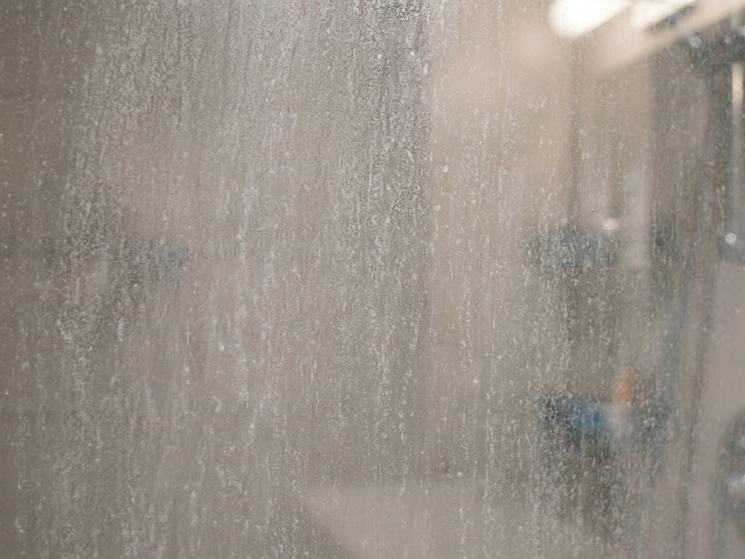
Why Hard Water Stains Form on Glass
To understand how to remove hard water stains from glass shower doors, it helps to know what you’re actually fighting.
When “hard” water—which is loaded with dissolved minerals like calcium and magnesium—sits on your shower door, the water eventually evaporates into the air. The minerals, however, cannot evaporate. They stay behind on the surface, bonding tightly to the glass.
Worse yet, shower glass isn’t as perfectly smooth as it looks to the naked eye. It has microscopic pores. Over time, these mineral deposits seep into those tiny imperfections, making them incredibly difficult to wipe away with standard soap and water. Because these minerals are alkaline, traditional soap or standard window cleaners won’t dissolve them. You need an acid to break that chemical bond.
Before You Start: Choose Your Weapon
Before grabbing the nearest scrub brush, assess how severe the buildup is. Different levels of staining call for different treatments.
| Buildup Level | Recommended Acid | Scrubbing Tool |
|---|---|---|
| Light / Recent | Distilled white vinegar | Microfiber cloth or non-scratch sponge |
| Moderate / Layered | Cleaning vinegar (6% acidity) or lemon juice | Non-scratch scrub pad |
| Severe / Etched-looking | Citric acid powder or commercial acid cleaner | Fine steel wool (Grade #0000), used with caution |
Step-by-Step Guide: The Vinegar and Dish Soap Method
For most households, a simple mixture of white vinegar and blue dish soap is the safest and most effective way to remove hard water stains from glass shower doors. The vinegar breaks down the calcium, while the dish soap cuts through body oils and helps the mixture cling to the vertical glass.
1. Mix and heat the solution Mix equal parts distilled white vinegar and a standard grease-cutting dish soap in a microwave-safe bowl. Heat the mixture for about 30 seconds until it is warm, but not boiling. Warm vinegar penetrates mineral crusts much faster than cold vinegar. Pour the warm mixture into a spray bottle.
2. Spray and wait (crucial step) Spray the solution generously over the dry shower glass. Don’t start scrubbing immediately. Let the mixture sit for 15 to 30 minutes. If the glass starts drying out, spray a little more. The acid needs time to dissolve the calcium buildup.
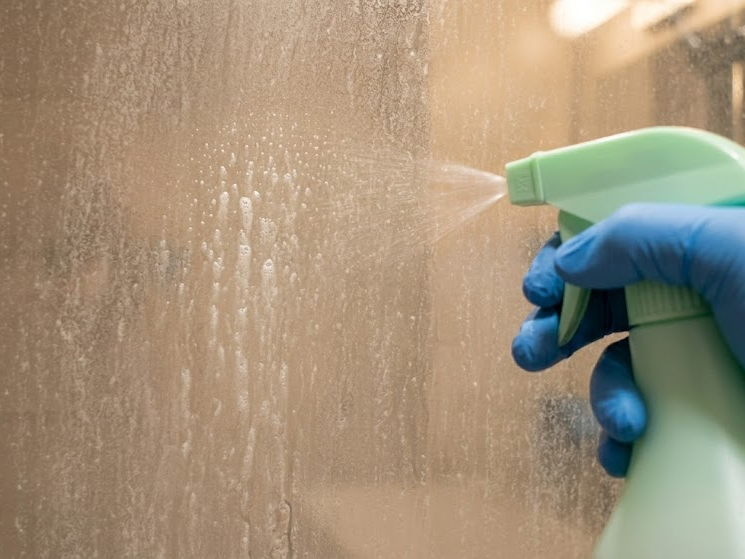
3. Gentle scrubbing Use a non-scratch sponge or a damp microfiber cloth to wipe down the glass in circular motions. You shouldn’t have to press hard if the vinegar has done its job.
4. Rinse and dry completely Rinse the door thoroughly with warm water. Once rinsed, immediately wipe the glass completely dry with a clean microfiber cloth or a squeegee. Leaving water to air-dry will simply start the staining process all over again.
What to Do for Severe, Deeply Layered Stains
If the vinegar method leaves spots behind, your hard water buildup has likely accumulated over months or years. Fully learning how to remove hard water stains from glass shower doors at this stage means stepping up your strategy carefully.
One option worth trying before commercial sprays: pure citric acid powder, a mild organic acid often found in the baking aisle and commonly used as a safer cleaning ingredient. Mix 2 tablespoons of citric acid powder into 1 cup of hot water, spray it onto the glass, and let it sit for 20 minutes. It’s odorless, concentrated, and can cut through thick mineral buildup more effectively than standard vinegar.
For physical agitation on stubborn spots, some people turn to Grade #0000 superfine steel wool — but this should be treated as a last resort, not a first choice.
⚠️ Important Warning: Steel wool carries real risk of permanently damaging your glass, even the superfine Grade #0000 variety. It can scratch protective coatings, tempered glass treatments, or anodized/painted door frames — damage that cannot be undone and may void a manufacturer’s warranty on newer enclosures. If you choose to use it:
- Never use standard kitchen steel wool or coarse scouring pads — only Grade #0000 superfine steel wool.
- Always use it wet, with a lubricant like soapy water, never dry.
- Test on a small, inconspicuous corner first and check for scratching before treating the whole door.
- If your shower door has any special coating, tempered edge treatment, or you’re unsure of the glass type, skip steel wool entirely and consult a glass professional instead.
Common Mistakes to Avoid
- Using abrasive powders directly. Scouring powders containing harsh abrasives can create microscopic scratches on the glass, making the surface rougher and causing hard water to build up even faster in the future.
- Neglecting the rubber seals. While focusing on the glass, people often forget the plastic or rubber seals at the bottom of the door. Vinegar can degrade certain lower-quality rubbers if left soaking for hours, so rinse those areas well.
- Mixing bleach and vinegar. Never mix these two. If you previously cleaned your shower with bleach, rinse it completely before applying a vinegar-based solution. Mixing them creates toxic chlorine gas.
If mineral buildup and grease bother you elsewhere in the house too, the same natural, acid-based approach works well in the kitchen — see our guide on how to clean a gas stove naturally for a similar chemical-free method.
You’ll also want to keep the rest of the bathroom in mind, not just the glass — mineral buildup tends to show up on faucets, tile grout, and showerheads at the same time.
How to Prevent Hard Water Stains from Returning
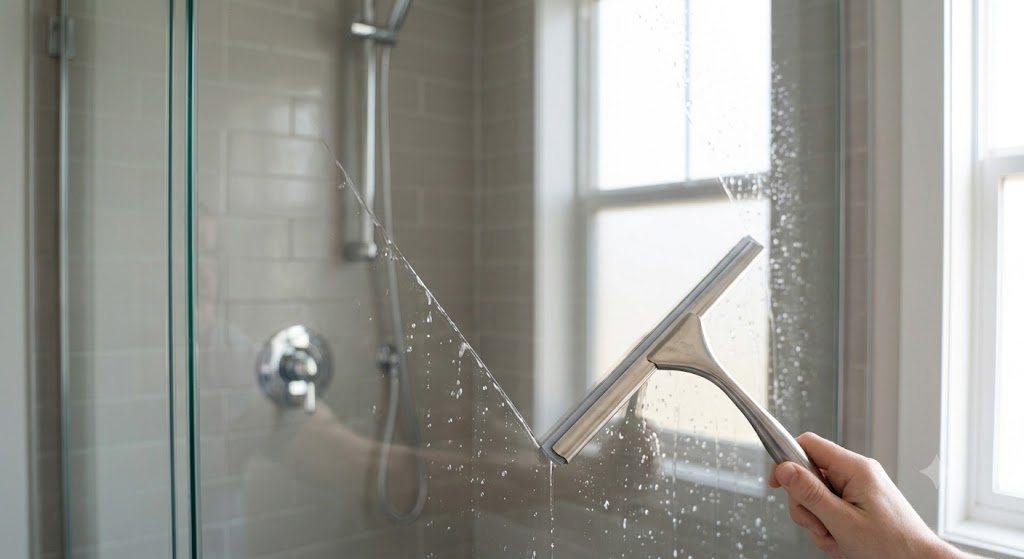
Learning to remove hard water stains from glass shower doors is only half the battle. Without a change in routine, the spots will likely return within a week. Prevention is significantly easier than deep cleaning.
The 30-second squeegee rule: Keep a small rubber squeegee inside the shower. Make it a habit to wipe down the glass after the last shower of the day. Removing standing water means the minerals never get the chance to dry onto the surface.
Apply a water repellent: Once your glass is perfectly clean and dry, apply a rain-repellent spray (like those used on car windshields) or a specialized shower glass protectant. This fills the microscopic pores in the glass, causing water to bead up and slide right off instead of drying in place.
FAQ
Q. Can I use baking soda to remove hard water stains from glass shower doors? Yes, but with care. Baking soda is a mild alkali, so it won’t chemically dissolve calcium the way vinegar does, but it works as a very gentle abrasive. You can mix baking soda and vinegar into a paste, apply it to stubborn spots, and rinse. Avoid scrubbing aggressively, since dry baking soda can occasionally haze certain glass coatings.
Q. How often should I deep clean my shower glass? If you squeegee daily, a mild vinegar wipe-down every few months is usually enough. Without a squeegee, you’ll likely need to repeat the vinegar and dish soap method every one to two weeks to keep stains from becoming permanent.
Q. Why are my glass doors still cloudy even after the stains are gone? If the glass remains cloudy or white even when wet and after thorough cleaning, it may be “etched.” This means the minerals have chemically altered the glass surface itself over time. True chemical etching generally can’t be fully cleaned away — a glass restoration specialist may be able to improve clarity through polishing, but full recovery often isn’t possible, and replacement may be the more practical option.
How This Article Was Prepared
This article was prepared through AI-assisted research and human editorial review.
The research process included:
- Reviewing U.S. Geological Survey (USGS) information on hard water minerals (calcium and magnesium)
- Reviewing glass manufacturer guidance on tempered glass and protective coatings
- Comparing common acid-based cleaning methods (vinegar, citric acid)
The author did not personally test every method described here. Glass type, coatings, and water hardness vary by household.
Editorial Note: Grade #0000 steel wool and citric acid can damage certain coatings or finishes. Always test on a small, inconspicuous area first and follow your shower door manufacturer’s instructions. Never mix vinegar and bleach.
Sources reviewed:
- U.S. Geological Survey – Hard water and mineral content
- Shower door and tempered glass manufacturer cleaning guidance
Final Thoughts
If you’ve been searching for a reliable way to remove hard water stains from glass shower doors, the answer isn’t a miracle product or hours of exhausting labor. It just takes patience to let mild acids do the work, followed by a quick daily maintenance habit. Grab a squeegee, spend 30 seconds after your shower, and you won’t have to face a massive scrubbing session again.

James L is the founder and editor of Clever Nest Lab, an independent home care website focused on practical, research-based household advice. He reviews manufacturer guidance, official documentation, and reliable sources to turn useful information into clear, practical guides.
Clever Nest Lab distinguishes between first-hand testing and research-based recommendations. The goal is to help readers better understand common household problems, follow safer cleaning and maintenance practices, and make informed decisions.