If you’ve ever looked at your shower door or bathroom tiles and noticed a cloudy white buildup, you might wonder whether it’s hard water stains or soap scum. While they can look similar, they’re caused by different things and require different cleaning methods.
Misidentifying the problem often leads to frustration. Many homeowners scrub endlessly with the wrong cleaner, only to see little improvement.
In this guide, you’ll learn how to analyze Hard Water Stains vs. Soap Scum, why they form, and the best ways to remove each one effectively.
Quick Diagnosis
Before choosing a cleaner, identify what you’re seeing. Using the wrong cleaning method can waste time and may not remove the buildup effectively.
| What you see | Most likely cause | Try first |
|---|---|---|
| Chalky white spots | Hard water stains | White vinegar or a limescale remover |
| Slippery or waxy film | Soap scum | Bathroom degreaser |
| White residue that remains after vinegar | Mixed buildup | Degreaser first, then an acidic cleaner |
| Rough deposits on glass or metal | Mineral scale | Manufacturer-approved descaling product |
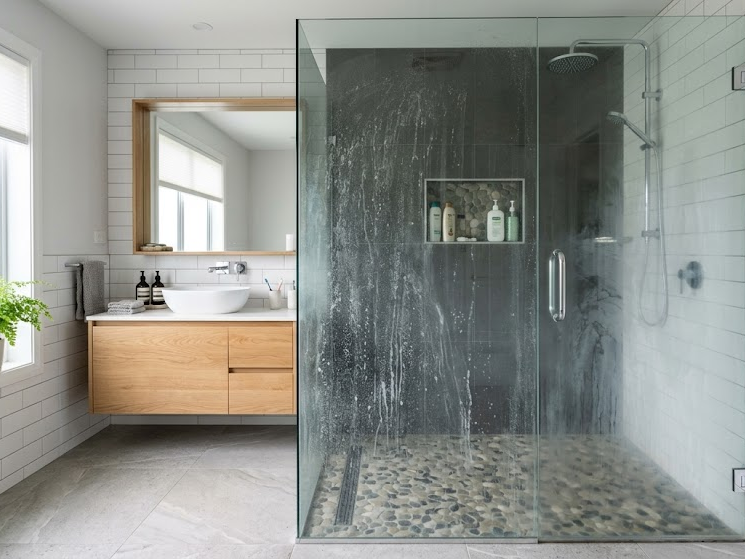
What Are Hard Water Stains?
Hard water stains are mineral deposits left behind when water containing calcium and magnesium evaporates.
Instead of disappearing completely, the water leaves behind tiny mineral crystals that gradually build up over time.
They’re most commonly found on:
- Glass shower doors
- Faucets
- Showerheads
- Bathroom tiles
- Sink basins
Hard water stains usually appear as:
- White or gray spots
- Chalky residue
- Cloudy patches
- Rough texture
Over time, these deposits become harder and more difficult to remove.
What Is Soap Scum?
Soap scum is a sticky film created when bar soap reacts with minerals in hard water.
Rather than evaporating like water, soap combines with calcium and magnesium to create an insoluble residue that sticks to surfaces.
Soap scum often appears on:
- Bathtubs
- Shower walls
- Glass doors
- Bathroom fixtures
- Plastic shower curtains
It usually looks:
- Milky or cloudy
- Slightly greasy
- Smooth or waxy
- Yellowish in older buildup
Unlike mineral deposits, soap scum contains oils, body residue, and soap ingredients.
Hard Water Stains vs. Soap Scum: Key Differences
| Feature | Hard Water Stains | Soap Scum |
|---|---|---|
| Cause | Mineral deposits | Soap mixed with hard water minerals |
| Texture | Rough, chalky | Smooth, greasy, waxy |
| Color | White or gray | White, cloudy, sometimes yellow |
| Best Cleaner | Vinegar or acidic cleaner | Degreasing bathroom cleaner |
| Common Locations | Glass, faucets, showerheads | Tubs, shower walls, curtains |
Although they may look alike, using the wrong cleaner can make cleaning much harder.
How to Tell Which One You Have
A simple touch test often reveals the answer.
Signs of Hard Water Stains
- Feels rough
- Doesn’t smear easily
- Usually appears where water dries
- Looks crystalline in bright light
Signs of Soap Scum
- Feels slippery or waxy
- Can smear slightly when rubbed
- Builds up where soap is used regularly
- Often collects in corners and along grout lines
If you’re still unsure, you can perform a small spot test using an appropriate cleaner on an inconspicuous area.
If a vinegar-based cleaner begins dissolving the residue within a few minutes, mineral deposits are likely contributing to the buildup. If the residue changes very little, soap scum or mixed buildup may be present instead.
Results can vary depending on surface coatings, water hardness, and the cleaning products previously used.
Sometimes It’s Both
This is something many cleaning guides don’t mention.
In many bathrooms, hard water stains and soap scum develop together.
The mineral deposits provide a rough surface that soap scum easily sticks to, creating multiple layers of buildup.
This explains why a single cleaner sometimes doesn’t work.
Research from manufacturer guidance and household cleaning references suggests that mineral deposits and soap scum frequently occur together on shower surfaces. Because the two types of residue respond differently to cleaning products, identifying the dominant type of buildup before cleaning often leads to better results.
A two-step process often works best:
- Remove soap scum first with a degreasing cleaner.
- Remove remaining mineral deposits using vinegar or a limescale remover.
Cleaning in this order usually produces much better results than repeatedly using only one product.
Why Vinegar Works for One but Not Always the Other
White vinegar is mildly acidic.
Acids dissolve calcium-based mineral deposits, making vinegar highly effective against hard water stains.
However, soap scum also contains oils and fatty residues.
Acid alone cannot easily dissolve these greasy components.
That’s why bathrooms with heavy soap scum often need:
- A bathroom degreaser
- Dish soap solution
- A non-abrasive scrub sponge
Using vinegar on soap scum may help slightly but usually won’t remove thick buildup completely.
Common Cleaning Mistakes
Many homeowners accidentally make cleaning more difficult.
Common mistakes include:
- Using only vinegar for every stain
- Scrubbing glass with steel wool
- Waiting months before cleaning buildup
- Mixing cleaning chemicals together
- Ignoring shower squeegeeing after use
Regular maintenance is much easier than removing years of buildup.
How to Prevent Both Problems
Preventing buildup takes only a few minutes after each shower.
Helpful habits include:
- Wipe down shower glass with a squeegee.
- Dry metal fixtures with a microfiber cloth.
- Use liquid body wash instead of traditional bar soap if soap scum is a recurring issue.
- Clean shower surfaces weekly.
- Install a water softener if your home has very hard water.
Small habits significantly reduce future cleaning time.
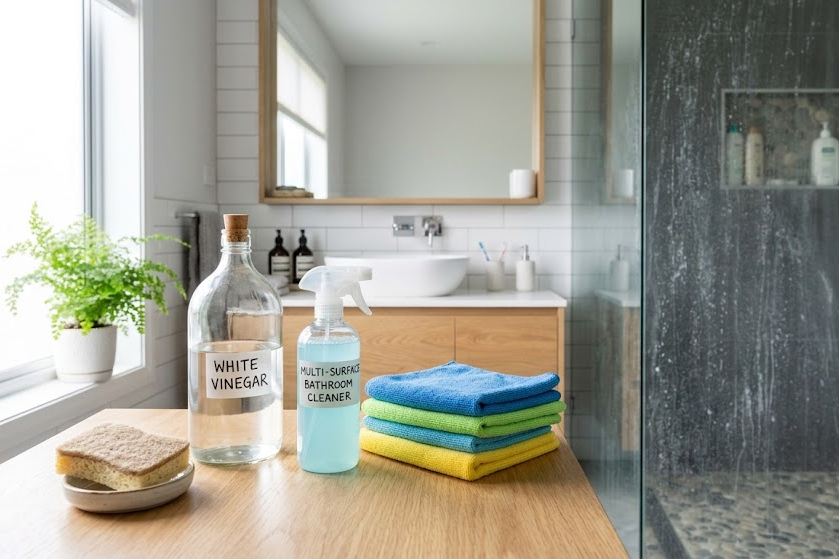
Which Cleaner Should You Choose?
| Problem | Recommended Cleaner |
|---|---|
| Hard water stains | White vinegar, citric acid, limescale remover |
| Soap scum | Bathroom cleaner, dish soap, degreasing cleaner |
| Mixed buildup | Degreaser first, acid cleaner second |
Always follow the manufacturer’s instructions and test any cleaner on a small, hidden area before treating large surfaces.
Safety Tips
When cleaning your bathroom:
- Wear rubber gloves if using strong cleaners.
- Never mix bleach with vinegar or other acidic products.
- Keep the room well ventilated.
- Avoid abrasive scrubbers on glass and polished fixtures.
- Rinse surfaces thoroughly after cleaning.
These simple precautions help protect both you and your bathroom finishes.
Conclusion
Although hard water stains and soap scum often look similar, they form for different reasons and respond to different cleaning methods.
Hard water stains are caused by mineral deposits and respond well to acidic cleaners like vinegar. Soap scum is a greasy residue that typically requires a degreasing cleaner. In many bathrooms, both types of buildup occur together, so identifying the difference—and cleaning in the right order—can save time and produce better results.
With regular maintenance and the right products, you can keep your shower glass, tiles, and fixtures looking cleaner for longer.
Frequently Asked Questions
Can hard water stains turn into soap scum?
No. They are different types of buildup. However, soap scum often sticks to existing hard water deposits, making them appear as one thick layer.
Why doesn’t vinegar remove all the cloudy residue on my shower door?
If vinegar removes only part of the residue, the remaining buildup is likely soap scum, which usually requires a degreasing cleaner.
Does liquid body wash create less soap scum than bar soap?
Generally, yes. Many liquid body washes contain synthetic detergents that leave less residue than traditional bar soap.
Can I use baking soda on both hard water stains and soap scum?
Baking soda can help scrub away light buildup, but it isn’t very effective on heavy mineral deposits by itself. It’s best used as a gentle abrasive alongside the appropriate cleaner.
How often should I clean my shower to prevent buildup?
For most households, a quick wipe after each shower and a thorough cleaning once a week is enough to prevent significant hard water stains and soap scum.
How This Article Was Prepared
This article was prepared through AI-assisted research and human editorial review.
The research process included:
- Reviewing U.S. Geological Survey (USGS) information on hard water minerals
- Reviewing cleaning chemistry (why acids dissolve minerals but not soap scum grease)
- Comparing tile and glass manufacturer guidance
The author did not personally test every surface combination. Water hardness and soap types vary by household.
Editorial Note: Always test cleaners on a small area first. Never mix bleach with vinegar. Follow manufacturer instructions for glass coatings and fixtures.
Sources reviewed:
- U.S. Geological Survey – Hard water minerals
- Bathroom fixture and tile manufacturer cleaning guidance

James L is the founder and editor of Clever Nest Lab, an independent home care website focused on practical, research-based household advice. He reviews manufacturer guidance, official documentation, and reliable sources to turn useful information into clear, practical guides.
Clever Nest Lab distinguishes between first-hand testing and research-based recommendations. The goal is to help readers better understand common household problems, follow safer cleaning and maintenance practices, and make informed decisions.