Nothing makes a clean bathroom look neglected faster than cloudy white spots. Today, we will learn how to prevent hard water stains on glass shower doors with simple habits. Those marks aren’t soap scum—they’re mineral deposits left behind after hard water evaporates. Once they build up, they can be surprisingly stubborn to remove, even with scrubbing or acidic cleaners.
The good news is that prevention doesn’t take much time. A few small habits, done consistently, can keep shower glass looking clear for years and cut down on deep-cleaning sessions significantly.
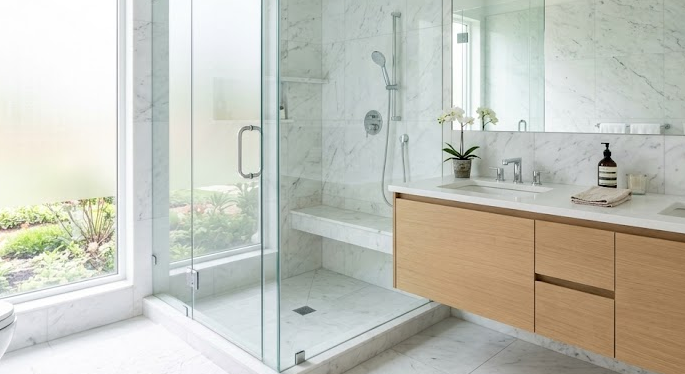
Why Hard Water Leaves Stains on Glass
Hard water carries dissolved minerals—mostly calcium and magnesium. When droplets sit on glass and dry, the water evaporates but the minerals stay behind. Over weeks and months, those tiny deposits build into the cloudy hard water stains and white streaks most homeowners recognize immediately.
Left unaddressed for long enough, mineral buildup can start etching into the glass surface, and that kind of haze is much harder—sometimes impossible—to fully remove. Generally speaking, the harder your water supply, the faster hard water stains tend to show up.
Daily Habits: How to Prevent Hard Water Stains
Most of the prevention work happens in the few minutes right after you shower.
Use a Squeegee Every Time
This one habit does more than almost anything else on this list. Removing standing water before it has a chance to dry keeps minerals from settling onto the glass in the first place, and it only takes about 20 seconds.
A few tips that help:
- Start at the top and pull the squeegee down in overlapping strokes.
- Wipe the blade off after each pass so you’re not just spreading water around.
Many people who make this a habit notice they need to deep-clean far less often.
Dry Remaining Moisture with a Microfiber Cloth
A squeegee handles most of the glass, but small droplets tend to linger around door edges, hinges, handles, and the bottom track. A microfiber cloth picks up what the squeegee misses before those drops have a chance to dry into deposits. Cotton towels work in a pinch, but they often leave lint behind, so microfiber is the better choice if you have one on hand.
Improve Bathroom Ventilation
Humidity slows evaporation, and slower evaporation gives minerals more time to settle. After showering, it helps to:
- Run the exhaust fan for 20–30 minutes.
- Crack a window if the weather allows it.
- Leave the shower door partially open so air can circulate.
Better airflow simply helps everything dry faster and more evenly.
Clean the Glass Weekly
This weekly cleaning habit is one of the easiest ways to prevent hard water stains for good.
| Cleaner | Best For | Frequency |
|---|---|---|
| Mild dish soap | Everyday maintenance | Weekly |
| White vinegar and water (1:1) | Light mineral deposits | Weekly or biweekly |
| Commercial shower glass cleaner | Heavy-use bathrooms | As needed |
It’s worth avoiding abrasive powders or rough scrubbing pads, since they can scratch the glass and actually make future buildup worse.
Apply a Protective Glass Coating to Prevent Hard Water Stains
This is a step a lot of guides skip over, but a hydrophobic coating can make a real difference. These products form a thin, invisible barrier that causes water to bead up and roll off instead of clinging to the glass.
The main benefits:
- Less mineral buildup over time
- Easier, faster cleaning
- Less soap scum sticking to the surface
- Better overall water runoff
Most coatings last somewhere between 3 and 6 months, depending on how often the shower gets used.
Consider a Water Softener if Hard Water Is Severe
If hard water stains are showing up throughout your home—not just in the shower—a water softener might be worth looking into. Common signs include:
- White deposits on faucets
- Scale buildup inside kettles
- hard water stains that won’t rinse off dishes
- Appliances scaling up faster than expected
A softener costs more upfront, but it can reduce mineral buildup across your plumbing system and may help water-using appliances last longer.
One thing worth knowing: a softener won’t undo hard water stains that are already there. It’s best to deep-clean the shower glass first, then let the softener help maintain results going forward.
Don’t Forget the Shower Door Tracks
It’s easy to focus only on the glass and forget the tracks, rubber seals, and metal frames, where minerals also collect. Standing water in these areas evaporates slowly, which tends to leave behind more concentrated deposits than the glass itself. Drying these spots during your weekly cleaning routine helps prevent buildup you can’t easily see.
Common Mistakes That Make Hard water stains Worse
Letting water air-dry every day. Mineral buildup is gradual, but skipping the drying step for even a few days can noticeably increase spotting in hard-water areas.
Waiting until the glass looks cloudy. By the time haze is visible, several layers of minerals have usually already built up. Light, frequent maintenance is a lot easier than trying to restore glass after the fact.
Using abrasive scrubbers. Steel wool and rough pads can scratch both the glass and any protective coating on it. Once scratched, the surface tends to trap even more mineral deposits.
Ignoring soap scum. Soap residue gives minerals something to cling to. Cleaning both soap scum and mineral deposits together tends to keep glass clearer for longer.
Extra Tips Most Guides Don’t Mention
Most articles stop at “use a squeegee and some vinegar.” A few additional habits can make a noticeable difference over time.
Replace Worn Squeegee Blades
An old, worn rubber blade tends to leave thin water lines behind instead of clearing the glass fully. Swapping the blade every 6–12 months keeps it working the way it should.
Use Liquid Body Wash Instead of Bar Soap
Bar soap tends to contribute more to soap scum, which gives minerals a surface to grip onto. Switching to a liquid body wash can reduce overall buildup for some households.
Check Your Showerhead Spray Pattern
A partially clogged showerhead can create a finer mist that coats more of the glass than a normal spray would. Cleaning the showerhead every so often can cut down on unnecessary spotting.
How Often Should You Maintain Shower Glass?
| Task | Recommended Frequency |
|---|---|
| Squeegee after shower | Every use |
| Wipe with microfiber | Every use |
| Clean glass | Once a week |
| Deep clean | Every 1–2 months |
| Apply water repellent | Every 3–6 months |
| Clean shower tracks | Monthly |
Sticking to a schedule like this generally prevents most hard water stains before they become a real problem.
How to Prevent Hard Water Stains: Quick Recap
Final Thoughts
Preventing hard water stains is a lot easier than removing them once they’ve set in. A quick routine after each shower, a weekly cleaning, and an occasional protective coating go a long way toward keeping glass clear without relying on harsh cleaners.
The real issue usually isn’t the cleaner you’re using—it’s letting minerals dry on the glass day after day. Consistency tends to matter more than how hard you scrub.
Frequently Asked Questions
Can hard water permanently damage shower glass?
It can, in some cases. If mineral deposits are left for long stretches of time, they may etch into the glass surface. Regular maintenance helps reduce the chances of permanent cloudiness.
Is vinegar safe for glass shower doors?
Generally, yes. Diluted white vinegar works well on light mineral deposits. Just be careful with prolonged contact near natural stone surfaces, since vinegar can damage stone over time.
How do I know if my home has hard water?
Common signs include white spots on dishes, mineral buildup around faucets, soap that doesn’t lather easily, and shower glass that keeps developing hard water stains no matter how often you clean it.
Do rain-repellent products actually work on shower doors?
Many hydrophobic glass treatments made for household use perform well on shower glass. Following the manufacturer’s directions and reapplying on schedule tends to make the biggest difference.
Why do hard water stains come back so quickly after cleaning?
That’s why learning how to prevent hard water stains matters more than removing them after the fact. If water is left to air-dry after each shower, minerals start depositing almost immediately. Daily drying is really the key habit for keeping hard water stains from coming back.
Related Articles
| Suggested Anchor Text | Suggested Article Topic |
|---|---|
| How to Remove Hard Water Stains from Glass | Step-by-step stain removal guide |
| Best Ways to Clean a Glass Shower Door | Complete shower glass cleaning routine |
| How to Clean Bathroom Exhaust Fans | Improve ventilation and reduce moisture |
| Signs Your Home Has Hard Water | Identifying hard water problems |
| How to Clean Shower Door Tracks | Deep cleaning frames and tracks |
Recommended External References
- U.S. Environmental Protection Agency (EPA) – Information about drinking water quality and mineral content.
- Water Quality Association (WQA) – Resources on hard water and water treatment systems.
- Centers for Disease Control and Prevention (CDC) – General guidance on healthy home environments.
How This Article Was Prepared
This article was prepared through AI-assisted research and human editorial review.
The information was organized by reviewing publicly available guidance on hard water minerals and shower glass maintenance, including information from the EPA and Water Quality Association.
Recommendations may vary by glass type and water hardness.
Always check the owner’s manual before applying coatings or new cleaning methods.

James L is the founder and editor of Clever Nest Lab, an independent home care website focused on practical, research-based household advice. He reviews manufacturer guidance, official documentation, and reliable sources to turn useful information into clear, practical guides.
Clever Nest Lab distinguishes between first-hand testing and research-based recommendations. The goal is to help readers better understand common household problems, follow safer cleaning and maintenance practices, and make informed decisions.