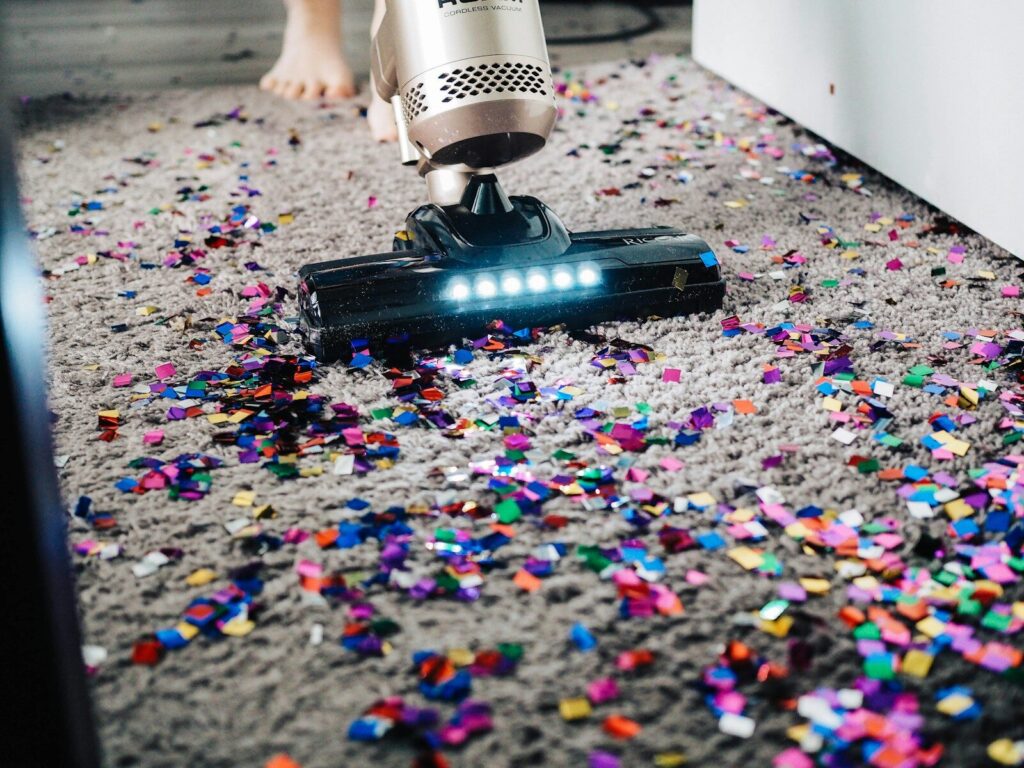
If you are trying to remove deep pet hair from carpets, you already know that a vacuum only removes what’s sitting loose on top of the carpet fibers. Pet hair, though, has tiny barbs that grip and twist into the weave itself, and every time a dog or cat walks or lies on the rug, that hair gets pressed deeper into the backing. That’s why a carpet can look “vacuumed clean” and still be holding a surprising amount of embedded fur — and why regular vacuuming alone rarely gets ahead of it in a multi-pet household.
The Science of Why Pet Hair Gets Stuck
Carpet fibers are twisted into loops or cut piles, creating thousands of tiny gaps at different angles. Pet hair, especially from double-coated breeds, has microscopic barbs along its shaft (similar in principle to a fish hook) that catch on those fibers and resist the airflow-based suction a vacuum relies on. Over time, foot traffic presses that trapped hair further down, where it also holds onto dust, skin flakes, and the odor compounds that come with them — which is part of why carpets can start to smell “off” well before they look visibly dirty.
Why a Squeegee Works Best to Remove Deep Pet Hair from Carpets
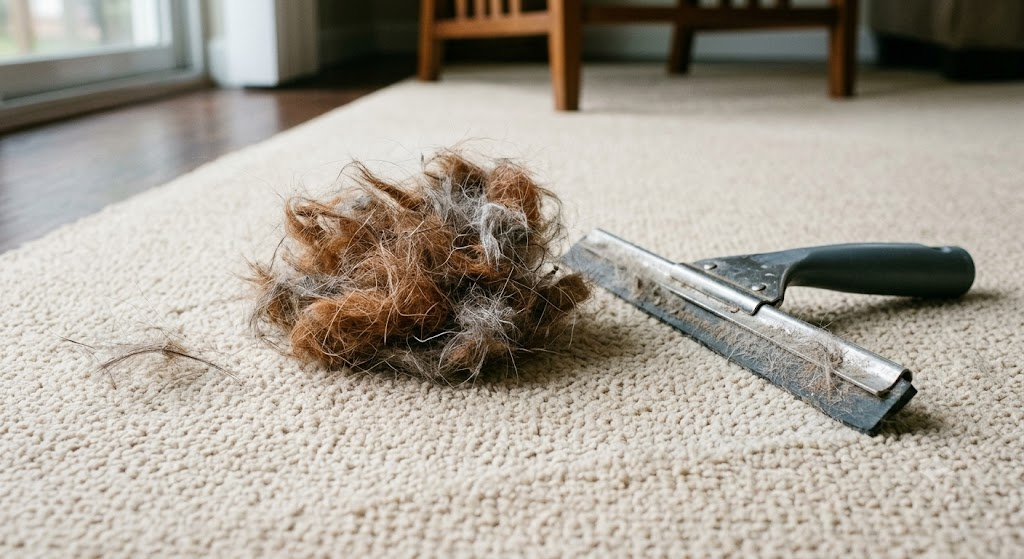
A vacuum removes hair through air pressure. A squeegee removes it through direct friction and pressure against the fiber structure — a completely different mechanism. The rubber blade’s edge catches on embedded hair strands and physically drags them up and out of the weave, rolling them into clumps a vacuum could never dislodge on its own. It is the most effective way to remove deep pet hair from carpets.
What You’ll Need
Three inexpensive items, usually under $5 combined:
- A standard window squeegee with a firm, sharp rubber blade
- A vacuum, for the cleanup pass afterward
- A dedicated trash bag for the hair that comes up
Step-by-Step Method to Remove Deep Pet Hair from Carpets
- Vacuum first. Clear the room and run a normal vacuum pass to lift the top layer of loose hair, so the squeegee’s work is focused on what’s actually embedded deeper.
- Angle the blade correctly. Hold the squeegee at roughly a 45-degree angle against the carpet and apply firm, even pressure.
- Use short, controlled strokes. Drag it toward you in 1–2 foot pulls rather than attempting the whole room in one long motion — shorter strokes maintain more consistent pressure.
- Collect what comes up. The rubber edge grips embedded fibers and pulls up matted rolls of hair that were invisible from the surface. A single 5×7 rug can produce a surprising amount from this step alone.
- Do a final vacuum pass. Gather any loosened hair by hand, discard it, then run the vacuum once more to catch anything remaining. According to cleaning experts at The Spruce, this combination method yields the best results.
Which Carpet Types Handle This Best
| Carpet type | Squeegee safety | Notes |
| Cut pile / plush | Safe | Ideal candidate, minimal risk |
| Berber / looped | Use light pressure | Aggressive dragging can snag loops |
| Frieze / textured | Safe | Textured fibers hide hair especially well |
| Wool blend | Test a small area first | Natural fibers vary in resilience |
How Often This Needs Doing
For heavy-shedding breeds — Labradors, Huskies, German Shepherds — using this trick to remove deep pet hair from carpets every two weeks in high-traffic areas keeps embedded buildup from accumulating. Lighter shedders or households with less carpet coverage can usually stretch this to once a month.
Alternatives Worth Knowing About
A rubber pet-hair broom works on the same friction principle and allows the job to be done standing up, which matters if bending over a squeegee repeatedly isn’t comfortable. Some people also use a damp rubber glove for small spot areas like stairs or under furniture, though it’s slower for full rooms.
FAQ
Will this damage the carpet?
A smooth rubber squeegee is generally safe on standard nylon, polyester, and wool carpets when used with reasonable pressure. Looped Berber styles need lighter handling to avoid snagging.
Why does this work better than a specialized pet-hair vacuum attachment?
Vacuum attachments still rely primarily on suction. A squeegee adds direct mechanical friction, which reaches hair that airflow alone can’t dislodge.
Can this replace regular vacuuming entirely?
No — the two work best together. Vacuuming handles surface debris and dust; the squeegee pass targets what’s embedded below that layer.
Bottom Line
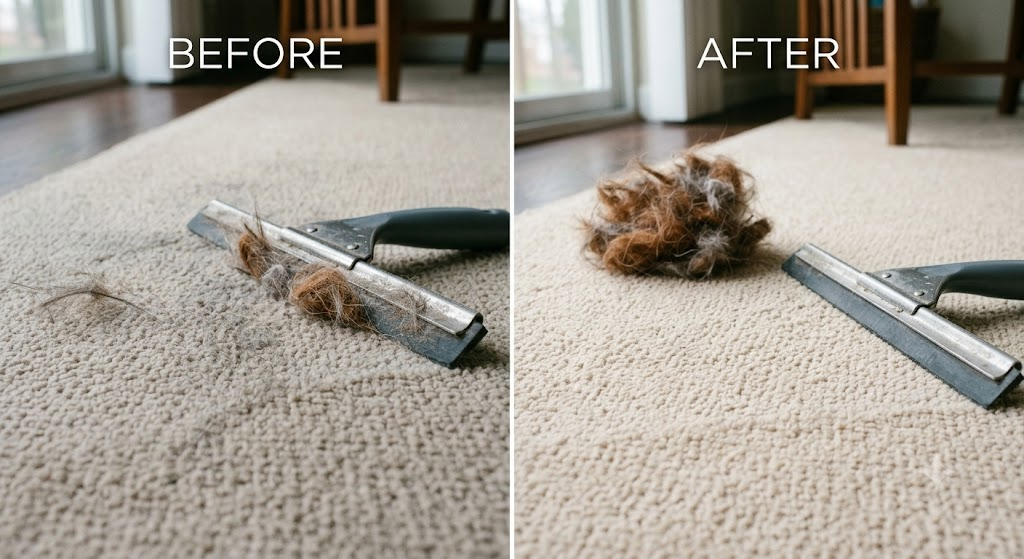
A carpet that looks clean after vacuuming can still be holding a layer of embedded pet hair, dust, and odor underneath. Learning how to remove deep pet hair from carpets with a five-dollar tool and about ten minutes per room is often enough to reach what regular vacuuming consistently misses.
How This Article Was Prepared
This article was prepared through AI-assisted research and human editorial review.
The research process included reviewing carpet fiber structure, pet hair removal techniques, and cleaning tool comparisons from household maintenance resources.
The author did not personally test every method described here. Results can vary depending on carpet type, pile depth, and pet breed.
Editorial Note: Test on a small, hidden area first. Use light pressure on looped Berber and wool carpets to avoid snagging.
Sources reviewed:
- Carpet manufacturer guidance on fiber types
- Cleaning publications (e.g., The Spruce) on pet hair removal methods

James L is the founder and editor of Clever Nest Lab, an independent home care website focused on practical, research-based household advice. He reviews manufacturer guidance, official documentation, and reliable sources to turn useful information into clear, practical guides.
Clever Nest Lab distinguishes between first-hand testing and research-based recommendations. The goal is to help readers better understand common household problems, follow safer cleaning and maintenance practices, and make informed decisions.